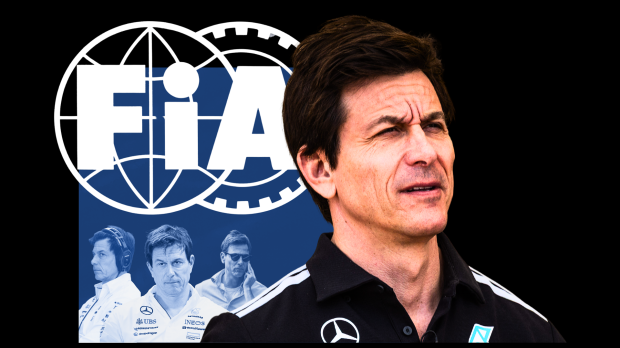

Audi F1 boss exposes FIA rules loophole and uses Mercedes example
Did Mercedes tone down their power unit's capabilities?

Audi F1 boss Mattia Binotto has hinted that Mercedes had potential to dupe the system when it came to the FIA's additional development and upgrade opportunities (ADUO) scheme.
ADUO was brought in at the start of the season amid the 2026 regulation changes, with it being designed to try and help struggling power unit manufacturers.
The FIA said that power units would be analysed after races six, 12 and 18 of the 2026 season, and that any manufacturer who were over two per cent behind the dominant power unit would be allowed to bring extra upgrades, done on a sliding scale depending on how far behind each manufacturer is.
But after race six, it was revealed that Red Bull-Ford had created the fastest power unit, despite the fact that the two teams that use those power units - Red Bull and Racing Bulls - were sat down in fourth and sixth in the constructors' championship respectively.
Only the internal combustion engines (ICE) on the power units were tested, and the FIA told GPFans that the way in which they made their findings is being reviewed.
The first ADUO ruling stands, however, meaning that the power unit manufacturer who have won seven of the first nine grands prix of the season - Mercedes, are allowed to bring an upgrade to their power unit.
F1 HEADLINES: Mercedes disqualification risk as Lewis Hamilton gets title boost
Binotto not happy with ADUO ruling
Now, Audi boss Binotto has suggested that the ADUO rules need to be tweaked slightly, to avoid any teams dumbing down their ICE on purpose in order to get the ADUO upgrades.
"In my opinion, the limit has been that it has exclusively measured performance on the track," Binotto told Motorsport.com. "A car with an overall advantage can afford not to fully exploit the potential of its power unit.
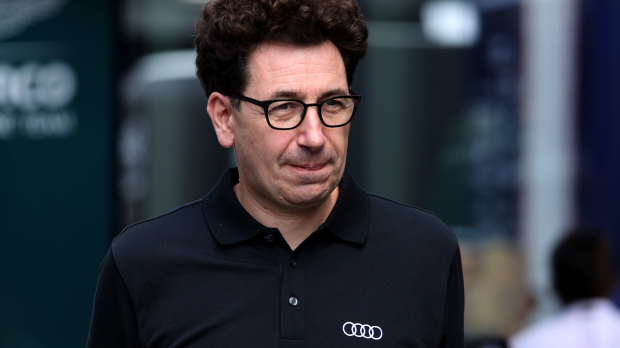
"It's possible, for example, that Mercedes had an engine with superior potential, but had no need to push it to the limit because it already had an advantage thanks to the car. If that were the case, it could have also gained additional development margin.
"That's why I think the regulation needs to be rethought in this regard. This wasn't the original intent of the ADUO: the goal was to help those who were actually falling behind, not to create situations in which the true potential of a power unit might be difficult to assess."
Later, Binotto clarified: "On the results, I'm not questioning the work done by the FIA. They have all the tools and data necessary to make their assessments, despite the limitations that any measurement system inevitably entails. However, I believe it's important to remember the original objective of the ADUO. When it was first discussed, the concept was that of a sort of safety net."
When contacted by GPFans, Mercedes revealed they 'agreed with Binotto’s central point that ADUO should be a safety net for manufacturers in trouble and not a system to be exploited for tactical advantage.'
Who is benefitting from ADUO?
In short, everyone other than Red Bull. Mercedes have received one homologation for being between two and four per cent behind Red Bull, while the other three power unit manufacturers get two homologations, including Audi, for being more than four per cent behind Red Bull.
However, whereas Ferrari are unlikely to get any more help following the next ADUO judgment after race 12, Aston Martin and Audi probably will, with those two power unit manufacturers still lagging behind the rest of their rivals.
This was the FIA's analysis after race six (the Monaco GP):
| Engine | Teams | Upgrades |
|---|---|---|
| Red Bull Powertrains | Red Bull, Racing Bulls | Benchmark |
| Mercedes | McLaren, Williams, Mercedes, Alpine | One Upgrade |
| Ferrari | Haas, Cadillac, Ferrari | Two Upgrades |
| Audi | Audi | Two Upgrades |
| Honda | Aston Martin | Two Upgrades |
F1 2026 Regulations: Every new rule and car change explained






 Grand Prix of Australia 2026
  Grand Prix of China 2026
  Grand Prix of Japan 2026
  Saudi Arabian Grand Prix 2026
  Miami Grand Prix 2026
  Grand Prix du Canada 2026
  Grand Prix De Monaco 2026
  Gran Premio de Barcelona-Catalunya 2026
  Grand Prix of Austria 2026
  Grand Prix of Belgium 2026
  Grand Prix of Hungary 2026
  Grand Prix of Italy 2026
  Grand Prix of Azerbaijan 2026
  Grand Prix of Bahrain 2026
  Grand Prix of Singapore 2026
  Gran Premio de la Ciudad de Mexico 2026
  Grande Prêmio de São Paulo 2026
  Qatar Grand Prix 2026
  Grand Prix of Abu Dhabi 2026