

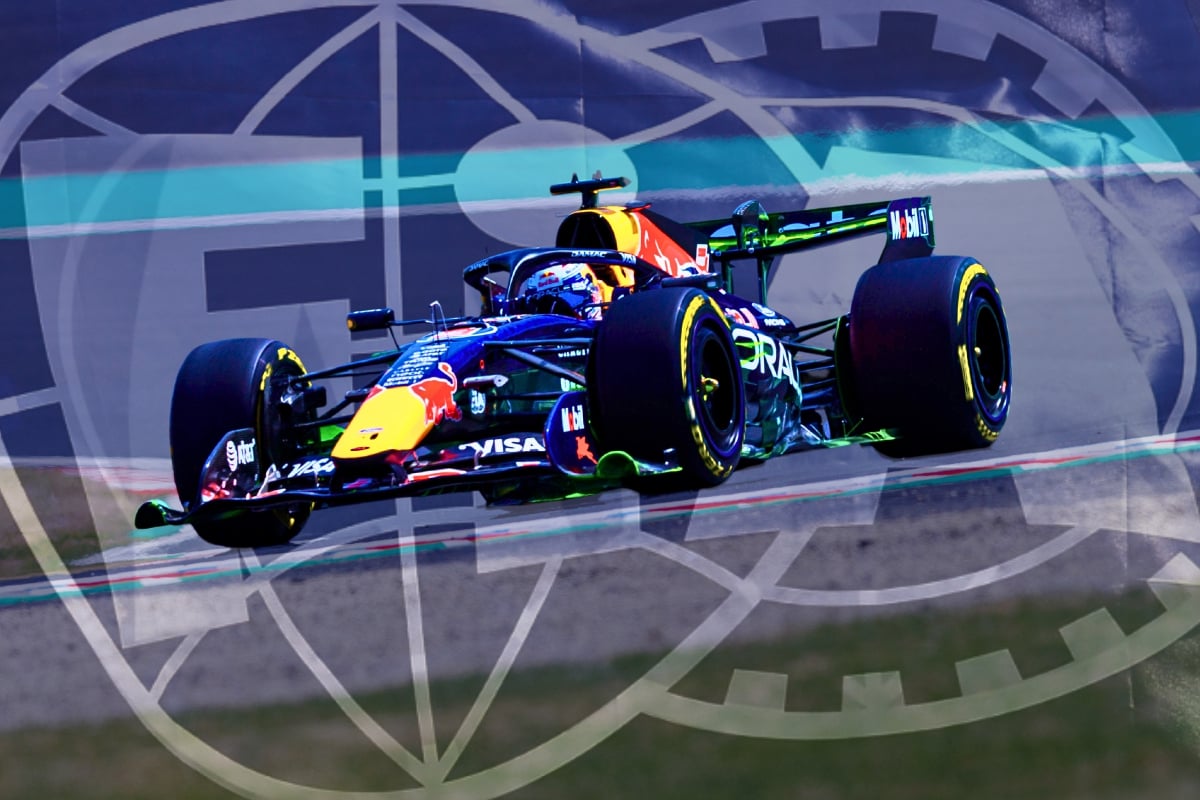

What is TPC in F1?
Everything you need to know about TPC

As the pinnacle of motorsport, Formula 1 showcases not just some of the finest engineering and racing talents in the world, but also reflects current trends in automotive consumerism.
Take the latest regulations for example. For 2026, the chassis and power unit rules in F1 have been completely overhauled with a much stronger focus on electrical energy.
The MGU-H has been removed from the power units entirely and instead, the MGU-K is now nearly three-times as powerful, something which largely contributed to Audi's decision to join the F1 circus, with the electrification of racing aligning with their corporate goal of achieving net-carbon neutrality.
The F1 2026 campaign welcomed the German giants to the grid, who took over the outfit formerly known as Sauber, whilst American constructors' Cadillac also joined the grid as a brand new competitor.
So how do new teams like Cadillac engage in TPC (Testing of Previous Cars) if they don't have any previous models to run?
Find out the answer to this and more below as GPFans explains everything you need to know about TPC in F1.
F1 COMMENTATORS: Meet the Sky Sports and Channel 4 teams including Martin Brundle, Naomi Schiff and Danica Patrick
What is TPC in F1?
TPC stands for Testing of Previous Cars and is an FIA-sanctioned method that F1 teams can use to allow additional testing to be done throughout a season, not just beforehand.
Every year before the F1 championship kicks off, a short period of pre-season testing takes place, usually across three days, and in recent years, at the Bahrain International Circuit.
However, when new regulations are introduced just like they were in 2026, this testing allowance is increased to accommodate to the increased learning time necessary for teams and drivers to get to grips with their new machinery.
But even with a total of nine days across the Barcelona shakedown and official pre-season testing in Bahrain in 2026, teams need further opportunities to continue testing for a number of reasons, and testing their previous cars instead of the latest model allows this without it impacting their current season.
What does the FIA say about TPC?
But TPC doesn't come without restrictions.
The FIA 2026 sporting regulations defines Testing of Previous Car as: "Any track running time, not part of a competition, in which a competitor entered in the championship participates (or in which a third party participates on behalf of a competitor or a supplier of a homologated power unit), using a previous car.
This means that when Cadillac, who use Ferrari power units, entered F1, they were able to use a Ferrari SF-23 at the Imola Circuit in Italy when Sergio Perez was tasked with preparing his new team for their F1 debut.
In the event of a team takeover (such as Sauber into Audi) the FIA have reportedly passed a mandate that means over the next two seasons, engine suppliers with expiring contracts must still make power units available for former customer outfits, to assist with the transition, as seen with Audi, who have become a works team.
The FIA 2026 sporting regulations states each competitor may complete a maximum of 20 days of TPC in each calendar year, with the mileage capped at 1,000km.
Teams may only use drivers entered in the championship, or which any competitor intends to enter in the championship, such distance being accumulated over a maximum of four of the days allowed, and TPC may only take place for a maximum continuous duration of nine hours between the times of 9am and 7pm on the agreed days.
If a driver is replaced at any time during the championship, their replacement will be deemed to be the original driver for the purposes of calculating TPC mileage.
Each competitor may not have more than one car available for the purpose of TPC and may not use more than one car for the purpose of TPC during any day of TPC.
TPC may only take place on circuits holding an FIA Grade 1 or FIA Grade 1T Circuit Licence, and may not take place on a circuit hosting a competition in the championship, with further restrictions set out in the FIA sporting regulations regarding the time of year such circuits can be used.
Why do F1 teams do TPC?
Testing wasn't always so restricted in F1. In fact, TPC wasn't introduced until the 2010s, with the modern rules around testing machinery that is at least two years old being adopted over the past couple of years.
Even if the cars are older and don't exactly provide an ideal set-up to learn about current models, additional testing time can help drivers who have recently switched teams to acclimatise to their new garage, team members, and methods of working.
It also provides great opportunities for rookie drivers to gain valuable experience at the wheel of F1 machinery, and in return, give up their time to provide F1 teams with more data, when stars like seven-time champion Lewis Hamilton may be busy with marketing duties or press responsibilities.
The only time outside of pre-season testing where teams are allowed to run their latest car is during a Pirelli tyre test or as part of a filming day for the purpose of marketing, but teams are still restricted to no more than 200km of running during these 'testing' days away from F1 championship race weekends.
F1 SCHEDULE: Every race date for 2026 plus TV details
Related
More F1 news




Recommended by the editors
 F1 News & Gossip
F1 and FIA called out over major failure during chaotic Malaysia GP delay
 Latest F1 News
Christian Horner reveals extraordinary reason given for Red Bull sacking
 Latest F1 News
Controversial F1 rule criticised by Max Verstappen helped him win Bahrain Grand Prix
 F1 News & Gossip
South Africa's F1 dream suffers devastating blow after Rwanda breakthrough







Races
-
 Grand Prix of Australia 2026
-
 Grand Prix of China 2026
-
 Grand Prix of Japan 2026
-
 Saudi Arabian Grand Prix 2026
-
 Miami Grand Prix 2026
-
 Grand Prix du Canada 2026
-
 Grand Prix De Monaco 2026
-
 Gran Premio de Barcelona-Catalunya 2026
-
 Grand Prix of Austria 2026
-
 Grand Prix of Great Britain 2026
-
 Grand Prix of Belgium 2026
-
 Grand Prix of Hungary 2026
-
 Dutch Grand Prix 2026
-
 Grand Prix of Italy 2026
-
Gran Premio de España 2026
-
 Grand Prix of Azerbaijan 2026
-
 Grand Prix of Bahrain 2026
-
 Grand Prix of Singapore 2026
-
Grand Prix of the United States 2026
-
 Gran Premio de la Ciudad de Mexico 2026
-
 Grande Prêmio de São Paulo 2026
-
Las Vegas Grand Prix 2026
-
 Qatar Grand Prix 2026
-
 Grand Prix of Abu Dhabi 2026
Follow us on your favorite social media channel
Editorial & corporate information

Avenue HQ
10–12 East Parade
Leeds
LS1 2BH
United Kingdom Regional correspondence
View contact page