



F1's V8 plan proves drivers have won FIA regulation argument
F1's V8 plan says plenty about the 2026 backlash

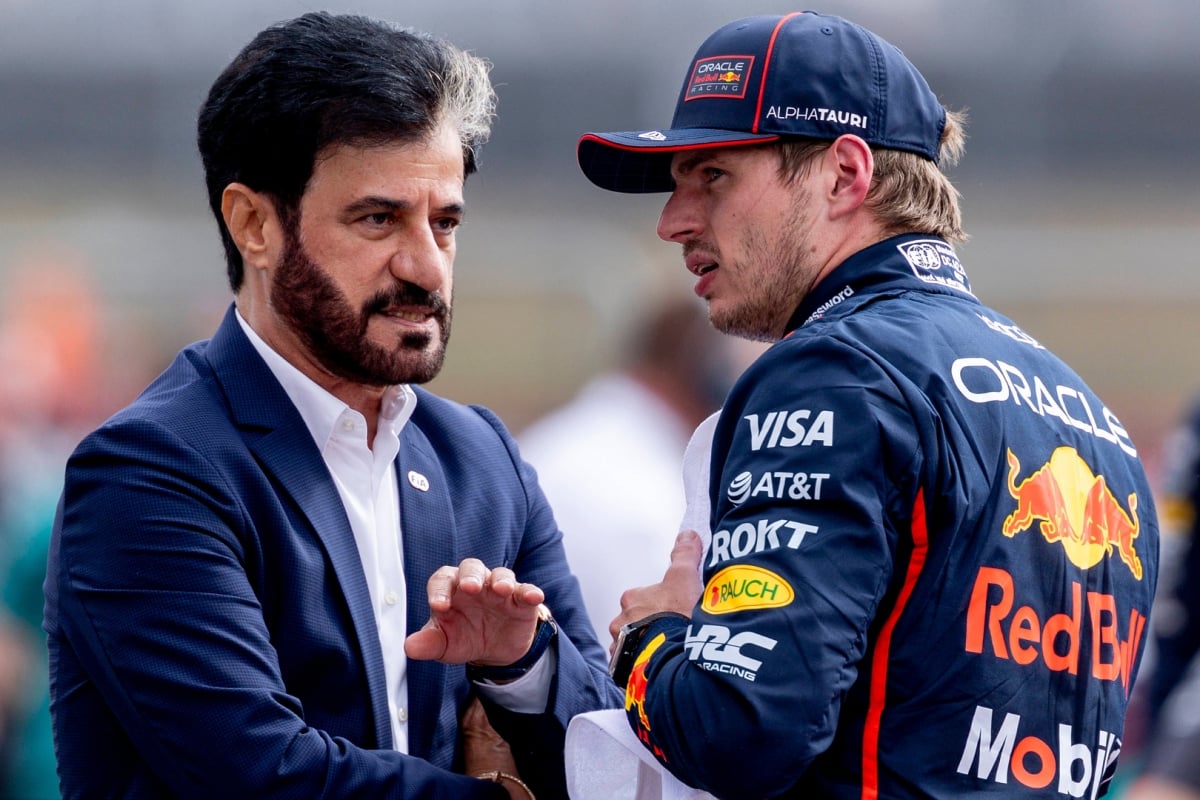
FIA president Mohammed Ben Sulayem has said the quiet part out loud.
After weeks of driver complaints, emergency tweaks, complex explanations and growing frustration around the 2026 regulations, the FIA is no longer simply talking about small fixes to the current F1 rulebook.
It is talking about V8 engines, more sound, less complexity, lighter cars and only minor electrification. In other words, it is talking about exactly the kind of direction drivers and fans have been pushing for.
READ MORE: Newey builds rocket ship faster than any F1 car - but Aston Martin cannot use it
FIA president confirms F1 V8 plan
Speaking during the Miami Grand Prix weekend, Ben Sulayem made clear that he expects V8 engines to return to Formula 1 by 2031 and possibly as early as 2030 if enough support can be found.
“It’s coming,” Ben Sulayem said. “At the end of the day, it’s a matter of time.”
F1 only introduced its current power unit concept this season, with the new regulations built around a far greater reliance on electric power, battery management and energy deployment. The early reaction, however, has been anything but smooth.
Drivers have repeatedly raised concerns about lift and coast, superclipping and the feeling that they are not always being rewarded for attacking a lap in the most natural way possible.
Ben Sulayem’s V8 push is not just nostalgia for a louder past. It is a response to a very modern problem.
The FIA president has spoken about reducing complexity, bringing back sound, cutting weight and moving towards a power unit with only minor electrification. A very different message to the one F1 has been selling.
READ MORE: Hamilton merely 'surviving' at Ferrari as F1 legend hit by chronic issue
Norris and Verstappen lead F1 driver backlash
Lando Norris has been one of the clearest voices on the issue, with the McLaren driver arguing that F1 still has not properly fixed the central problem with the new regulations.
“If you go flat-out everywhere and you try pushing like you were in previous years, you still just get penalised for it,” Norris said.
That line cuts through all the technical language. F1 can talk about recharge limits, superclip power and boost deployment, but if the drivers feel they are punished for driving flat out, then the sport has a serious issue.
“You just have to get rid of the battery," the McLaren star added. No punches pulled here.
That is not a request for a tiny adjustment to the software. It is a rejection of the balance F1 has chosen with this regulation cycle.
Max Verstappen has also made no secret of his frustration with the current direction of the sport, having previously compared the 2026 version of F1 to 'Formula E on steroids' and 'Mario Kart', threatening with a tongue lodged firmly in his cheek to replace his simulator with a Nintendo.
After the Miami tweaks were introduced, Verstappen still described the changes as a 'tickle', making clear that he did not believe they went far enough to restore the flat-out feeling drivers want.
READ MORE: Russell wants Mercedes review after Miami GP
Miami tweaks were sensible but not enough
To be fair to the FIA and F1, the Miami changes were not pointless.
The tweaks were designed to reduce excessive energy harvesting, make qualifying more consistently flat out and lower the dangerous speed differences between cars when one driver is deploying energy and another is trying to recover it.
The maximum permitted recharge in qualifying was reduced from 8MJ to 7MJ, while peak superclip power was increased from 250kW to 350kW. That was intended to reduce the time spent recharging and cut driver workload around energy management.
Those changes were sensible and there are very few people who did not enjoy watching the Miami GP.
They were, however, just patches.
They tried to make the 2026 concept work better, but they did not remove the thing drivers are actually complaining about. The issue is not simply that one setting is wrong, or that one number needs changing. The issue is that F1 has created a rule set where battery strategy and energy management is too central to the racing itself.
READ MORE: Alonso just dropped the coldest truth bomb on Aston Martin F1 project
F1's V8 discussion
The argument has moved. It is no longer just fans shouting about engine noise or drivers moaning after a bad weekend. The FIA president is pushing for a simpler engine direction, Verstappen wants V8s or V10s, Norris wants the battery gone and there are numerous other examples of drivers expressing their disdain at the state of racing in 2026.
F1 does not have to go backwards to admit it has gone too far in the wrong direction.
The future can still use sustainable fuels. It can still have some electrification. It can still be relevant without asking drivers to spend too much of a race thinking about battery deployment rather than attacking the car in front.
For years, drivers were told modern F1 had to be complex, hybrid-heavy and battery-led. Now the FIA president is talking about sound, simplicity and less complication.
That is not a full surrender, but it is the clearest sign yet that the drivers have won the argument. Let's hope action soon follows the talking.
F1 HEADLINES: Hamilton scares rival as Wolff fears Antonelli problem
Related
More F1 news
Latest F1 news

Recommended by the editors
 F1 Regulations
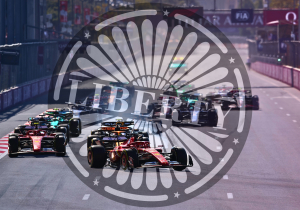
F1's V8 plan proves drivers have won FIA regulation argument
 Alpine F1
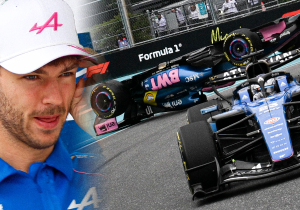
F1 team faces '$1.3m damage cost' after spectacular Miami Grand Prix crash
 Latest F1 News
FIA announce F1 2026 change which could hamper Mercedes title charge
 Lewis Hamilton
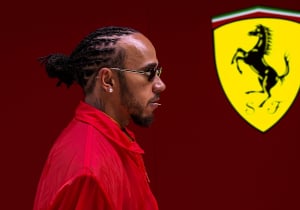
Lewis Hamilton coming to terms with Ferrari false dawn







Races
-
 Grand Prix of Australia 2026
-
 Grand Prix of China 2026
-
 Grand Prix of Japan 2026
-
 Grand Prix of Bahrain 2026
-
 Saudi Arabian Grand Prix 2026
-
 Miami Grand Prix 2026
-
 Grand Prix du Canada 2026
-
 Grand Prix De Monaco 2026
-
 Gran Premio de Barcelona-Catalunya 2026
-
 Grand Prix of Austria 2026
-
 Grand Prix of Great Britain 2026
-
 Grand Prix of Belgium 2026
-
 Grand Prix of Hungary 2026
-
 Dutch Grand Prix 2026
-
 Grand Prix of Italy 2026
-
Gran Premio de España 2026
-
 Grand Prix of Azerbaijan 2026
-
 Grand Prix of Singapore 2026
-
Grand Prix of the United States 2026
-
 Gran Premio de la Ciudad de Mexico 2026
-
 Grande Prêmio de São Paulo 2026
-
Las Vegas Grand Prix 2026
-
 Qatar Grand Prix 2026
-
 Grand Prix of Abu Dhabi 2026
Follow us on your favorite social media channel
Editorial & corporate information

Avenue HQ
10–12 East Parade
Leeds
LS1 2BH
United Kingdom Regional correspondence
View contact page