



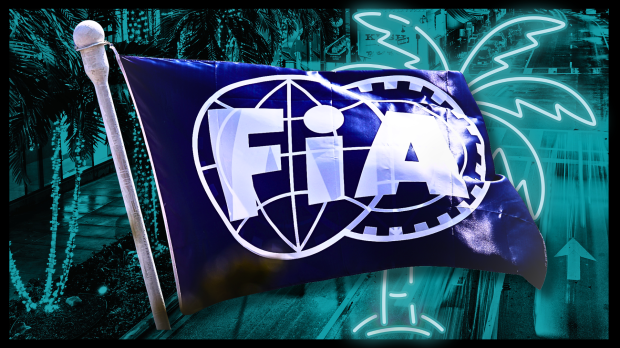

What F1 rules and regulations have the FIA changed at the Miami Grand Prix?
Explaining the F1 rule tweaks made by the FIA ahead of the Miami Grand Prix

After just three rounds into the 2026 season and new regulations, the FIA have introduced several tweaks to the F1 rules from the Miami Grand Prix onwards.
Following discussion between the FIA and the drivers, then with the sport's governing body and team executives, it was announced that a series of changes would be made to the rules ahead of the Miami GP.
In the wake of Ollie Bearman's crash at Suzuka some changes have been made in the interest of safety, while tweaks to qualifying have also been made in a bid to appease drivers who are unhappy about lifting and coasting or superclip into corners.
There have also been changes to the race-start and wet conditions, again taken to ensure safety in both scenarios.
Here is the full list of changes and the rules they are replacing.
READ MORE: Will Miami GP be cancelled? Lightning threat poses risk to F1 race
FIA make F1 rule changes ahead of Miami Grand Prix
Qualifying
For qualifying the energy management parameters have seen a reduction in maximum permitted recharge from 8MJ to 7MJ. In making this change, the aim is to reduce excessive harvesting and encourage flat-out racing. It also targets a maximum superclip duration reduced to approximately 2-4 seconds per lap.
If the FIA are concerned about excessive superclipping they can also set the recharge limit lower than 7MJ at 12 races, increased from the previous eight races.
In addition to reducing the permitted recharge, the peak superclip power has been increased to 350 kW, with it previously being 250kW. Increasing the rate of energy that can be recovered through superclipping by 100kW, should reduce the time spent recharging. This is because it should recharge the battery faster and therefore reduce the amount of time spent superclipping. The increased rate of energy should also eliminate the need to lift and coast on qualifying laps.
Race
The maximum power available through the Boost has now been capped at +150 kW, when previously it allowed drivers to access the full 350kW of the MGU-K at the push of a button. This has been introduced to limit dramatic speed differentials like those that caused Bearman's accident at Suzuka.
While the MGU-K deployment is maintained at 350kW in key acceleration zones, it has been limited to 250kW in other parts of the lap. Therefore, by reducing the deployment of electrical energy by 100kW where overtaking is less likely, it should reduce instances of those dramatic speed differentials.
However, because the 350kW is kept at more likely overtaking spots, such as the end of straights, the increased overtakes that we have seen this year will remain.
Race starts
The FIA have introduced a new 'low power start detection' system for the Miami Grand Prix onwards, which identifies cars with abnormally low acceleration shortly after clutch release. To help out, an automatic MGU-K deployment will be triggered to ensure a minimum level of acceleration. An associated visual warning system is also being introduced, activating flashing lights (rear and lateral) on affected cars to alert following drivers.
Prior to these changes, the MGU-K was not allowed to deploy any electrical power at a start until the car is above 50km/h. These changes have therefore been introduced to reduce start-related risks that could leave some cars stranded on the grid, while others approach a full-speed.
Alongside this on the starts, a reset of the energy counter at the start of the formation lap has also been implemented to correct a previously identified system inconsistency.
Previously, where you started on the grid dictated how much energy a driver could harvest on the formation lap. At the season opener in Melbourne, some drivers used up nearly all their battery warming their tyres on their way to the grid and then were left with little battery for the actual start.
Wet conditions
Alongside changes to the established rules, the FIA have also announce pre-emptive tweaks in regards to wet conditions.
They announced that: "Tyre blanket temperatures for intermediate tyres have been increased following driver feedback in order to improve initial grip and tyre performance in wet conditions.
"Maximum ERS deployment will be reduced, limiting torque and improving car control in low-grip conditions."
"The rear light systems have been simplified, with clearer and more consistent visual cues to improve visibility and reaction time for following drivers in poor conditions."
READ MORE: Hamilton handed Miami Grand Prix boost as Ferrari upgrades loom
Related
More F1 news
Latest F1 news

Recommended by the editors
 Latest F1 News
Ferrari F1 star set for grid penalty at next race in Azerbaijan
 F1 Analysis
The Monaco F1 sprint is a GOOD idea and here is why
 Latest F1 News
Fernando Alonso reveals 'shock' after finding out Aston Martin truth
 George Russell
Toto Wolff reveals huge truth about George Russell contract situation at Mercedes







Races
-
 Grand Prix of Australia 2026
-
 Grand Prix of China 2026
-
 Grand Prix of Japan 2026
-
 Saudi Arabian Grand Prix 2026
-
 Miami Grand Prix 2026
-
 Grand Prix du Canada 2026
-
 Grand Prix De Monaco 2026
-
 Gran Premio de Barcelona-Catalunya 2026
-
 Grand Prix of Austria 2026
-
 Grand Prix of Great Britain 2026
-
 Grand Prix of Belgium 2026
-
 Grand Prix of Hungary 2026
-
 Dutch Grand Prix 2026
-
 Grand Prix of Italy 2026
-
Gran Premio de España 2026
-
 Grand Prix of Azerbaijan 2026
-
 Grand Prix of Bahrain 2026
-
 Grand Prix of Singapore 2026
-
Grand Prix of the United States 2026
-
 Gran Premio de la Ciudad de Mexico 2026
-
 Grande Prêmio de São Paulo 2026
-
Las Vegas Grand Prix 2026
-
 Qatar Grand Prix 2026
-
 Grand Prix of Abu Dhabi 2026
Follow us on your favorite social media channel
Editorial & corporate information

Avenue HQ
10–12 East Parade
Leeds
LS1 2BH
United Kingdom Regional correspondence
View contact page