



F1 2026 Regulations Explained: Every new rule, car change and key questions answered
A complete guide to Formula 1’s sweeping new 2026 regulations

A new F1 era has begun with the 2026 season bringing changes to the sport we've never seen before.
Combining new chassis rules, overhauled power units, and a focus on closer racing, safety, and road‑relevant hybrid technology, expect to come across unfamiliar terms in 2026. It is literally a whole new world.
The new regulations are in place to promote more overtaking, a reduction of drag and nearing towards F1's goal of being Net Zero by 2030, with their more sustainable engines which in turn have appealed to power unit manufacturers Audi and Honda.
Here is everything you need to know about the 2026 cars, new rules and regulations.
F1 Engine Compression Ratio: What is it and why is it so controversial?
New car design and aerodynamics
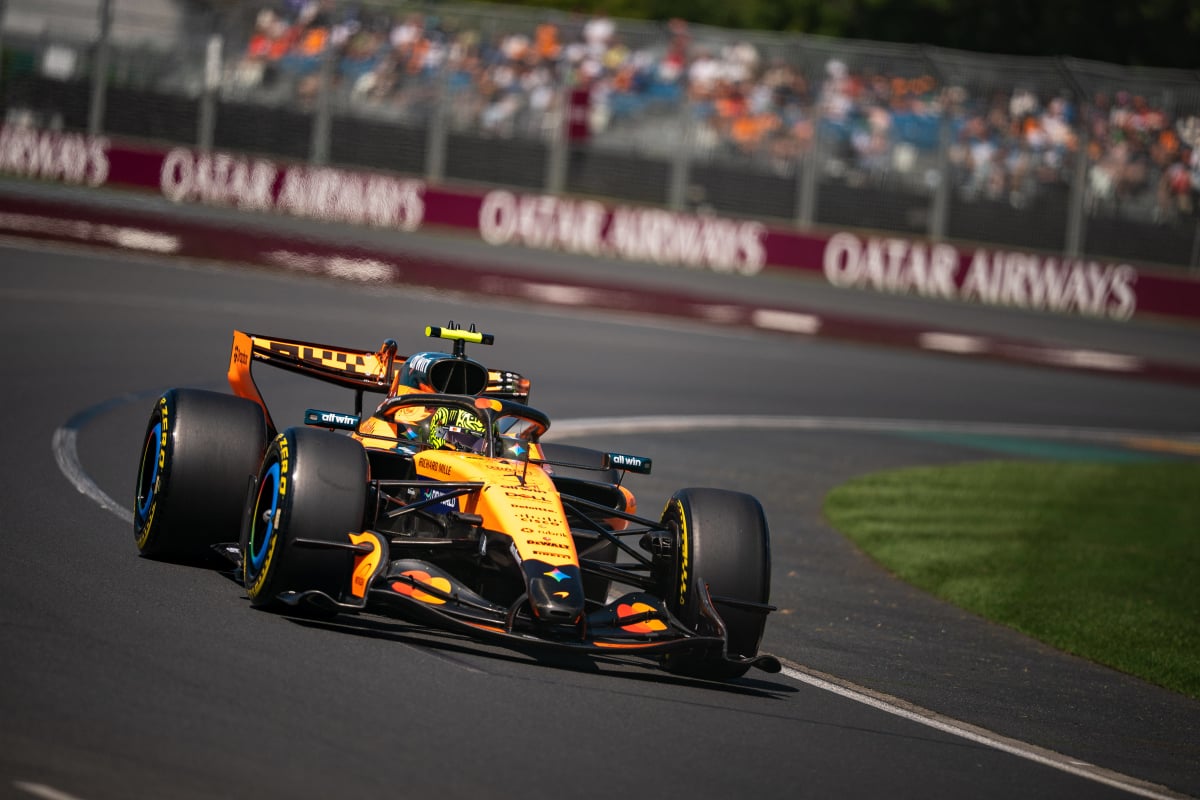
F1 cars in 2026 are smaller, narrower, more nimble and lighter, introduced to promote better racing, particularly around the narrower street circuits on the calendar such as Monaco and Singapore.
An F1 car in 2026 has a minimum weight of 768kg, without its fuel, with individual components of the car such as the floor and the wheelbase all being downsized.
But, you want cold hard numbers, let's move on to how much smaller the 2026 cars have become.
Lighter, smaller, more agile cars
The 2026 F1 cars are roughly 30kg lighter (with the minimum weight cut from 800kg to 768kg). In order to achieve this new car weight, the wheelbase of the cars have been reduced by 20cm and the car width has been reduced by 10cm.
The maximum floor width has also been reduced by 15cm, while the width of the front tyres have been decreased by 2.5cm and the rears by 3cm.
A narrower and smaller floor, with reduced ground‑effect tunnels, lowers downforce by about 15–30 per cent and overall drag by up to around 40–55 per cent, depending on the target.
Following the news that they would miss the Barcelona shakedown, it was rumoured the Williams car was significantly overweight, but managed to pass all tests to take part in subsequent tests in Bahrain.
Active Aerodynamics and “Z‑Mode / X‑Mode”
The Drag Reduction System (DRS) is gone for 2026, replaced by active front and rear wings that allow drivers to switch between two configurations.
These two configurations are Z‑Mode (Corner / High‑downforce) and X‑Mode (Straight / Low‑drag).
X or Straight-Mode sees both wing elements open to minimise drag and boost straight‑line speed, similar to DRS but can be used more flexibly.
Z or Corner-mode sees both wing elements close for maximum grip through corners.
Tyres, wheels and overall drag
Both the front and rear tyres are narrower for 2026, the front tyres have been decreased by 2.5cm and the rears by 3cm, but they will stay on the 18‑inch rim.
The 2026 aero package aims for much lower drag so cars can follow more closely and reach higher speeds on straights, all of which is meant to aid with overtaking.
However, drivers like Esteban Ocon have claimed that overtaking looks 'quite difficult on paper' in 2026.
Power unit changes for 2026
Alongside the aerodynamic changes, there have been major changes to F1 power units for 2026. This might be the most controversial area of all.
The new power units have angered no less than four-time world champion Max Verstappen, who likened F1 to 'Formula E on steroids' and claimed drivers will be forced into 'management'.
Verstappen also labelled the 2026 cars as his least favourite generation to drive, but nonetheless, the new power units have made great strides in sustainability.
Electrical power has tripled to an almost 50-50 split between the ICE, while the new power units will run on 100 per cent sustainable fuels.
50–50 Split Between ICE and Electric Power
The core 1.6‑litre V6 turbo is retained, but the power split shifts to roughly 50 per cent internal combustion and 50 per cent electric, up from an older ~80:20 ratio.
F1 has now aligned with road car trends, attracting brands such as Honda and Audi as power unit suppliers.
New MGU‑K and removal of MGU‑H
The MGU-H has been removed from F1 power units and instead everything is now concentrated on the MGU-K. The new MGU-K is three-times as powerful delivering 350kW to the rear wheels, up from 120kW.
It will recover energy at a greatly increased rate, notably when the car is braking, coasting and on the throttle.
So why was the MGU-H removed you might ask? The component was a very expensive piece of kit to produce and maintain throughout the season, and didn't actually produce particularly big gains in power output.
Sustainable fuel and energy management
F1 power units will run on 100 per cent sustainable fuels in 2026, as part of their goal to reach carbon neutrality by 2030.
During pre-season testing, there was an issue with Mercedes and Aston Martin, whose fuel suppliers Petronas and Aramco had not been approved by the FIA. However, ahead of the season-opening Australian Grand Prix it was confirmed Mercedes' fuel has been homologated.
Energy management will also be a major feature from this year, with the energy recovery system (ERS) within the power unit becoming even more important, and drivers having to manage their battery capacity.
The new ERS can harvest twice as much energy per lap as it could in 2025, helping to recharge the battery throughout the course of the lap, and can recharge the battery with up to 9MJ (megajoules) per lap, doubling the previous capacity.
Stricter energy‑management rules mean drivers must manage battery usage more carefully, especially in qualifying and during long straights.
The battery has been one of the prevailing issues for Aston Martin and Honda. Team principal Adrian Newey told the media in Melbourne that vibrations in the chassis were causing reliability problems and risking permanent nerve damage for drivers Fernando Alonso and Lance Stroll.
Overtaking and on‑track systems
New systems have been put in place to aid with overtaking in 2026, discarding DRS and introducing two major features.
The first of which, active aerodynamics, we have already covered with Straight-Mode and Corner-Mode.
Alongside these two modes, drivers will also have a manual override boost mode (Overtake Mode) available.
Manual Override Boost Mode (Within One Second)
The new 'Manual Override' system (or Overtake mode) gives drivers a short burst of extra battery power when they are within one second of the car ahead.
This is intended to help close gaps and create more overtaking without relying on a DRS‑style button only behind another car.
No DRS: How Active Aero changes the show
Because all cars can now use X‑Mode on straights, the aerodynamic advantage of the following car is reduced compared with DRS, which worries some teams about overtaking.
Pre‑season testing has already sparked debate over how easy it is to follow another car closely and pass without traditional DRS.
Safety and structural changes
As with any set of regulations, there also safety and structural changes to the new cars.
For 2026 this includes a strengthened roll hoop and nose structure, or the new 'hazard lights' that show ERS (Energy Recovery System) status.
Furthermore, simulations of the race start procedure during testing in Bahrain brought to light a major safety concern, which has been changed by the race director just in time for the Australian Grand Prix.
Stronger Roll Hoops and Nose Structure
The roll hoop must now withstand up to 20G instead of 16G, improving cockpit protection.
Similarly, the front nose uses a two‑stage impact structure to reduce the risk of secondary impacts and nose detachment.
Enhanced side intrusion and driver protection
The 2026 regulations also tighten side‑impact protection around the driver and fuel cell area.
New external lights show ERS (Energy Recovery System) status, similar to hazard lights on a road car, which helps drivers and marshals know if a car is live.
Race start procedure - a big deal in 2026
Concerns have been raised that Straight-Mode usage at the start could create dangerous closing speeds and increase the risk of collisions into Turn 1.
Furthermore, F1 teams were concerned about turbo lag, the delay between pressing the accelerator and receiving the extra power from the turbo, during the race start procedure.
To combat these issues the race director stated that Straight-Mode could not be used until after Turn 1, and five extra seconds have been given on a race start to spool the turbo up in Melbourne.
What stays the same (or only slightly different)?
The championship structure remains the same with a 24‑race calendar and six sprint‑format weekends largely unchanged in format.
Qualifying has received a slight tweak to reflect the 22 drivers on the grid. Q1 will decide the grid positions P17 to P22, Q2 will determine positions P11 to P16 and 10 drivers will continue to battle for for P1 to 10 in Q3.
Q3 will now last 13 minutes, instead of the customary 12 minute shootout for pole.
The points system, sporting penalties, and team‑ownership rules remain broadly similar, with only minor tweaks to clarify technical infringements.
Cadillac's Valtteri Bottas no longer had to serve a five-place grid penalty in Melbourne, due to changes in the rules with the penalty being awarded more than 12 months ago.
Key questions answered
1. What is replacing DRS in F1 2026?
While there is no direct replacement for DRS, Straight-Mode and the Manual Override boost (Overtake Mode) are its new counterparts.
When a driver is within one second of the car ahead, they can deploy extra power to help with overtaking. Whereas DRS was tied to specific zones, Overtake Mode can be used strategically, either all at once or spread across a lap.
Straight Mode will open the flap on the rear and front wings, engaging a low-drag mode, to reduce drag and increase top speed.
Boost mode also acts a driver-operated energy deployment tool drawn from the ERS, and at the push of a button, drivers receive combined power from the engine and battery, which can be used offensively or defensively.
2. Are the F1 2026 cars faster or slower?
Lap times are expected to remain broadly similar, but top speeds should increase due to lower drag, while cornering speeds may be slightly lower due to less downforce.
3. How will the 50–50 power split affect racing?
Drivers must manage a much more energy‑intensive MGU‑K, forcing drivers into lifting and coasting techniques during qualifying and the race.
F1 drivers will also have to be cautious on the throttle in slow sections, because a certain level of pedal demand could kickstart the MGU-K when you don't want to use battery energy.
4. Will overtaking be easier without DRS?
There isn't a concrete answer either way. One the one hand, overtaking should in theory be easier with the low drag mode. The 2026 cars are also designed to follow better in dirty air with the reduced dimensions and lower downforce.
On the other hand, Overtake Mode has its own drawbacks, with Ferrari's Charles Leclerc claiming that it comes with at the cost of depleting the battery. This then makes the driver an easy target to be repassed later in the lap.
5. Are the 2026 F1 cars safer?
With the stronger roll hoops, two‑stage nose, improved side‑impact protection, and ERS lights, the 2026 cars are designed to be safer.
F1 and the FIA are in constant dialogue with how to improve safety in the sport, as recently evidenced by tweaks to the start procedure.
For example, Straight Mode has been abandoned on the race start to lessen the risk of collisions into Turn 1.
6. Why are the cars lighter and smaller?
The 2026 F1 cars are lighter and smaller to provide greater agility, better‑quality racing and more sustainable development.
Reaching the 768kg minimum weight is difficult however, due to heavier engines, larger batteries and the cost of weight saving.
7. How do the new rules help road‑car technology?
The 50–50 ICE/electric split, simpler MGU‑K focus, and sustainable fuels also translate across to real‑world EV and hybrid road‑car R&D.
By prioritising electrification, efficiency and sustainability, brands such as Honda and Audi can carry across the innovative technology for their road car hybrid systems and sustainable fuels.
Conclusion: What the 2026 regulations mean for F1 fans
Lewis Hamilton previously stated that the new rules would be difficult for fans to understand. Despite that, the 2026 regulations could provide better racing, a reshuffle of the pecking order and a more competitive grid.
As we have already seen, Aston Martin have not responded positively to the new regulations and with it has come a major storyline that will rumble way deeper into 2026.
Only the first few races will be able to determine whether we'll see more overtaking, closer racing and the spectacle we were promised.
F1 SCHEDULE: Every race date for 2026 plus TV details
Related
More F1 news





Recommended by the editors
 F1 2026 Regulations
F1 2026 Regulations Explained: Every new rule, car change and key questions answered
 Aston Martin F1
Aston Martin F1 crisis: Adrian Newey unleashes Honda fury and reveals the shocking truth
 Australian Grand Prix
F1 Results Today: Mercedes fight back as Lewis Hamilton impresses for Ferrari
 F1 2026 Explained
F1 Explained: What is the 107% rule and will it KO Aston Martin at Australian Grand Prix?







Races
-
 Grand Prix of Australia 2026
-
 Grand Prix of China 2026
-
 Grand Prix of Japan 2026
-
 Grand Prix of Bahrain 2026
-
 Saudi Arabian Grand Prix 2026
-
 Miami Grand Prix 2026
-
 Grand Prix du Canada 2026
-
 Grand Prix De Monaco 2026
-
 Gran Premio de Barcelona-Catalunya 2026
-
 Grand Prix of Austria 2026
-
 Grand Prix of Great Britain 2026
-
 Grand Prix of Belgium 2026
-
 Grand Prix of Hungary 2026
-
 Dutch Grand Prix 2026
-
 Grand Prix of Italy 2026
-
Gran Premio de España 2026
-
 Grand Prix of Azerbaijan 2026
-
 Grand Prix of Singapore 2026
-
Grand Prix of the United States 2026
-
 Gran Premio de la Ciudad de Mexico 2026
-
 Grande Prêmio de São Paulo 2026
-
Las Vegas Grand Prix 2026
-
 Qatar Grand Prix 2026
-
 Grand Prix of Abu Dhabi 2026
Follow us on your favorite social media channel
Editorial & corporate information

Avenue HQ
10–12 East Parade
Leeds
LS1 2BH
United Kingdom Regional correspondence
View contact page