


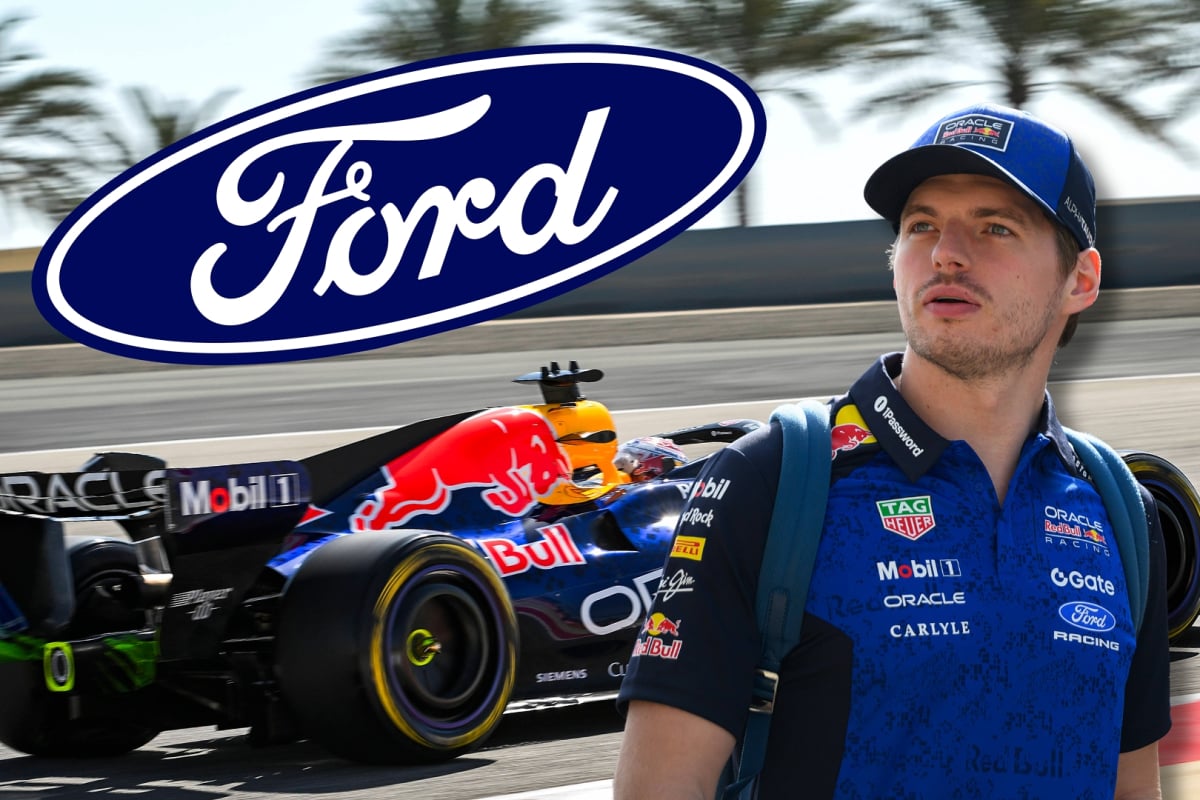

Ford chief issues update on Red Bull partnership after F1 power unit changes
Red Bull have begun a new era of power unit production alongside Ford

Ford Racing chief Mark Rushbrook has revealed an update on their partnership with Red Bull Racing, while also reacting to the new F1 power unit changes.
Ford began working with Red Bull ahead of this year's regulations overhaul, with Red Bull starting a new era of power unit production from 2026 onwards.
While Red Bull's new era has not got off to the best of starts (their best grand prix result so far is fifth), they are now an F1 power unit manufacturer, something which they believe will power them towards more long-term success.
The 2026 power unit regulation changes have been hit with mixed reviews, with the tripled emphasis on electrical energy leading to huge responsibility being placed on the drivers to manage their battery capacity, through things such as super clipping and lifting and coasting rather than going flat out.
While small tweaks have been made to the regulations in order to improve safety for the remainder of the 2026 season, more radical changes have been announced for 2027.
The FIA have confirmed that, from 2027, power from the internal combustion engine (ICE) will be increased by 50kW, while Energy Recovery System (ERS) deployment power will be reduced by 50kW.
Limiting the ERS deployment power should mean that drivers will not have to do quite so much harvesting of energy via means such as super clipping or lifting and coasting.
Ford Racing CEO Rushbrook has now welcomed those changes, while also reiterating his commitment to Red Bull's project.
"It’s stakeholders voicing their opinions, decision-makers making their decisions," Rushbrook told The Athletic. "But I think that is a good step to help the racing and the product on the track."
Rushbrook continued, revealing that Red Bull and Ford had achieved many of their early goals at the start of 2026, but 'want to continue working toward the very top' of the sport, with Mercedes currently the dominant outfit in F1.
"That’s what everyone wants, to be able to win races and championships," he continued. "We know it’s going to take a lot of work to get there. That’s part of why we partnered with Red Bull. They are racers, they’re committed to winning.
"Last year, what they showed, they were in a deficit, and they clawed back within two points of getting the championship for Max. We know it’s the right partner.
"We’re fully committed for all of our resources going to help that program."
F1 HEADLINES: Verstappen to Mercedes could fall apart as Russell behaviour called out
Will FIA return to V8s in the future?
One thing that Red Bull and Ford will be keeping a very close eye on is the potential for F1 to return to V8 engines from the 2030 season onwards.
FIA president Mohammed Ben Sulayem recently said that it is a possibility, claiming it was 'just a matter of time', and it's understood that they want to make a final decision on the 2030 regulations by this year's summer break.
With sustainable fuels proving to be a real success both in F1 and in road cars around the world, the FIA have hinted that F1 could soon head back to an era of V8 engines, but run on entirely sustainable fuels.
This means that we could have the iconic noise of F1 in years gone by, without hampering too much F1's goal of becoming carbon neutral by 2030 - although sustainable fuels are worse over the lifetime of a road car in terms of emissions than electric cars.
V8 technology previously swept into F1 in 2006, and lasted until 2013, before the hybrid power units took over.
The V6 turbo-hybrids which took over did not have the same noise that was so synonymous with F1, but did improve fuel efficiency and align with automotive industry trends at the time.
Automotive trends may well switch to sustainable fuels in the future, and F1 want to be ahead of the curve in that sense.
READ MORE: Bahrain & Saudi GPs could return this year in late F1 calendar swap
Related
More F1 news
Latest F1 news

Recommended by the editors
 Latest F1 News
Audi urged to make rapid improvements after 'embarrassing' F1 start
 Red Bull
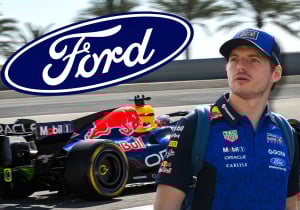
Ford chief issues update on Red Bull partnership after F1 power unit changes
 Aston Martin F1
Aston Martin fears revealed as F1 insider claims 'anyone I speak to looks depressed'
 Nurburgring 24 Hours
Max Verstappen mania hits the Nurburgring as historic ticket sales announced and fans warned







Races
-
 Grand Prix of Australia 2026
-
 Grand Prix of China 2026
-
 Grand Prix of Japan 2026
-
 Grand Prix of Bahrain 2026
-
 Saudi Arabian Grand Prix 2026
-
 Miami Grand Prix 2026
-
 Grand Prix du Canada 2026
-
 Grand Prix De Monaco 2026
-
 Gran Premio de Barcelona-Catalunya 2026
-
 Grand Prix of Austria 2026
-
 Grand Prix of Great Britain 2026
-
 Grand Prix of Belgium 2026
-
 Grand Prix of Hungary 2026
-
 Dutch Grand Prix 2026
-
 Grand Prix of Italy 2026
-
Gran Premio de España 2026
-
 Grand Prix of Azerbaijan 2026
-
 Grand Prix of Singapore 2026
-
Grand Prix of the United States 2026
-
 Gran Premio de la Ciudad de Mexico 2026
-
 Grande Prêmio de São Paulo 2026
-
Las Vegas Grand Prix 2026
-
 Qatar Grand Prix 2026
-
 Grand Prix of Abu Dhabi 2026
Follow us on your favorite social media channel
Editorial & corporate information

Avenue HQ
10–12 East Parade
Leeds
LS1 2BH
United Kingdom Regional correspondence
View contact page