
Every F1 driver to receive a race ban after Lando Norris FIA demand
Over the years, eight drivers have been forced to sit out races

Lando Norris' call for Franco Colapinto to be suspended by the FIA after the Azerbaijan Grand Prix got us thinking about which F1 stars have been banned from the sport before.
Over the years, several F1 drivers have been affected by differing degrees of suspension, with some of the greatest drivers that the sport has ever seen among the names forced to miss a race, or races, throughout the years.
Norris demanded Colapinto be the latest of them after that multi-car pileup in Baku that saw the Argentine driver take out the McLaren car on Saturday, as well as his Alpine team-mate Pierre Gasly.
The reigning F1 champion has since apologised for those comments, and Colapinto is only set to serve a five-place grid penalty in Malaysia this weekend. However, some drivers in the past did not escape so lightly.
F1 HEADLINES: Max Verstappen penalty claim disputed as champion issues official apology
Which F1 drivers have been banned from races?
Eddie Irvine, 1994
The most severe F1 ban ever handed out was to Eddie Irvine in 1994, forced to miss multiple races while driving for Jordan that year.
Irvine's punishment came after he caused a four-car collision at the season opener in Brazil, with the FIA initially banning him for one race.
However, after Jordan appealed, the FIA extended Irvine's ban to three races, with the Irishman going on to miss the Pacific, San Marino and Monaco Grands Prix.

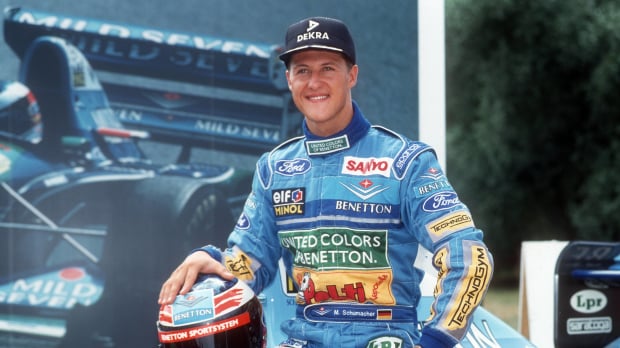
Michael Schumacher, 1994
While Irvine's punishment came as a result of an incident at the season opener in 1994, eventual seven-time F1 world champion Michael Schumacher would go on to receive punishment for an incident in the middle of that season.
Schumacher's initial crime was overtaking pole-sitter Damon Hill during the formation lap ahead of the British Grand Prix, but things escalated when Benetton argued with the FIA and the German failed to serve his five-second time penalty.
The FIA subsequently showed Schumacher a black flag, which he also initially ignored, before he then came into the pits and served his initial five-second penalty.
He went on to finish second on the track, but his disqualification was later confirmed for ignoring the black flag, and he was also banned for two races. Benetton appealed, meaning Schumacher raced at the German and Hungarian Grands Prix in the following weeks, but when that appeal was rejected, he was forced to sit out races in Monza and Estoril.
READ MORE: Fernando Alonso confirms F1 future as Aston Martin make major announcement
Nigel Mansell, 1989
Nigel Mansell is another F1 icon who found himself unable to take part in a grand prix during his career.
The incident in question this time came at the Portuguese Grand Prix in 1989, when Mansell, driving for Ferrari, overshot his pit box and reversed back into it, having been leading the race at the time.
The British star was shown the black flag as a result, but ignored it, eventually going on to collide with Ayrton Senna later in the race, taking both of them out of the grand prix.
The black flag meant he was disqualified in Estoril, and Mansell was subsequently handed a $50,000 fine and a one-race ban, forcing him to miss the following round of the season in Spain.

Mika Hakkinen, 1994
Something must have been in the air in F1 in 1994, with eventual two-time world champion Mika Hakkinen also being handed a race ban that season.
Hakkinen was initially handed a suspended one-race ban for three races after a collision with Rubens Barrichello at the British Grand Prix, but it was later activated when he caused a multi-car crash at the very next race in Germany.
The McLaren man was forced to miss the Hungarian Grand Prix as a consequence, much to Ron Dennis' (then McLaren chief) dismay.

READ MORE: Ferrari line up replacement for Lewis Hamilton boss accused of 'terrible relationship'
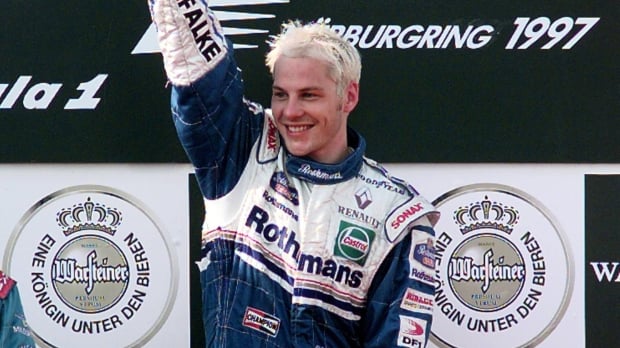
Jacques Villeneuve, 1997
Unfortunately, the list does not stop there. Later in the 90s, Jacques Villeneuve was also given a one-race suspension in the year that he won his F1 championship.
Villeneuve was one of five drivers given a suspended race ban for ignoring yellow flags at Suzuka in the penultimate race of that season after a crash for Jos Verstappen, but because he had already committed the same offence three times earlier, it was activated for the next event, which was that weekend's Japanese Grand Prix.
Williams appealed, and with no time to hold the hearing, Villeneuve still took part in the race. However, the appeal was later rejected, with the Canadian losing the two points he had picked up, leaving him trailing championship rival Michael Schumacher by one point heading into the season finale.
Villeneuve went on to win the title by three points in Jerez, so no harm done in the end.
Other F1 drivers to be banned
Three other F1 drivers have also found themselves forced to sit out of the action over a grand prix weekend.
Most recently, Kevin Magnussen was forced to miss the 2024 Azerbaijan Grand Prix in Baku after an incident at the Italian Grand Prix saw his penalty points total hit 12, resulting in an automatic suspension from the FIA.
12 years earlier, Romain Grosjean had found himself sitting on the sidelines for the 2012 Italian Grand Prix, having caused a massive multi-car pileup into turn one at Spa the round earlier.

Riccardo Patrese was also forced to miss the United States Grand Prix back in 1978, although he was not officially banned.
Instead, his missing a race came as a result of pressure from the drivers on the event organisers, with some of the sport's biggest stars at the time saying they would not race unless Patrese was suspended following a 10-car crash at the Italian Grand Prix, following which Ronnie Peterson later lost his life in hospital.
Several years later, in 1981, Patrese was legally cleared of being at fault for the crash, acquitted of manslaughter in a Milan court.
READ MORE: Shock Fernando Alonso claim made by former F1 team-mate - 'I was not allowed to beat him'




 Grand Prix of Australia 2026
 Grand Prix of China 2026
 Grand Prix of Japan 2026
 Saudi Arabian Grand Prix 2026
 Miami Grand Prix 2026
 Grand Prix du Canada 2026
 Grand Prix De Monaco 2026
 Gran Premio de Barcelona-Catalunya 2026
 Grand Prix of Austria 2026
 Grand Prix of Belgium 2026
 Grand Prix of Hungary 2026
 Grand Prix of Italy 2026
 Grand Prix of Azerbaijan 2026
 Grand Prix of Bahrain 2026
 Grand Prix of Singapore 2026
 Gran Premio de la Ciudad de Mexico 2026
 Grande Prêmio de São Paulo 2026
 Qatar Grand Prix 2026
 Grand Prix of Abu Dhabi 2026