
F1 is facing an existential crisis which could change the sport - and it's Donald Trump's fault
Some pretty substantial dominoes have fallen

Hey, isn't it weird that we don't know what the F1 calendar looks like for 2027 yet?
We can infer the broad strokes from history and contractual information - there will be a Vegas race towards the end of the year, we'll go to Brazil, China, Japan and Portugal, etc. - but information about the dates is just educated guesswork at this point.
We should be expecting to see the Abu Dhabi Grand Prix at the culmination of a 24-race calendar too, with the now-typical early season trips to Saudi Arabia and Bahrain. If you're good at reading between the lines, you'll probably have figured out where this is going by now.
The 2026 calendar was confirmed in early June of 2025. The 2025 calendar was out, astonishingly, in April. 2024, the start of July. The last time it took this long to confirm the calendar was the previous year, a year of reasonably major scheduling upheaval - adding two races, sorting the paperwork and scheduling for the first Las Vegas race, and more.
F1 HEADLINES: Max Verstappen unhappy after Monza and Red Bull star set to miss Spanish Grand Prix
Middle East conflict delaying F1 2027 calendar
So...what's taking so long this year? The calendar isn't expanding, and we know which 24 circuits are contracted to host races.
Obviously, although it's not been said outright, it's the same reason that we don't know where the 2026 season will finish.
Conflict in the Middle East has put a serious dent in F1's plans, with this year's Saudi race cancelled and the Bahrain weekend moved six months back and 6,000km southeast to Malaysia. Qatar and Abu Dhabi are widely expected to have their own races cancelled (the latter will likely go to Imola instead).
That's bad in the short term, obviously, but manageable. The good thing about the money Liberty Media has made in recent years is that they can eat a nightmare season like this one.
The concern is the medium to long term. The uncertainty surrounding the situation in the region, ignited when the US launched its war against Iran earlier his year, is producing ripple effects that could knock F1 off its axis for some time.
At this point, any 2027 calendar is likely to have a number of asterisks, visible or otherwise. The Race reports that F1's ideal scenario is a season-opening double-header in Bahrain and Saudi Arabia. As the state of the world sits at the moment, it would be absurd to commit fully to holding those March races.
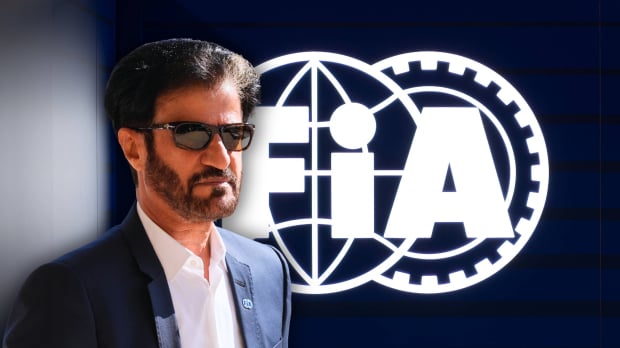
FIA president Mohammed Ben Sulayem recently told the AP that there is 'no emergency' over getting the 2027 calendar sorted - although organisers hoping to start selling tickets might disagree - and refused to even be drawn on cancelling the races set to be held less than three months from now.
"Being from that part of the world," he added, "we can't jump the gun and just say, 'That's it, we are canceling' and then cancel.
"Are we going to allow our people, our staff, the drivers or the teams to go at risk? No, of course not. We will not. But we'll have also to listen to the governments and to the local promoter there."
If the driving forces behind the war which is colouring F1's schedule decision-making were rational actors, then things might be easier. A simple 'yes, this war is probably going to last, don't hold the races' would actually be helpful at this point, albeit not as much as 'no, it's about to end, book the races'.
That's just not the case though. So much of this depends on the whims of a very unpredictable king in the White House. F1 can't plan around what America or Donald Trump are going to do, because Trump himself likely doesn't know. The answer to any question about what the US will do next in this war is 'it's pretty much impossible to know'.
Uncertainty could cost F1 hundreds of millions
Doubt around any given race on the F1 calendar is an issue for the sport, but the sport being unable to race in the Gulf states is a bigger existential issue than, say, Spa having to drop out at late notice.
Bahrain, Qatar, Abu Dhabi and Saudi Arabia are important races for the sport's balance sheet. They're paying tens of millions more than traditional European venues to host their races, and that's not including various sponsorship deals.
Are Aramco and Qatar Airways likely to maintain their substantial sponsorship deals if the sport is forced to move out of their home countries for an extended period of time? Will Gulf Air be the title sponsor of the Bahrain Grand Prix if it becomes the Malaysian Grand Prix for anything more than a stopgap?
The Saudi government has funded a new $480m track set to host its annual race from 2028, the Qiddiya Speed Park Track. If conflict continues and a Saudi race is impossible for, say, the next two years, or more, what happens to that ongoing project? If that turns into a $480m white elephant, how smooth are relations between F1 and those decision makers?
F1 is a sport which revolves around money, and it has done very well for itself out of the Middle East in recent years. If the rug is fully snatched from under them by a war-loving American president's long-term continuation of hostilities in the region, it is going to hurt, a lot.
As Stefano Domenicali has been keen to point out, viewership and the sport's bottom line haven't really been impacted by high-profile complaints about the new regulations brought in for 2026, and the new style of racing. As much as those regulations have been touted as a danger for the sport's future, the numbers suggest that those concerns are at least somewhat overblown.
A threat to four of the highest-paying F1 races on the calendar is an order of magnitude more important. Domenicali, the race organisers and the FIA will move heaven and earth to try to make at least some of them viable, because they know just how much of a difference that money makes.
Don't believe that? It's pretty much what Domenicali said himself less than five years ago when quizzed by the BBC about bringing races to Qatar and Saudi Arabia despite human rights concerns - denying that the sport 'needed' the race fees as it recovered the Covid-19 pandemic, but saying: "Money is part of the business, and you don't have to forget that without big investments you can't develop the business.
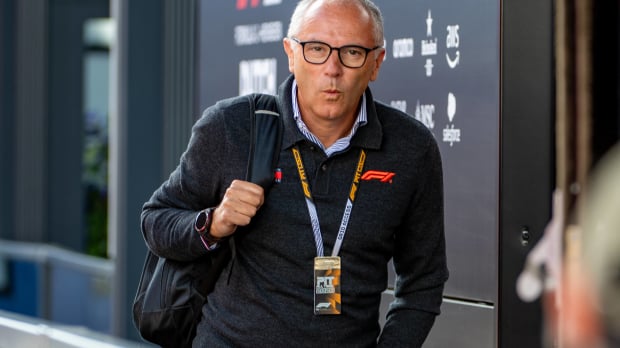
"That is one thing we sometimes forget - the investments certain countries are putting into our business will be beneficial to all other people and all other countries."
F1 has reaped a lot of financial benefit from its rapid expansion into the Middle East. It might be about to see the other side of that coin staring it in the face.
READ MORE: Ferrari have blown it again, only Horner can fix this mess and the Hamilton problem




 Grand Prix of Australia 2026
  Grand Prix of China 2026
  Grand Prix of Japan 2026
  Saudi Arabian Grand Prix 2026
  Miami Grand Prix 2026
  Grand Prix du Canada 2026
  Grand Prix De Monaco 2026
  Gran Premio de Barcelona-Catalunya 2026
  Grand Prix of Austria 2026
  Grand Prix of Belgium 2026
  Grand Prix of Hungary 2026
  Grand Prix of Italy 2026
  Grand Prix of Azerbaijan 2026
  Grand Prix of Bahrain 2026
  Grand Prix of Singapore 2026
  Gran Premio de la Ciudad de Mexico 2026
  Grande Prêmio de São Paulo 2026
  Qatar Grand Prix 2026
  Grand Prix of Abu Dhabi 2026