



F1 Explained: How does qualifying work?
Here's all you need to know about qualifying sessions in Formula 1
Qualifying in Formula 1 determines the starting order for the race, making it a vital piece of the grand prix puzzle.
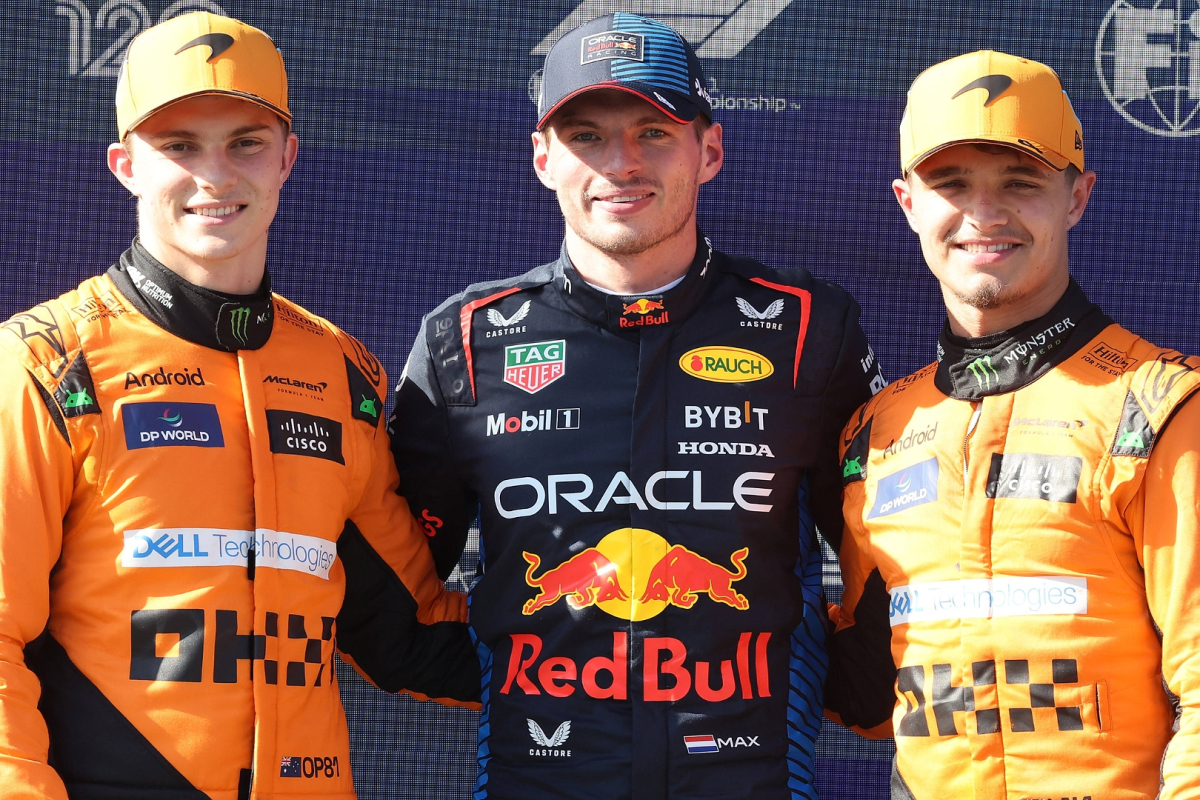
Qualifying is a high-pressure showdown in which drivers put it all on the line over one hour on Saturday (or a Friday in Las Vegas) to set the fastest lap and secure the coveted pole position.
Here's a breakdown of everything you need to know about the all-important session, from the knockout format to the 107% rule.
READ MORE: F1 Explained: What is a pit stop and how does it work?
What is Qualifying in F1?
Qualifying is a three-part knockout session held on Saturday afternoon, with each part progressively eliminating drivers until the top ten battle it out for the coveted pole position - the first place on the starting grid.
These three segments are known as Q1, Q2, and Q3, each lasting a designated period. Teams have free choice over which tyres they use throughout the qualifying, and there's also no specific number of laps a driver must complete, but the objective is to secure the fastest possible lap time within the session's timeframe.
In each session, drivers take to the track for an 'out-lap' to warm their tyres and brakes before attempting their fastest lap, known as the 'hot lap' or the 'flying lap.'
After pushing the limits for a flying lap, they go for a cool-down lap known as 'in-lap' before returning to the pits.
READ MORE: F1 Explained: What is an out lap, a hot lap and an in lap?
The three stages of qualifying - Q1, Q2 and Q3
Qualifying kicks off with Q1, an 18-minute frenzy where all 20 drivers participate. The five slowest drivers based on their lap times get eliminated and will start the race from 16th to 20th position.
The remaining 15 drivers progress to Q2, another 15-minute session where the stakes are even higher. The bottom five from Q2 are then eliminated and will occupy grid positions 11th to 15th.
Finally, the top 10 drivers enter the all-important Q3, a tense 12-minute shootout. Drivers fight tooth and nail for that coveted pole position, and whoever sets the fastest lap time starts the race from the front of the grid, unless they are hit with a grid penalty - a pre-race punishment that forces drivers to start lower than their qualifying position.
While securing a pole position isn't a sure-fire way to win a race, as weather, strategies, and accidents can all shake things up, it's especially important on tracks where overtaking is nearly impossible.
The 2024 Monaco GP was the first time in F1 history that the top 10 finished in the same order they started, with Ferrari's Charles Leclerc leading the way to secure a long-awaited victory in front of his home crowd.
READ MORE: F1 Penalties Explained: What are they and how do drivers get banned?
107% rule
The 107% rule was introduced back in 1996 to ensure that each car or driver is fast enough to compete in Sunday's race.
The reason for this is to prevent dangerous situations that could arise from having cars with vastly different speeds on the track, especially in situations when slower cars are lapped by faster ones.
The rule says that a driver must set a lap time within 107% of the fastest time in the first qualifying session (Q1). If they fail to do so, they won't be eligible to participate in the race.
However, this rule doesn't apply when the race director announces a wet track, as the conditions of the track can hugely impact lap times and performance.
READ MORE: F1 Explained: What exactly is the 107% rule?
Qualifying for sprints
Six grand prix weekends this season have adopted the sprint format, which was introduced back in 2021.
F1 tweaked the format for 2024, with sprint qualifying, which decides the starting grid for the sprint race, moving to Friday following the only free practice session of the weekend.
The sprint itself will follow on Saturday, after which we will see the familiar grand prix qualifying session set the grid for the main event on Sunday.
The sprint qualifying format mirrors the traditional one, with reduced session lengths. SQ1 clocks in at 12 minutes, followed by a 10-minute SQ2. The final showdown, SQ3, lasts just eight minutes.
READ MORE: F1 sprint races: How do they work and what are the changes for 2024?
Related
More F1 news
Latest F1 news


Recommended by the editors
 Latest F1 News
Mercedes F1 chief Toto Wolff calls lawyer over Monaco GP penalty controversy
 Barcelona Grand Prix
F1 Results Today: Barcelona Grand Prix practice times and positions
 Latest F1 News
Monaco Grand Prix result could change YET AGAIN as rival F1 teams set to appeal
 F1 Standings
F1 Standings after Monaco Grand Prix result changed AGAIN and Lewis Hamilton's big move







Races
-
 Grand Prix of Australia 2026
-
 Grand Prix of China 2026
-
 Grand Prix of Japan 2026
-
 Grand Prix of Bahrain 2026
-
 Saudi Arabian Grand Prix 2026
-
 Miami Grand Prix 2026
-
 Grand Prix du Canada 2026
-
 Grand Prix De Monaco 2026
-
 Gran Premio de Barcelona-Catalunya 2026
-
 Grand Prix of Austria 2026
-
 Grand Prix of Great Britain 2026
-
 Grand Prix of Belgium 2026
-
 Grand Prix of Hungary 2026
-
 Dutch Grand Prix 2026
-
 Grand Prix of Italy 2026
-
Gran Premio de España 2026
-
 Grand Prix of Azerbaijan 2026
-
 Grand Prix of Singapore 2026
-
Grand Prix of the United States 2026
-
 Gran Premio de la Ciudad de Mexico 2026
-
 Grande Prêmio de São Paulo 2026
-
Las Vegas Grand Prix 2026
-
 Qatar Grand Prix 2026
-
 Grand Prix of Abu Dhabi 2026
Follow us on your favorite social media channel
Editorial & corporate information

Avenue HQ
10–12 East Parade
Leeds
LS1 2BH
United Kingdom Regional correspondence
View contact page