



F1’s new cars in 2026 are how much slower? Australian Grand Prix confirms the brutal truth
The timesheets at Albert Park in Melbourne provided a stark comparison to 2025

F1’s new era has properly arrived now in 2026, and already the sweeping regulation changes (you can read all about them here) have had a massive impact on the sport.
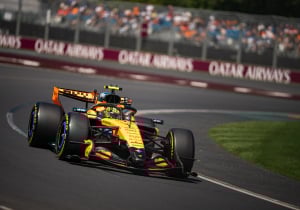
After pre-season testing and all the talk of ‘sandbagging season’, we got the brutal truth in Australian Grand Prix Qualifying at Albert Park in Melbourne on Saturday. These new cars are not only difficult to drive, they are also sooooooo slow…
The last set of new regs were ushered in for the 2022 season, and after that the cars were gradually honed to such an extent that 2025 hit new peaks for speed on track. And the gaps between the teams were tighter than ever. Spectacular action at times.
2026 though, initially at least, appears unlikely to deliver either lightning-fast times or incredible racing. The cars are much slower, and Mercedes (for now) are miles in front of everybody else.
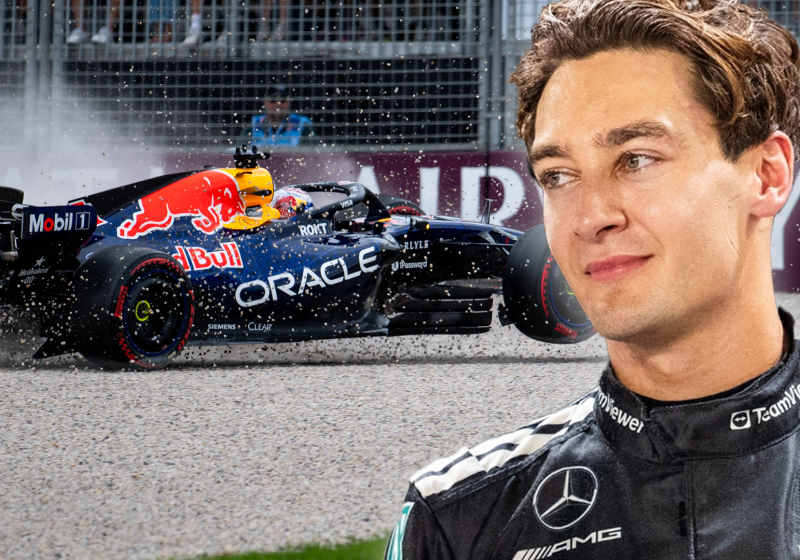
READ MORE: Verstappen CRASHES OUT of Australian Grand Prix qualifying
Are F1 2026 cars slower?
You bet they are, and Qualifying in Melbourne on Saturday gave us the cold, hard evidence to know just how much slower.
The fastest lap ever at this iconic street circuit was set by reigning world champion Lando Norris in his McLaren last year. His blistering pole run in Q3 stopped the clock at 1:15.096.
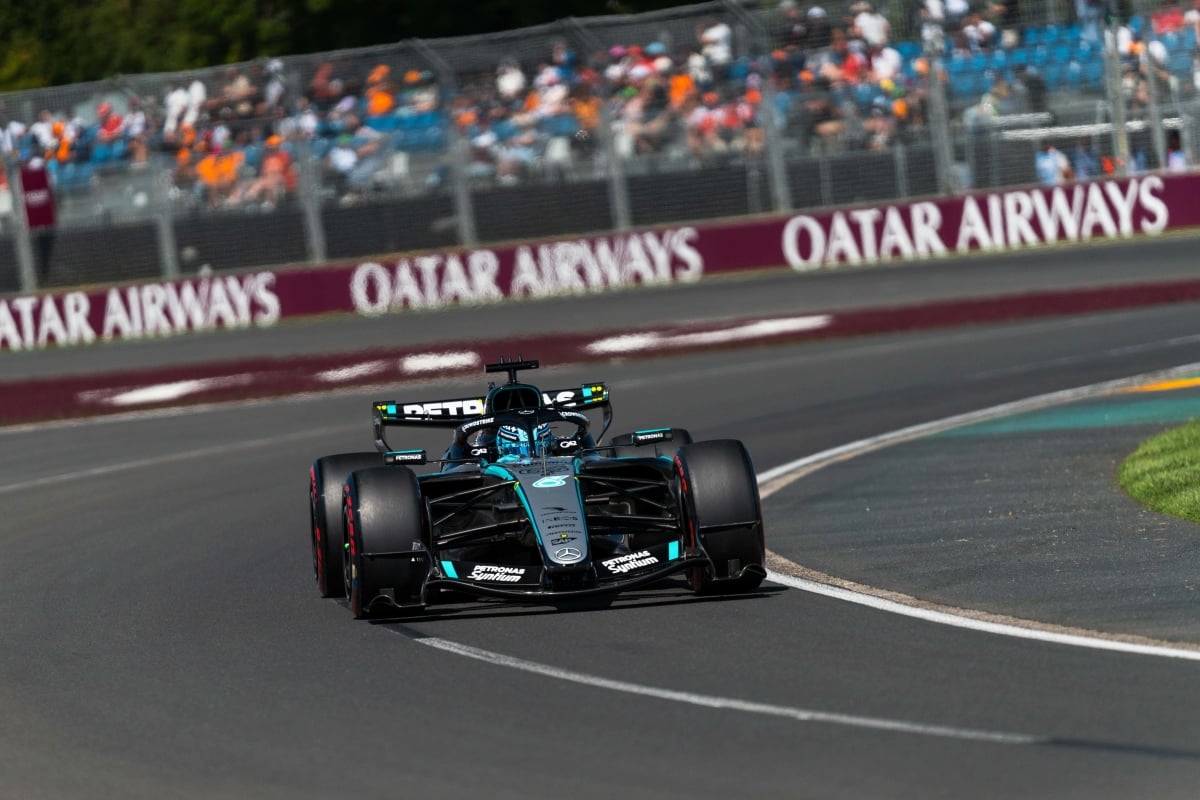
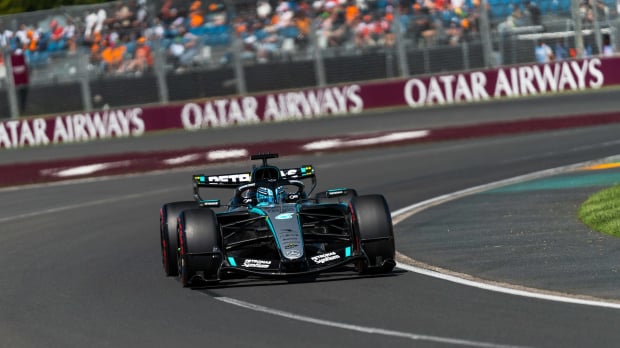
On Saturday Down Under it was George Russell providing a peerless pole lap in his Mercedes, but the difference to last year’s pole time was stark. Russell clocked 1:18.518, well over 3 seconds slower than Norris in 2025.
The gaps between cars were also so much bigger than 2025, when less than a second separated the 10 drivers in the shootout for pole. This year it was almost 3 seconds.
Check out the comparisons between 2026 and 2025 right here:
| Position | Driver | Team | Time |
|---|---|---|---|
| 1 | George Russell | Mercedes | 1:18.518 |
| 2 | Kimi Antonelli | Mercedes | +0.293 |
| 3 | Isack Hadjar | Red Bull Racing | +0.785 |
| 4 | Charles Leclerc | Ferrari | +0.809 |
| 5 | Oscar Piastri | McLaren | +0.862 |
| 6 | Lando Norris | McLaren | +0.957 |
| 7 | Lewis Hamilton | Ferrari | +0.960 |
| 8 | Liam Lawson | Racing Bulls | +1.476 |
| 9 | Arvid Lindblad | Racing Bulls | +2.729 |
| 10 | Gabriel Bortoleto | Audi | No time |
| Position | Driver | Team | Time |
|---|---|---|---|
| 1 | Lando Norris | McLaren | 1:15.096 |
| 2 | Oscar Piastri | McLaren | +0.084 |
| 3 | Max Verstappen | Red Bull | +0.385 |
| 4 | George Russell | Mercedes | +0.450 |
| 5 | Yuki Tsunoda | Racing Bulls | +0.574 |
| 6 | Alex Albon | Williams | +0.641 |
| 7 | Charles Leclerc | Ferrari | +0.659 |
| 8 | Lewis Hamilton | Ferrari | +0.877 |
| 9 | Pierre Gasly | Alpine | +0.884 |
| 10 | Carlos Sainz | Williams | +0.966 |
Are Mercedes really unbeatable in 2026?
On Saturday in Melbourne it appeared to be very much that way as Russell claimed pole, a massive 0.785 seconds clear of the nearest rival team (Isack Hadjar for Red Bull). But there are two reasons for hope for fans of rival teams.
For Sunday’s race in Melbourne the big remaining question mark against Mercedes will be reliability. We still do not truly know how these cars will perform in full race trim for 58 laps in the pressure cooker of an actual F1 race.
Looking ahead, June 1 looms large as a key date in your calendars. This is when Mercedes’ alleged engine compression ratio advantage may be nullified by another planned rule change. This time it’s a new and unplanned change, lobbied for by the other teams.
So there is hope (unless you are a Mercedes fan) that this will NOT be a cakewalk for Russell and team-mate Kimi Antonelli. But you may have to wait a little while.
Do the drivers like the 2026 cars?
The answer quite simply is, not so much. The most outspoken critic has been four-time world champion Max Verstappen, who said the job is now more about ‘management’ than trying to go really fast and compared it to ‘Formula E on steroids’. Ouch.
Lewis Hamilton meanwhile believes fans would need a university degree to understand the complex new regulations, while Esteban Ocon mooted the grim possibility of drivers having to lift and coast on a qualifying lap.
These soundbites all produced massive adverse publicity for F1 - nobody likes their glossy new product to be trashed before it even hits a racetrack in proper competition.
Will things get better?
Unquestionably yes. This is the first race of a new regulations set - probably the most sweeping change the sport has ever known.
In the coming months cars will be fine-tuned and teams and drivers will understand the cars even better. The cars will get faster and the racing (we hope) will get tighter.
This is revolution, followed by evolution.
F1 HEADLINES: Newey reveals the shocking truth as FIA announce last-minute U-turn
Related
More F1 news
Latest F1 news


Recommended by the editors
 F1 2026
F1’s new cars in 2026 are how much slower? Australian Grand Prix confirms the brutal truth
 F1 Explained
F1 Engine Compression Ratio - What is it and why is it so controversial?
 F1 on TV
F1 on Apple TV: 2026 Presenter lineup and how to watch the Australian Grand Prix FREE
 F1 2026 Regulations
F1 2026 Regulations Explained: Every new rule, car change and key questions answered







Races
-
 Grand Prix of Australia 2026
-
 Grand Prix of China 2026
-
 Grand Prix of Japan 2026
-
 Grand Prix of Bahrain 2026
-
 Saudi Arabian Grand Prix 2026
-
 Miami Grand Prix 2026
-
 Grand Prix du Canada 2026
-
 Grand Prix De Monaco 2026
-
 Gran Premio de Barcelona-Catalunya 2026
-
 Grand Prix of Austria 2026
-
 Grand Prix of Great Britain 2026
-
 Grand Prix of Belgium 2026
-
 Grand Prix of Hungary 2026
-
 Dutch Grand Prix 2026
-
 Grand Prix of Italy 2026
-
Gran Premio de España 2026
-
 Grand Prix of Azerbaijan 2026
-
 Grand Prix of Singapore 2026
-
Grand Prix of the United States 2026
-
 Gran Premio de la Ciudad de Mexico 2026
-
 Grande Prêmio de São Paulo 2026
-
Las Vegas Grand Prix 2026
-
 Qatar Grand Prix 2026
-
 Grand Prix of Abu Dhabi 2026
Follow us on your favorite social media channel
Editorial & corporate information

Avenue HQ
10–12 East Parade
Leeds
LS1 2BH
United Kingdom Regional correspondence
View contact page