


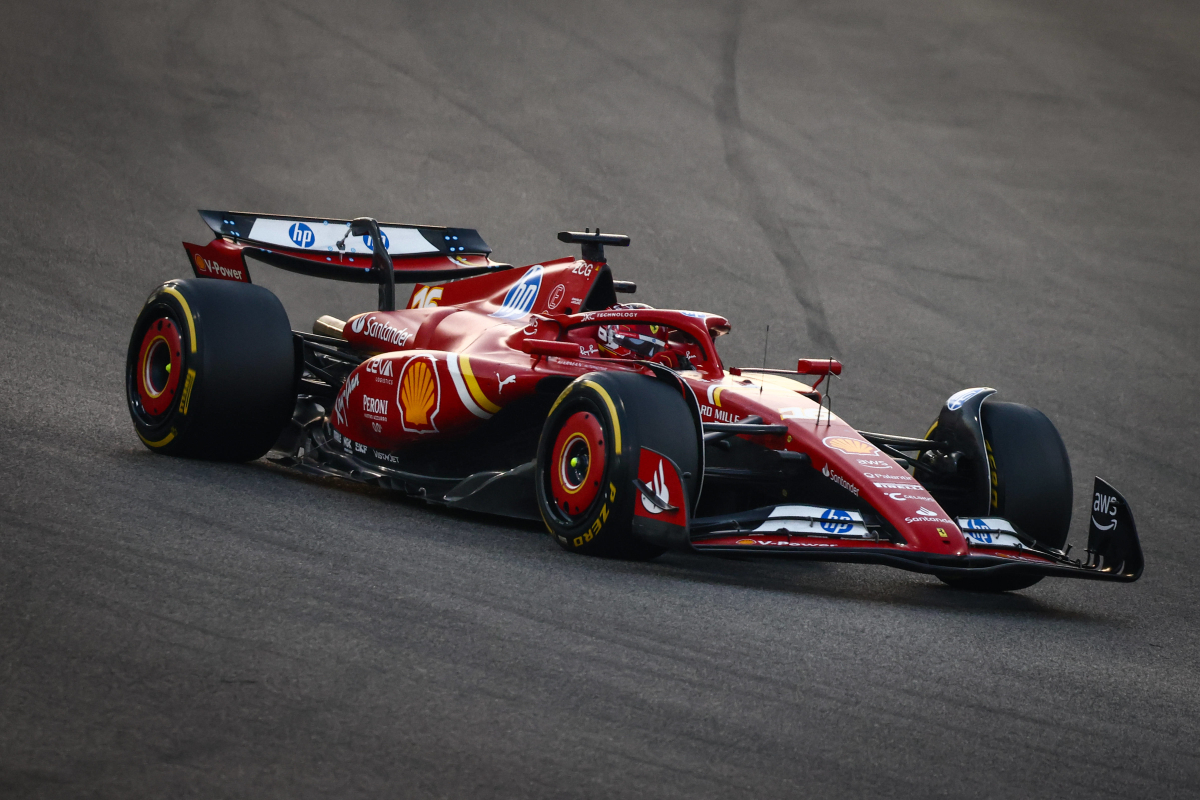

Why are Ferrari advertising this product after F1 ban?
Ferrari's new racesuit opened Pandora's box...well, at least for me

Ferrari's 2026 racesuit reveal has sent me down a rabbit hole, consisting of academic papers, retro liveries and 'Big Tobacco' companies. Not their intended consequence, I'm sure.
While the rest of the F1 fanbase were busy gushing over Lewis Hamilton and Charles Leclerc's 'aura' (yet another word social media has desecrated with banal overuse), one X account delivered an astute observation about one of their sponsors.
Tucked away, on the right-hand side of Hamilton's chest, were the white letters ZYN. For those of you who have tried to quit smoking, you will know that those three letters are the name of a nicotine pouch brand.
Nicotine! Wait, a god damn minute! Why on earth are F1 teams allowed to advertise an addictive substance? Wasn't there a ban on such things?
Sure, we all remember — and secretly hanker after — stylish cigarette and tobacco branding from teams and their cars. Marlboro McLaren. Rothmans Williams. Jordan Benson & Hedges, to mention a few.
The proof is in the proverbial pudding as to why tobacco and F1 were such a successful partnership. From branding alone, images of the red and white Marlboro McLaren still endure 30 years later, and Rothmans Williams jackets are remain highly sought after garments on second-hand marketplaces.
More than just a nostalgia trip, however, tobacco and F1 were often a stylish coupling, tapping into that glamorous machismo that came hand-in-hand with the sport; but more importantly it made serious money - and still does today.
Tobacco and F1: A history still relevant today
According to STOP — a global tobacco industry watchdog — F1 has made an estimated $4.5 billion to date from tobacco companies. Far from being an archaic phenomenon of the late 20th century, F1 continues to profit off sponsorship from the tobacco industry.
Philip Morris International (PMI) and British American Tobacco (BAT) spent an estimated $105 million on F1 sponsorship in the 2021 season. Likewise, $30 million was spent by BAT in 2020, which earned an estimated $54 million in onscreen exposure for its brands. Surprising, considering the transformation in attitudes to tobacco in the 21st century.
The tobacco industry were delivered a serious blow in 2002, following the introduction of the Tobacco Advertising and Promotion Act, which then led to a ban on advertising at sporting events in 2005 within both the UK and the EU.
So, while you won't see Lando Norris with a pouch of Pall Mall or Lewis Hamilton having a cheeky puff of a straight in the paddock, tobacco companies continue to maintain an advertising presence on the F1 grid.
Let's start with Philip Morris International. One of the 'Big Tobacco' giants and largest tobacco companies in the world, the company has produced cigarettes and tobacco since 1847.
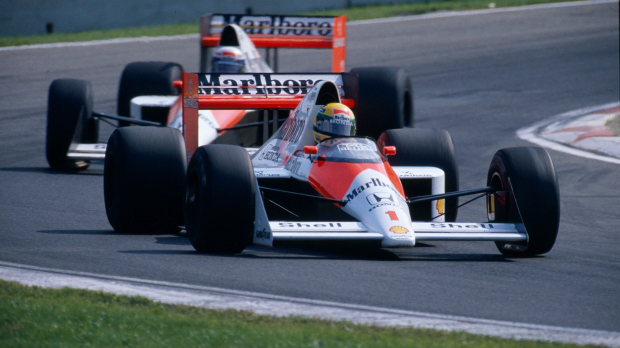
PMI began its relationship with F1 in 1972, with the Marlboro brand enduring throughout the century (at both McLaren and Ferrari) until the advertising ban saw those iconic eight-letters disappear altogether. Nevertheless, PMI retained promotional rights and used Ferrari drivers and cars to advertise tobacco products in regions where it remained legal.
PMI branding returned to Ferrari in 2018 through their brand 'Mission Winnow', an attempt from the company to embrace a 'smoke-free future' and its transformation in terms of science and technology, but importantly not being used to promote any tobacco related products.
This partnership ended by the 2022 season, but once again PMI and Ferrari renewed their relationship for 2026 and — you guessed it — the team now advertises ZYN.
ZYN's parent company is Swedish Match, a tobacco company that has been owned by Philip Morris since 2022. But, because ZYN isn't a tobacco product and contains nicotine, of which there is no current ban on advertising, their logo will adorn Ferrari's car throughout the 2026 season.
McLaren also have a deal with British American Tobacco, hence the appearance of nicotine pouch company Velo on their liveries. In 2020 alone, Velo received exposure from race broadcasts worth an estimated $36.7 million.
STOP's research also looks into F1's younger fanbase, and how tobacco companies engage with them. They cite data from IPSOS that found 61 per cent of new F1 fans are aged under 35, and 36 per cent are under 25.
Their analysis claims that BAT have 'used social media to associate its McLaren partnership with music-focused initiatives that appeal to young adults. This includes a partnership with the Tomorrowland festival and a Velo-sponsored British Grand Prix afterparty.'
Nevertheless, companies like PMI aim to create a smoke-free future, and wrote in their Ferrari team partnership announcement that they have: "Invested more than $10.5 billion to develop, scientifically substantiate and commercialise innovative smoke-free products for adults who would otherwise continue to smoke, with the goal of completely ending the sale of cigarettes.
"This includes the building of world-class scientific assessment capabilities, notably in the areas of pre-clinical systems toxicology, clinical and behavioural research, as well as post-market studies."
We've barely scratched the surface of F1's relationship with tobacco. You may not recognise them as easily, but these companies still generate a significant amount of money, for the sport and brands alike. Far from being a 20th century relic, tobacco companies remain an active commercial force in Formula 1.
F1 HEADLINES: Ferrari make Hamilton move as fans demand change
Related
More F1 news





Recommended by the editors
 F1 2026
F1’s new cars in 2026 are how much slower? Australian Grand Prix confirms the sad truth
 F1 Explained
F1 Engine Compression Ratio - What is it and why is it so controversial?
 F1 on TV
F1 on Apple TV: 2026 Presenter lineup and how to watch the Australian Grand Prix FREE
 F1 2026 Regulations
F1 2026 Regulations Explained: Every new rule, car change and key questions answered







Races
-
 Grand Prix of Australia 2026
-
 Grand Prix of China 2026
-
 Grand Prix of Japan 2026
-
 Grand Prix of Bahrain 2026
-
 Saudi Arabian Grand Prix 2026
-
 Miami Grand Prix 2026
-
 Grand Prix du Canada 2026
-
 Grand Prix De Monaco 2026
-
 Gran Premio de Barcelona-Catalunya 2026
-
 Grand Prix of Austria 2026
-
 Grand Prix of Great Britain 2026
-
 Grand Prix of Belgium 2026
-
 Grand Prix of Hungary 2026
-
 Dutch Grand Prix 2026
-
 Grand Prix of Italy 2026
-
Gran Premio de España 2026
-
 Grand Prix of Azerbaijan 2026
-
 Grand Prix of Singapore 2026
-
Grand Prix of the United States 2026
-
 Gran Premio de la Ciudad de Mexico 2026
-
 Grande Prêmio de São Paulo 2026
-
Las Vegas Grand Prix 2026
-
 Qatar Grand Prix 2026
-
 Grand Prix of Abu Dhabi 2026
Follow us on your favorite social media channel
Editorial & corporate information

Avenue HQ
10–12 East Parade
Leeds
LS1 2BH
United Kingdom Regional correspondence
View contact page