



Why F1's rotating calendar is a good thing
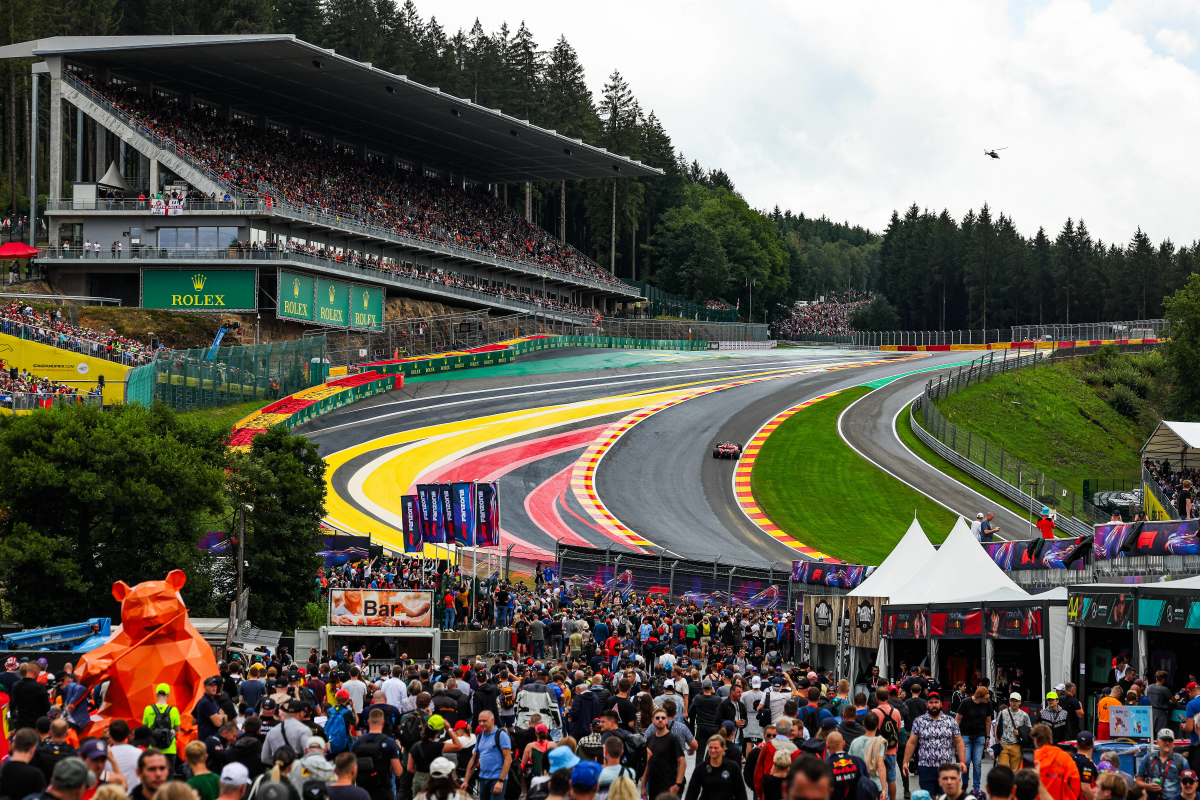
Formula 1 sent shockwaves throughout the racing world when CEO Stefano Domenicali revealed that Belgium’s Spa Francorchamps would only host Grand Prix events in 2026, 2027, 2029 and 2031.
In 2028 and 2030, the historic venue will be replaced by another circuit. Rumours of a rotating calendar had swirled for several years – but this announcement heralded a new dawn for the sport. As was made clear by Spa’s temporary exodus, no track is safe from a potential ousting.
Many are of the mind that Formula 1 should maintain the same set of races each year to protect its heritage. Few fans, if any, have backed the decision. Yet, some notable benefits could arise from a changeable calendar. From reduced costs to improved fan experiences – we explore the full upswing potential here
Formula 1 thrives on change
Adding fresh venues to the Formula 1 calendar is nothing new. The sport has welcomed a flurry of new tracks over the last two decades – with a smattering of fan-favourites returning after hiatuses. There is precedent for this precise circumstance.
For example, Zandvoort, Imola and Shanghai all returned to the championship’s lineup in recent years. Las Vegas, Qatar and Saudi Arabia have each joined the action, too.
And in 2026, Imola will once again depart the Formula 1 schedule in favour of a newly developed Madrid circuit.
As reported by racing and betting expert Jennie Gow for FIRST, Formula 1 is all about pushing towards the “ultimate limit”. If that is to remain true, the sport must continue to test its mettle in unfamiliar, ever-changing territory.
Circumventing economic frailties
Hosting a Formula 1 Grand Prix demands significant investment from organisers. For some longstanding venues, these year-on-year costs have risen to an untenable degree.
READ MORE: F1 track makes $55 MILLION investment to stay on calendar
A rotating calendar would ease the economic burden faced by many track operators. Rather than delivering less-than-perfect fan experiences each year, circuits can refocus their funding to provide best-in-class race weekends.
Thus, with fears of steep annual investment allayed, further new venues may be encouraged to enter the fray.
Bolstered Formula 1 investment
Nobody wants to hear how much money Formula 1’s bigwigs make through brand-new contracts.
However, the reality is this: Formula 1 relies upon these deep pockets to continue to flourish on a global scale. Teams and drivers need consistent investment from major advertisers and partners.
Without this ongoing influx of cash, the sport would shift into reverse and drift backwards.
Formula 1 can score vital funding from fresh fan investment and enhanced backing from partners by traversing previously untouched ground, allowing for product refinement across various sectors.
Return of the old guard
In 2020, Formula 1 reworked its calendar to align with a temporarily shortened season as the world faced an unprecedented crisis.
This paved the way for limited-term contracts with tracks such as Portimao Circuit, Mugello, Istanbul Park and the Nurburgring.
A slippery Istanbul track saw drivers’ concentration tested, Portimao’s twisty turns caught a chunk of the grid off guard, while Mugello presented a dramatic safety car restart.
These unforeseen circumstances presented last-minute challenges for all on the grid – and fans reaped the rewards in the form of unabashed entertainment. Similar results are to be expected from a modernised, dynamic calendar.
Global circuit expansion
African, Asian and South American nations are all eager to increase their Formula 1 standing — with Rwanda, South Africa, South Korea and Argentina all disclosing interest in hosting races.
A year-on-year-off contract would permit venues to test suitability through phased integration. This should alleviate budgetary concerns and, crucially, provide additional time for organisers to prepare.
Bottom line: rotation is necessary
As Formula 1 evolves in an increasingly connected world, there exists an unwavering need to cater to a breadth of audiences. Yet, the current calendar predominantly promotes Europe and North America.
Rotating the host cities to reflect an expansive worldwide fanbase will allow for bolstered engagement and, perhaps most importantly, reinvigorated racing. If any sport is built for a rotational schedule on an international scale, it’s this one.
Rotating the Formula 1 calendar represents a controversial change, no doubt, but it is one that must be made to future-proof the sport.
Related
More F1 news
Full News Feed


Recommended by the editors
 F1 on TV
Apple TV claims huge US numbers boost thanks to new F1 deal
 Australian Grand Prix
F1 Australian Grand Prix 2026 results: Final classification with penalties applied
F1 on TV
F1 on Apple TV: 2026 Presenter lineup and how to watch for FREE
 Australian Grand Prix
F1’s new cars in 2026 are soooooo much slower as Australian Grand Prix confirms the grim truth




Races
-
 Grand Prix of Australia 2026
-
 Grand Prix of China 2026
-
 Grand Prix of Japan 2026
-
 Grand Prix of Bahrain 2026
-
 Saudi Arabian Grand Prix 2026
-
 Miami Grand Prix 2026
-
 Grand Prix du Canada 2026
-
 Grand Prix De Monaco 2026
-
 Gran Premio de Barcelona-Catalunya 2026
-
 Grand Prix of Austria 2026
-
 Grand Prix of Great Britain 2026
-
 Grand Prix of Belgium 2026
-
 Grand Prix of Hungary 2026
-
 Dutch Grand Prix 2026
-
 Grand Prix of Italy 2026
-
Gran Premio de España 2026
-
 Grand Prix of Azerbaijan 2026
-
 Grand Prix of Singapore 2026
-
Grand Prix of the United States 2026
-
 Gran Premio de la Ciudad de Mexico 2026
-
 Grande Prêmio de São Paulo 2026
-
Las Vegas Grand Prix 2026
-
 Qatar Grand Prix 2026
-
 Grand Prix of Abu Dhabi 2026
Follow us on your favorite social media channel
Editorial & corporate information

Avenue HQ
10–12 East Parade
Leeds
LS1 2BH
United Kingdom Regional correspondence
View contact page