



10 wild Japanese Grand Prix facts and why Suzuka is F1's craziest cult classic
Japan is one of the great races on the F1 calendar

The iconic Suzuka circuit has produced some of Formula 1’s most epic title deciders, but dig a little deeper and the Japanese Grand Prix might just be the weirdest, wildest stop on the calendar.
This weekend (March 27-29) the calendar will again land in Japan for another instalment of one of the sport's most gripping and enduring storylines.
We have all you need to know about one of the best F1 weekends of all.
F1 2026 Regulations: Every new rule and car change explained
Japanese Grand Prix, the iconic moments
We have had monsoon showdowns to marshals physically pushing a championship contender back into the race, and that is only scratching the surface.
It is fair to say that Japan does F1 drama differently. Here are some of the most incredible moments so far:
1. A world title decided in a monsoon
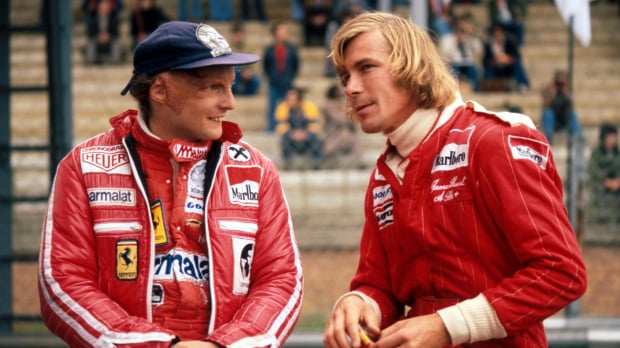
The very first Formula 1 Japanese Grand Prix in 1976 at Fuji Speedway took place in conditions so bad that Ferrari superstar Niki Lauda walked away from a world title fight rather than continue. After surviving a near‑fatal crash at the Nürburgring earlier in the season, Lauda retired on lap two in the torrential rain, saying his life meant more than the championship. That left title rival James Hunt free to claim the points he needed to pip Lauda to the world championship.
2. A crash which killed spectators and killed the race
The second F1 race at Fuji in 1977 ended in tragedy when Gilles Villeneuve’s Ferrari was launched into a restricted area after contact with Ronnie Peterson, killing two spectators. The fallout was so severe that Japan disappeared from the F1 calendar entirely until Suzuka picked up the baton a full decade later in 1987.
3. Suzuka: the track that loves a title decider
When Japan returned in 1987, Suzuka quickly became synonymous with world championships being sealed, and not always in a straightforward way. Between 1987 and 2011, the title was clinched at Suzuka on multiple occasions, including classic deciders featuring Ayrton Senna, Alain Prost, Michael Schumacher and Sebastian Vettel.
4. Senna, Prost and the chicane controversy
The 1989 race produced one of F1’s most infamous flashpoints as McLaren team‑mates Ayrton Senna and Alain Prost collided at the chicane while fighting for the win and the championship. Marshals pushed Senna’s stalled car backwards onto the circuit so he could rejoin the race, but he would later be disqualified for cutting the chicane via the escape road, handing Prost the title and igniting a political firestorm.
5. Revenge at 160mph and another title settled in the gravel
One year later, the rivalry boiled over again when Senna and Prost, now in a Ferrari, tangled at Turn 1 at around 160mph, spearing straight into the gravel trap. Both were unhurt and barely acknowledged each other, but with both cars out on the spot Senna secured his second world championship in one of the most controversial conclusions to a title race ever.
6. Honda’s home race hoodoo
For a nation which lives and breathes Honda, Suzuka has carried a strangely cursed record for its revered local brand. Despite powering some of the greatest cars in F1 history, including the all‑conquering McLarens of the late 1980s, various title‑deciding collisions and twists meant Honda repeatedly missed out on home‑soil victories which seemed locked in. Only in the Max Verstappen era has that narrative really started to flip, turning Suzuka into a winning playground for Honda‑powered machinery.
7. From sportscars to F1, the race before the World Championship
The label “Japanese Grand Prix” actually predates its arrival on the F1 world championship calendar. In the 1960s it was a sportscar race held at Suzuka, with Britain’s Peter Warr, later a key Lotus team boss, winning the 1963 edition in a Lotus 23 and helping cement Japan’s appetite for top‑level motorsport.
8. Schumacher’s Suzuka stranglehold
If there is a spiritual landlord at Suzuka, it is the great Michael Schumacher. The seven‑time F1 world champion won the Japanese Grand Prix six times, a record at the venue, and his Suzuka successes helped underpin Ferrari’s early‑2000s dominance as well as some of the most important title chapters of his career.
9. Verstappen rewrites the Suzuka rulebook
In recent seasons the mighty Dutchman Verstappen has turned Suzuka into his own personal podium. By 2025 he had taken four consecutive wins at the circuit, the first driver ever to do so, while also joining Hamilton and Vettel on four Japanese GP victories overall. Only Schumacher is still ahead.

10. Suzuka’s iron men: Alonso and the marathon record
The modern era has also given Suzuka a different kind of record breaker in the great Fernando Alonso. By the 2025 race the Spaniard had drawn level with Schumacher for the most Japanese GP starts at Suzuka with 19 appearances, underlining an extraordinary level of longevity at one of the calendar’s most demanding circuits. Alonso, now 44 years old, is likely to be back again in an Aston Martin this weekend (though his arrival will be delayed with the birth of his first child imminent). But he appears unlikely to finish the race this time, due to those bad vibrations from the Honda power unit.
F1 DRIVER SALARIES: F1 driver salaries: What stars including Hamilton and Verstappen earn
Suzuka questions answered: Travel guide, Ferris wheels and crazy fans
You have questions about the fan experience at Suzuka? We have the answers:
How far is Suzuka from Tokyo?
Suzuka Circuit sits in Mie Prefecture, roughly 300 km as the crow flies from Tokyo and around 380 km by road, so this is not a “hop on a metro” kind of venue. In practice, fans generally base themselves closer in Nagoya, around one hour away, or accept a three‑to‑four hour trek each way from the capital once you factor in trains, transfers and the final stretch into the circuit.
Suzuka Circuit: where F1 meets theme park
Suzuka isn’t just a racetrack, it also doubles as a full‑blown amusement park complete with multiple rollercoasters and family attractions open around the F1 weekend. You can watch Grand Prix cars on track in the morning and then jump on rides in the afternoon, something which feels more like a motorsport‑themed resort than a conventional racetrack.
The iconic Suzuka Ferris wheel and how much it costs
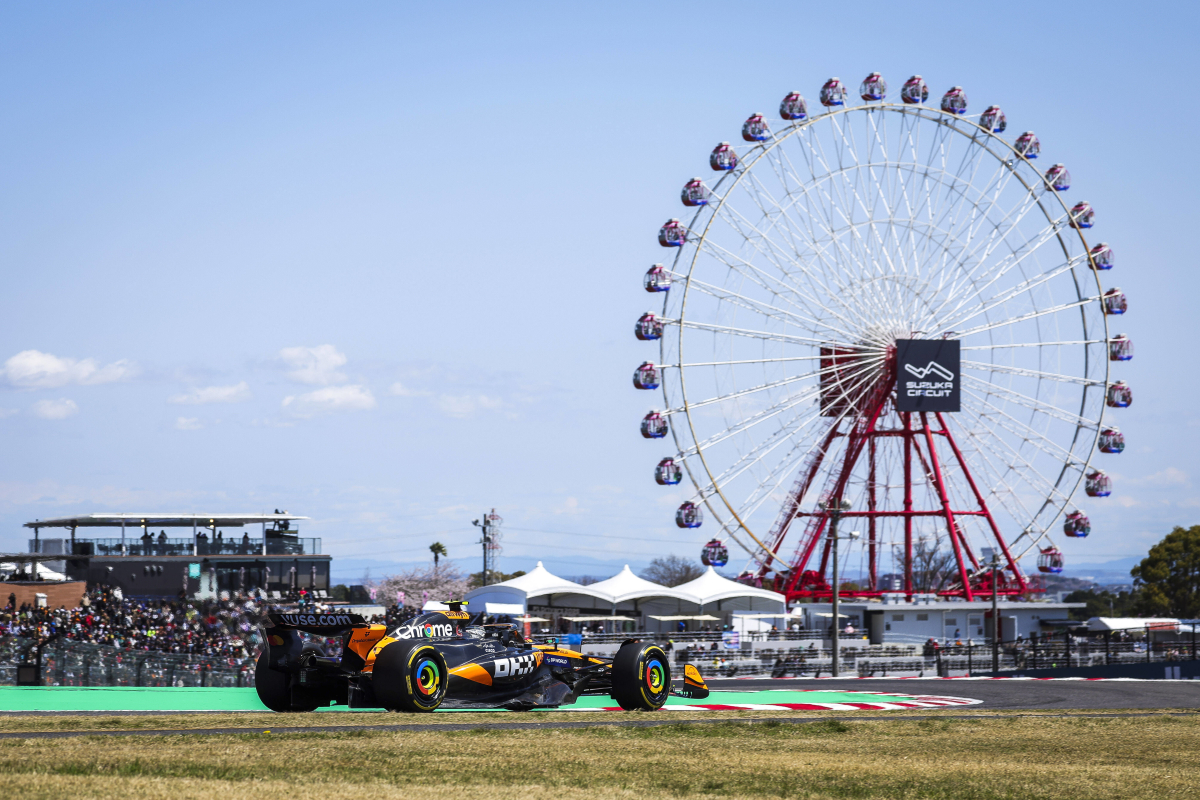
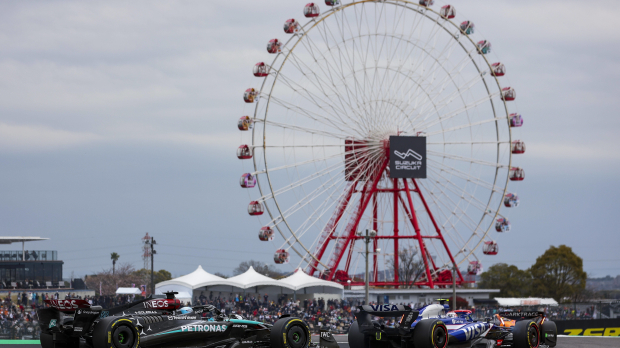
The bright red Circuit Wheel Ferris wheel is the unofficial logo of the Japanese Grand Prix, towering 50 metres above the ground and roughly 100 metres above sea level. From the top, fans get a panoramic view which takes in most of the circuit layout and stretches out towards Ise Bay, turning each slow rotation into a moving track map. A ride on the Circuit Wheel costs 700 yen per person in 2026, with children aged 6 or younger required to ride with an adult. That works out at roughly £3.50 or $4.50 at current exchange rates, making it one of the cheaper ways to get a genuinely unique view of an F1 weekend.
New Ferris Wheel Fanzone at Suzuka
For 2026 a dedicated Ferris Wheel Fanzone is being built under that big wheel, with shops selling F1 and Suzuka‑branded gear, a display of the official F1 trophy and even a 2026 show car parked up for selfies. It’s designed as a less‑crowded alternative to GP Square, giving fans the chance to browse merch, grab photos and soak up the atmosphere without getting swallowed by the main fan village crush.
Why Japanese F1 fans are the wildest on the calendar
The crowd might be the wildest thing about the whole weekend: Japanese F1 fans are famously polite, but they also turn up in full cosplay as drivers, engineers and even long‑departed backmarkers. It’s completely normal here to see kids dressed from head to toe as Lance Stroll or a Williams reserve, complete with homemade helmets and hand‑painted signs.
Bento boxes, noodles and trackside rituals
Part of Suzuka’s charm is how everyday Japanese culture blends into an F1 event, with fans carrying exquisitely packed bento boxes, flasks of green tea and locally sourced snacks. Rather than the usual chips‑and‑burgers diet, you get queues for noodle stands and regional delicacies, then groups laying out picnic mats in the general admission areas as if this was a Sunday festival. A festival that just happens to have Max Verstappen and co flying past at 300 kmh.
Weddings, drift coasters and “only in Japan” touches
Because the circuit doubles as a leisure complex, you can actually get married at Suzuka. It has dedicated wedding and reception facilities which let couples tie the knot overlooking the track. The park has also hosted unique attractions like a “drift coaster”, leaning into the country’s homegrown car culture and adding another motorsport‑flavoured twist.
F1 SCHEDULE: Every race date for 2026 plus TV details
Related
More F1 news
Latest F1 news


Recommended by the editors
 Japanese Grand Prix
10 wild Japanese Grand Prix facts and why Suzuka is F1's craziest cult classic
 Japanese Grand Prix
F1 Qualifying Results: Japanese Grand Prix times & positions
 Japanese Grand Prix Qualifying
F1 Qualifying Today: Japanese Grand Prix 2026 start times, schedule, TV channel and FREE live stream
 Sky Sports F1
Sky Sports F1 star makes return at Japanese Grand Prix: 'She's back everyone'







Races
-
 Grand Prix of Australia 2026
-
 Grand Prix of China 2026
-
 Grand Prix of Japan 2026
-
 Grand Prix of Bahrain 2026
-
 Saudi Arabian Grand Prix 2026
-
 Miami Grand Prix 2026
-
 Grand Prix du Canada 2026
-
 Grand Prix De Monaco 2026
-
 Gran Premio de Barcelona-Catalunya 2026
-
 Grand Prix of Austria 2026
-
 Grand Prix of Great Britain 2026
-
 Grand Prix of Belgium 2026
-
 Grand Prix of Hungary 2026
-
 Dutch Grand Prix 2026
-
 Grand Prix of Italy 2026
-
Gran Premio de España 2026
-
 Grand Prix of Azerbaijan 2026
-
 Grand Prix of Singapore 2026
-
Grand Prix of the United States 2026
-
 Gran Premio de la Ciudad de Mexico 2026
-
 Grande Prêmio de São Paulo 2026
-
Las Vegas Grand Prix 2026
-
 Qatar Grand Prix 2026
-
 Grand Prix of Abu Dhabi 2026
Follow us on your favorite social media channel
Editorial & corporate information

Avenue HQ
10–12 East Parade
Leeds
LS1 2BH
United Kingdom Regional correspondence
View contact page