





F1 use Lewis Hamilton mistake to demonstrate new 2026 feature
Lewis Hamilton debuted a new feature

Lewis Hamilton became the first F1 driver to debut a brand new feature at pre-season testing in Bahrain.
The seven-time champion took to the track on Wednesday morning for the first official 2026 test, completing 52 laps and setting a best time of 1:36.433 before handing the car to team-mate Charles Leclerc.
Hamilton's first run in Bahrain wasn't without a minor issue however, where at the beginning he locked up into the corner and was sent into a small spin.
It was enough to trigger a new feature of the 2026 cars, as the new safety lights (hazard lights) on the mirrors and rear of his Ferrari flashed.
F1 exemplified the new feature in action on their social media, sharing a clip and writing: "New safety feature for 2026."
READ MORE: Red Bull F1 boss to miss Bahrain testing
What are F1 hazard lights and why were they introduced?
Similar to those on road cars, yellow lights function as hazard warning indicators and are mounted on the mirrors and rear wing endplate.
The flashing lights indicate a car has stopped on track and car is going under 20 km/h outside the pit lane, flashing to show the car’s ERS (Energy Recovery System) status.
The increased electrical energy in the new F1 power units (up to 350kW) presents a potential safety hazard when still or damaged, and highlights the risk to drivers trying to exit the car alongside medical personnel and marshals.
Therefore, if the lights show the ERS is live, those approaching the car can maintain a safe distance.
F1 HEADLINES: Verstappen destroys new regulations as Project Newey hits trouble
Related
More F1 news
Latest F1 news



Recommended by the editors
 Max Verstappen
Max Verstappen at scene of Japanese GP media pen damage
 Japanese Grand Prix
Max Verstappen misery deepens as Gianpiero Lambiase advice falls flat: 'Mate, this doesn't really help'
 Japanese Grand Prix
F1 star attacked by 'haters' after terrifying Japanese Grand Prix crash
 Latest F1 News
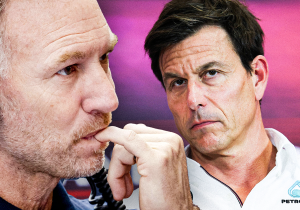
'Things happened which even I cannot comprehend': Toto Wolff tells all on Christian Horner







Races
-
 Grand Prix of Australia 2026
-
 Grand Prix of China 2026
-
 Grand Prix of Japan 2026
-
 Grand Prix of Bahrain 2026
-
 Saudi Arabian Grand Prix 2026
-
 Miami Grand Prix 2026
-
 Grand Prix du Canada 2026
-
 Grand Prix De Monaco 2026
-
 Gran Premio de Barcelona-Catalunya 2026
-
 Grand Prix of Austria 2026
-
 Grand Prix of Great Britain 2026
-
 Grand Prix of Belgium 2026
-
 Grand Prix of Hungary 2026
-
 Dutch Grand Prix 2026
-
 Grand Prix of Italy 2026
-
Gran Premio de España 2026
-
 Grand Prix of Azerbaijan 2026
-
 Grand Prix of Singapore 2026
-
Grand Prix of the United States 2026
-
 Gran Premio de la Ciudad de Mexico 2026
-
 Grande Prêmio de São Paulo 2026
-
Las Vegas Grand Prix 2026
-
 Qatar Grand Prix 2026
-
 Grand Prix of Abu Dhabi 2026
Follow us on your favorite social media channel
Editorial & corporate information

Avenue HQ
10–12 East Parade
Leeds
LS1 2BH
United Kingdom Regional correspondence
View contact page