


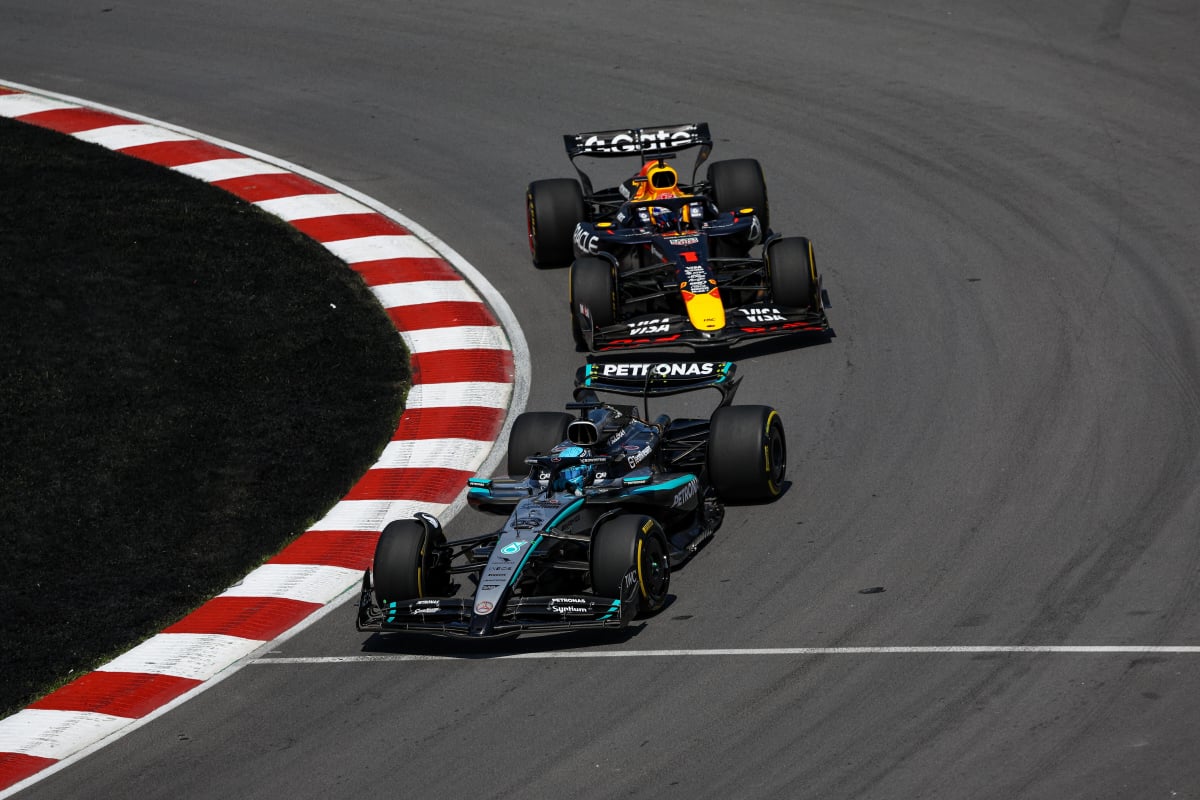

F1 2026 Regulations: What is overtake mode?
F1's new overtake mode could be quite something for the drivers

There are lots of new regulations sweeping into F1 in 2026, and here at GPFans, we've got you covered if you're a little confused about them!
New aerodynamic car design rules are hard enough to get your head around, but when you've got brand new power units too, you'd be forgiven for struggling to separate your geometric compression ratios from your energy recovery systems.
The new power units remain a 1.6-litre V6 turbo hybrid - as they have been since 2014 - but these new 2026 versions have had the emphasis on their electrical energy output tripled.
It means we are now set to have an almost exact 50-50 split between electrical energy and the internal combustion engine, and that means more management of the battery for drivers. And part of that management includes knowing when to use the new 'overtake mode'.
But what is 'overtake mode', how does it work, and is it the replacement for DRS which had previously been in the sport between 2011 and 2025?
F1 2026 Regulations: What is active aero?
What is F1 overtake mode?
F1's latest attempt at increasing the number of overtakes that we see during grands prix and sprint races comes in the form of an overtake mode.
DRS had previously been a simple concept for improving overtaking, with that feature being used when a driver was within one second of the car ahead in a particular zone of the track, with each circuit on the calendar having anywhere between one to four DRS zones, and the rear wing flying open to reduce drag and increase speeds.
While this was an effective way of improving the number of overtakes during F1 races, it also regularly led to so-called 'DRS trains' forming, where a gaggle of drivers were stuck one second behind the car in front, all benefitting from DRS and cancelling each other out.
Overtake mode, however, will be used by different drivers in different ways. Drivers will be handed an extra surge of electrical energy if they are within one second of the car ahead at a particular detection point, which will usually be at the final corner of a lap.
Drivers can then choose whether they want to use this all in one go down the home straight, or spread it out across the course of the lap, helping with both overtaking and then defending that position, or going after another car further up the road, but it can only be used on that following lap.
Overtake mode will give drivers an extra +0.5MJ (megajoules) of recharge, making battery management a crucial responsibility for F1 drivers in 2026.
The energy recovery system can now recharge the battery with twice as much energy per lap as in 2025, and this will play a significant role in helping the drivers to manage their battery capacity throughout a lap and, indeed, throughout a grand prix distance.
When does the 2026 F1 season start?
The 2026 F1 season gets underway on Friday, March 6, at the Albert Park Circuit, Melbourne for the Australian Grand Prix.
FP1 will mark the first session of the season at 12:30pm local time (1:30am GMT), while qualifying will get underway on Saturday, March 7 at 4pm local time (5am GMT). Lights out for the first grand prix of the year is at 3pm local time (4am GMT).
Before the F1 season kicks off, two lots of three-day tests will take place in Bahrain. The first of which will occur from Wednesday, February 11 until Friday, February 13. The second of the Bahrain tests takes place Wednesday, February 18 until Friday, February 20.
F1 Engine Compression Ratio: What is it and why is it so controversial?
Related
More F1 news
Latest F1 news



Recommended by the editors







Races
-
 Grand Prix of Australia 2026
-
 Grand Prix of China 2026
-
 Grand Prix of Japan 2026
-
 Grand Prix of Bahrain 2026
-
 Saudi Arabian Grand Prix 2026
-
 Miami Grand Prix 2026
-
 Grand Prix du Canada 2026
-
 Grand Prix De Monaco 2026
-
 Gran Premio de Barcelona-Catalunya 2026
-
 Grand Prix of Austria 2026
-
 Grand Prix of Great Britain 2026
-
 Grand Prix of Belgium 2026
-
 Grand Prix of Hungary 2026
-
 Dutch Grand Prix 2026
-
 Grand Prix of Italy 2026
-
Gran Premio de España 2026
-
 Grand Prix of Azerbaijan 2026
-
 Grand Prix of Singapore 2026
-
Grand Prix of the United States 2026
-
 Gran Premio de la Ciudad de Mexico 2026
-
 Grande Prêmio de São Paulo 2026
-
Las Vegas Grand Prix 2026
-
 Qatar Grand Prix 2026
-
 Grand Prix of Abu Dhabi 2026
Follow us on your favorite social media channel
Editorial & corporate information

Avenue HQ
10–12 East Parade
Leeds
LS1 2BH
United Kingdom Regional correspondence
View contact page