


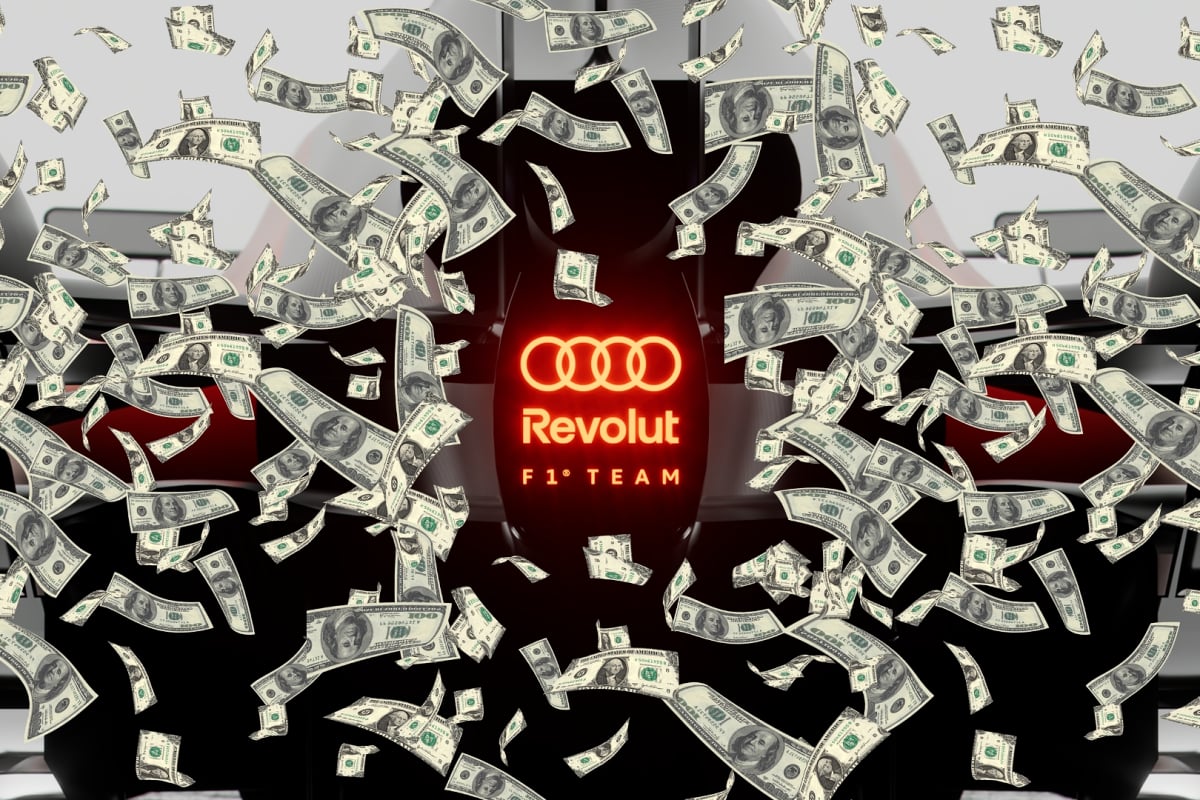

Audi is gambling £2bn on F1, but will it backfire?
Audi are entering F1 for the very first time

It's long (and I mean long) overdue but finally we will get to see Audi on an F1 grid in what will be one of the biggest subplots to the 2026 season.
The countdown to that moment hits a key milestone tonight (Tuesday January 20) when the 'new' team holds its launch and livery reveal in Berlin, Germany.
For the first time in its history, the German car company has entered the sport and in doing so will have rivals Mercedes watching over their backs as they tread on similar territory. Hey, maybe this may entice our former BMW friends back into F1?
But I digress, this is all about Audi. How does their entry look? Who are their top guys? How much has it cost them? What is their starting point? What are the dangers? Why on earth are they committing to F1 now?
So many questions...
DRIVE to SURVIVE: Season 8 release date and big storylines
Are Audi a brand new F1 team?
Yes... and no. We can safely say this is Audi competing for the first time in F1, but the actual team... far from it. Audi has taken over what was formerly the Sauber team (and curiously also once BMW) who had been competing in F1 since the days of Ayrton Senna in the early 1990s. This is good news for Audi, as it means the team can hit the ground running with a foundation to build on.
In fact Audi doesn't even enter the team cold, it purchased the Swiss outfit in time for the start for the 2025 season - so all appointments and strategy have largely been in its control for a year now.
How much has it cost Audi to enter F1?
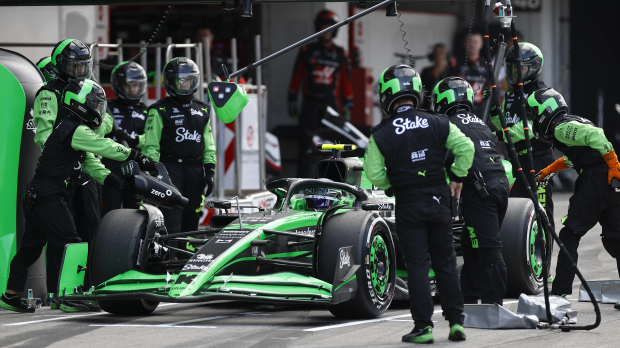
Audi's F1 entry, all factors considered, will cost around £2billion. First of all came the acquisition of Sauber for around £485million 12 months ago. Engine development to make Sauber a proper works team has cost around £525m. There is a team costcap per year at $215m (circa £105m) and Audi will be expected to use every penny of that.
When you factor in running costs too (including drivers' contracts and bonuses) this could stretch to almost £260m a year. Audi is not in this for the short term. We can expect least put five years to be put into this, and when that's factored in, the team could have spent £2bn by 2030. The only thing Audi doesn't have to pay is the entrance fee for a new team after inheriting Sauber - a discount of a cool £150m.
Who are Audi's best assets?
There is some serious F1 pedigree in the Audi setup. Mattia Binotto was previously team principal at Ferrari between 2019 and 2022, having started his career as an engineer in 1995. Binotto helped Ferrari recover from a 2020 funk to eventually start winning races again. As an official title, he is Head of Audi F1 Project.
There is also Jonathan Wheatley, whose career is littered with championship success. He started at Benetton in 1991 and stayed with the team as it morphed into Renault up until 2005, winning championships with Michael Schumacher and Fernando Alonso. He was also at Red Bull between 2006 and 2024 so oversaw all eight championships won by Sebastian Vettel and Max Verstappen. He started his first team principal role at Sauber in 2025 and after a positive start is in good shape to lead Audi into 2026.
Technical director James Key also has bags of experience including with reigning world champions McLaren.
Who are Audi's F1 drivers?
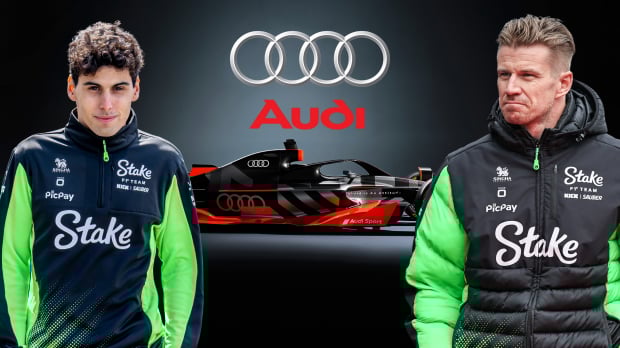
Audi has a perfect combination to see them through the first season, with Nico Hulkenberg and Gabriel Bortoleto leading the team. Youth, experience and continuity.
Hulkenberg made his F1 debut for Williams in 2010 and and has 250 starts to his name. He may be 38 years old but he is still on top of his game. After years of trying and some harsh luck stories, the German secured his first ever podium for the Sauber team at the 2025 British Grand Prix, holding off Lewis Hamilton in the process.
In the second seat is the more raw but certainly quick 21-year-old Brazilian Gabriel Bortoleto who made his debut in the 2025 season with Sauber and scored a respectable amount of points to establish himself on the grid.
How did Sauber perform in 2025?
Sauber finished 2024 rock bottom of the championship with just four points - 13 fewer than next slowest team Williams. However, despite only climbing up one position in 2025 to finish ninth the team secured 70 points and finished only 19 points behind seventh-placed Aston Martin. Momentum has been with the team since Audi walked through the door.
What can we expect heading into 2026?
Audi doesn't have the complete luxury of being given time to prove itself as a brand new team giving the continuation of Sauber as a different name. However don't expect race wins, and despite Hulkenberg's Silverstone heroics last year, podiums should not be expected either. An improvement on Sauber's 9th place last season would be an excellent start. Save the German battleground with Mercedes for later.
To Audi's defence too, it has had to build a brand new power unit for this season to replace the Ferraris in the Sauber. That won't be easy to get up to speed with the rest of the teams so they can be cut some slack here for a project that has bundles of potential to help them grow into a giant team in the future.

Why is Audi getting into F1?
This is the perfect moment for Audi to get involved. The costcap plays into its hands as it limits some of the outlandish spending that the best teams used to do and in effect makes an F1 entry affordable in the modern era. The 2026 revamped regulations also make it a reset for all teams in terms of car design. Everyone is working from a blank whiteboard (or blackboard if chalk is still your thing). This really is the best time to enter F1.
As well as the timing. It's one of the best forms of advertisements you can get for selling cars. We can take Mercedes as an example here. After Lewis Hamilton joined the team and won the world championship, their brand perception improved. If people want speed and performance excellence, an F1 team showcases that image.
F1 TESTING 2026: Key dates, times and how to watch live
So is this still an F1 gamble for Audi?
Absolutely. Audi does have motorsport experience of course, it was a powerhouse in world endurance racing - being able to dominate Le Mans in recent years including securing a 1-2-3 finish in 2010.
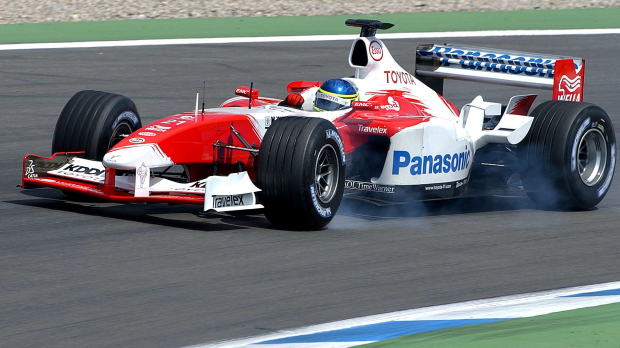
But big names, some with experience and others with not, have entered F1 and been burned. Toyota spent billions, which in the early 2000s was incredible, only to finish no better than mid-table before canning the project.
Honda also poured billions into the sport with McLaren from 2015 and did no more than to turn an F1 beast into back markers lucky to make it until the end of the race.
BMW took control of Sauber in 2006 but was on its way out four seasons later. Ford did a similar move in taking over a small team in Stewart in 2000 but - despite slapping a Jaguar name on it - also did nothing but regress until Red Bull took over (and the rest is history)
Granted, Mercedes did an excellent job after taking over Brawn in 2010 but as you can see, investment doesn't equal success. It plays a big role but if Audi is to succeed in F1 it will have to spend wisely. After all, who is going to want to buy an Audi if they see one breaking down in front of millions of people every other week?
Recommended by the editors









Races
-
 Grand Prix of Australia 2026
-
 Grand Prix of China 2026
-
 Grand Prix of Japan 2026
-
 Grand Prix of Bahrain 2026
-
 Saudi Arabian Grand Prix 2026
-
 Miami Grand Prix 2026
-
 Grand Prix du Canada 2026
-
 Grand Prix De Monaco 2026
-
 Gran Premio de Barcelona-Catalunya 2026
-
 Grand Prix of Austria 2026
-
 Grand Prix of Great Britain 2026
-
 Grand Prix of Belgium 2026
-
 Grand Prix of Hungary 2026
-
 Dutch Grand Prix 2026
-
 Grand Prix of Italy 2026
-
Gran Premio de España 2026
-
 Grand Prix of Azerbaijan 2026
-
 Grand Prix of Singapore 2026
-
Grand Prix of the United States 2026
-
 Gran Premio de la Ciudad de Mexico 2026
-
 Grande Prêmio de São Paulo 2026
-
Las Vegas Grand Prix 2026
-
 Qatar Grand Prix 2026
-
 Grand Prix of Abu Dhabi 2026
Follow us on your favorite social media channel
Editorial & corporate information

Avenue HQ
10–12 East Parade
Leeds
LS1 2BH
United Kingdom Regional correspondence
View contact page