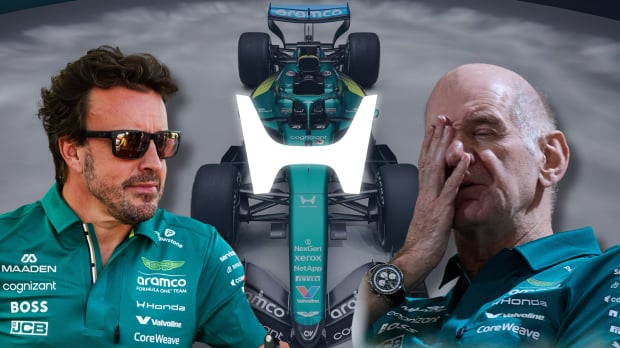

Aston Martin alarm bells ring as former Honda chief makes worrying F1 engine claim
Not more trouble for Aston Martin in 2028?

A former Honda executive has revealed a theory about why there has been a hierarchy change at the Japanese company and it paints a worrying picture for Aston Martin.
Honda rejoined F1 for 2026 as the engine supplier for the Aston Martin team, but the first season of their partnership has been nothing short of a shambles.
With design genius Adrian Newey on board, Aston Martin had hopes of at least being in a position to challenge for race victories this season.
Instead they sit second bottom of the constructors' championship with just seven points, all earned by Fernando Alonso who collected the team's best result of the season with an eighth place at the recent Bahrain Grand Prix in Malaysia earlier this month.
F1 HEADLINES: Red Bull plot to sign Alonso revealed as Mekies issues statement
Honda holding back Aston Martin
Much of the blame has been placed on the Honda power unit, which is ranked by the FIA's ADUO system as one of the worst on the grid.
Any positivity was once more removed at the most recent Singapore Grand Prix last weekend when Alonso could only finish 16th, having been so unhappy with his Honda power unit in qualifying, he demanded it was changed despite Honda not being able to identify a problem with it.
These events have come just as Honda have changed the leadership of their F1 power unit programme with Yoichiro Fukao taking over from Tetsushi Kakuda at the start of October.
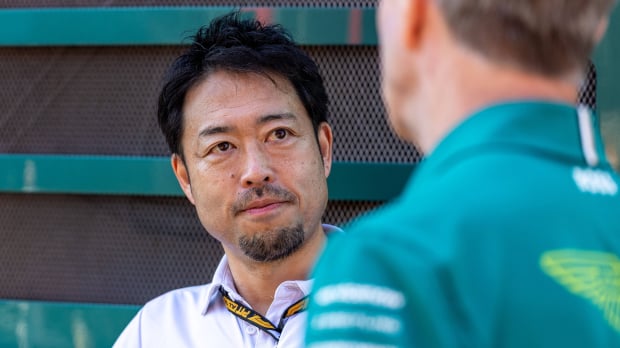
It indicates an urgency for Honda to find the solution to their slow engine, but a former Honda executive suggests there is a worrying reason why this change has been made.
Yasuaki Asaki was head of the power unit programme for Honda in the last year of their McLaren deal in 2017 as well as for Red Bull which powered Max Verstappen to his first world championship in 2021.
He believes a change has been made because numbers being produced at Honda suggest the team won't be able to catch up to rivals such as Mercedes, Ferrari and Red Bull's RBPT engines for 2027.
Asaki: Honda not happy with 2027 engine
Asaki told Japanese website Sportiva Shueisha: "Logically speaking, the plans for the PU for the 2027 season have already been decided, and this period is just the final confirmation stage.
"In other words, the specifications of the PU to be used in the opening race of the 2027 season are almost finalised.
"At the very least, if I were in charge of Honda Racing and knew that next year's PU would perform exceptionally well, I wouldn't change the development leader. Doing so could actually cause unnecessary turmoil within the organisation.
"My guess is that, within Honda, while discussing what would happen if they continued development under the conventional system, they got a clear picture of what the PU would look like in 2027, and concluded that at the current development speed, they would never be able to catch up with their rivals, and that something had to be done."
WATCH LIVE: Max Verstappen at GT World Challenge Portimao
READ MORE: Hamilton ally behind five five F1 title wins is now masterminding Verstappen renaissance




 Grand Prix of Australia 2026
  Grand Prix of China 2026
  Grand Prix of Japan 2026
  Saudi Arabian Grand Prix 2026
  Miami Grand Prix 2026
  Grand Prix du Canada 2026
  Grand Prix De Monaco 2026
  Gran Premio de Barcelona-Catalunya 2026
  Grand Prix of Austria 2026
  Grand Prix of Belgium 2026
  Grand Prix of Hungary 2026
  Grand Prix of Italy 2026
  Grand Prix of Azerbaijan 2026
  Grand Prix of Bahrain 2026
  Grand Prix of Singapore 2026
  Gran Premio de la Ciudad de Mexico 2026
  Grande Prêmio de São Paulo 2026
  Qatar Grand Prix 2026
  Grand Prix of Abu Dhabi 2026