



The Last Dutch Grand Prix: Zandvoort's Farewell and Verstappen's Home Race
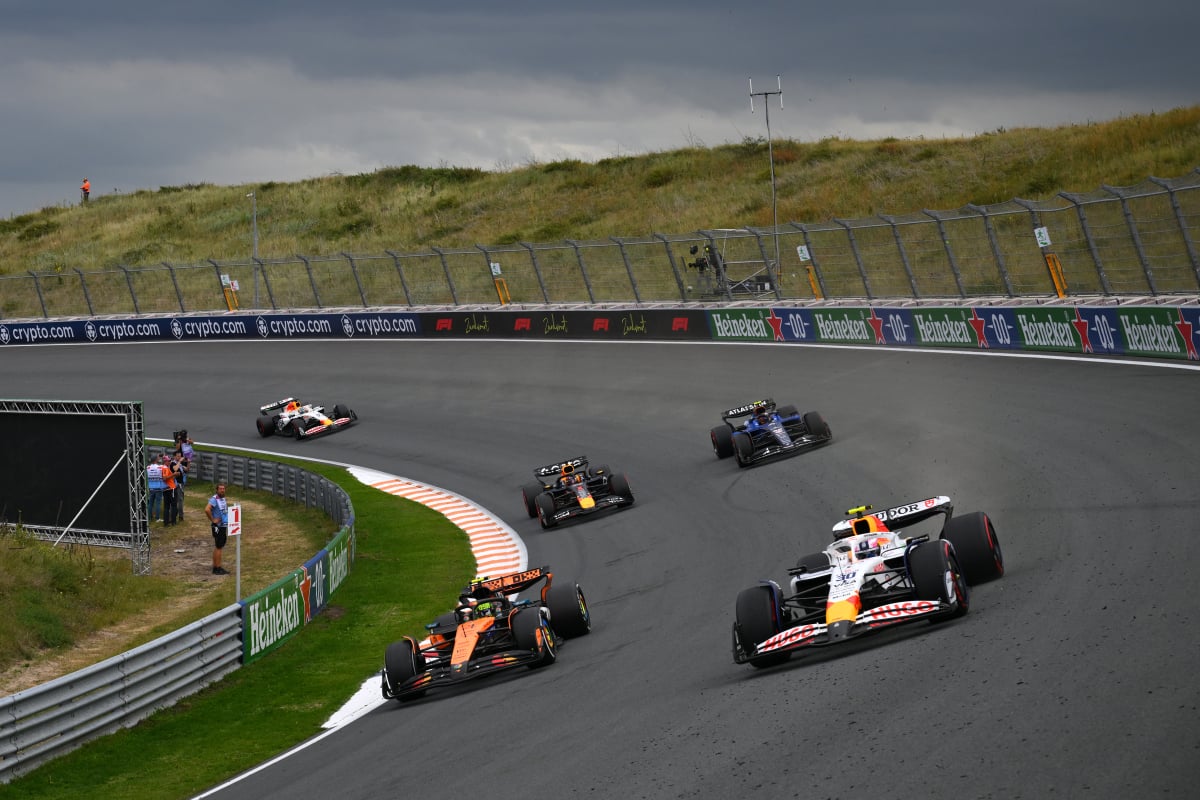
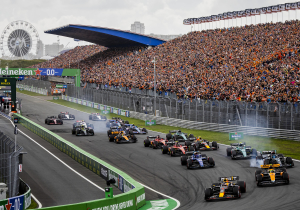
Formula 1 returns to Zandvoort this weekend for a race that is about much more than the ongoing 2026 championship. From August 21 to 23, the Dutch Grand Prix will be staged for the final time, bringing the curtain down on one of the most successful recent additions to the Formula 1 calendar. McLaren Racing has already described the 2026 event as the “swansong” for the Dutch Grand Prix, while Formula 1 has confirmed that Zandvoort’s agreement runs only through this season.
The final weekend will also make history in another way. Zandvoort will host its first Formula 1 Sprint, adding an extra competitive dimension to a farewell that already promises to be emotionally charged. Practice and Sprint Qualifying take place on Friday, the Sprint and Grand Prix qualifying on Saturday, and the final Dutch Grand Prix on Sunday afternoon. For a circuit that spent 36 years waiting for Formula 1 to return, the ending comes remarkably quickly.
The modern Dutch Grand Prix has existed for only five completed editions, from 2021 through 2025, with the 2026 race bringing that chapter to a close. Out of those, home hero Max Verstappen won three. Can he make it four and end this era of the circuit on a high note for the Dutch audience? It would be the unlikeliest of send-offs. Verstappen arrives at his home race sixth in the standings on 109 points, still without a win in F1 2026 and 110 points behind championship leader Kimi Antonelli.
Formula 1 Heritage to Modern Zandvoort Revival
Zandvoort is hardly a newcomer to Formula 1. The Dutch Grand Prix first became part of the World Championship in 1952, when Alberto Ascari won for Ferrari. The circuit subsequently became one of the sport's most distinctive venues that combined fast flowing corners with the dunes of the North Sea coast. Formula 1 raced there through the decades, although the event was periodically absent from the calendar.
The old era ended in 1985. Niki Lauda won that year's Dutch Grand Prix for McLaren, beating team mate Alain Prost and Ayrton Senna in tight, narrow fashion, and it proved to be Lauda's final Formula 1 victory. It was also the last Dutch Grand Prix for 36 years. Little did the home crowd know, their favorite circuit would have a revival nearly 4 decades later.
Zandvoort then went through a long period of reinvention. The circuit was modernised, its layout was adapted, and its facilities were brought up to the standards required for a return to Formula 1. That opportunity finally arrived in 2019, when Formula 1 announced that the Dutch Grand Prix would return for the 2020 season. The COVID-19 pandemic prevented that first planned race from taking place, but the revival was postponed rather than abandoned. On September 5, 2021, the world’s fastest circus finally returned to Zandvoort.
The timing could hardly have been better for the Dutch organisers and home fans. Max Verstappen had become the central figure of a rapidly expanding Dutch motorsport phenomenon, and his rise transformed the home race into one of the most visually and atmospherically distinctive weekends on the calendar. Coinciding with the young star’s prime, he brought joy and turned the race into one of the most popular on the calendar.
Verstappen and the Orange Army
No driver has been more closely associated with the modern Dutch Grand Prix than Verstappen. He won the first three races after Zandvoort's return in 2021, 2022 and 2023, turning the circuit into something approaching a personal fortress. His 2021 victory was particularly significant as he became the first Dutchman to win the modern Dutch Grand Prix, doing so in front of an enormous sea of orange clad supporters.
His winning streak ended in 2024, when Lando Norris took victory, and Oscar Piastri won in 2025, with Verstappen finishing second. Even so, Verstappen's record at Zandvoort remains extraordinary. Three wins in the first three editions, three consecutive poles during that opening run and the unique atmosphere generated by tens of thousands of Dutch supporters have made his relationship with the circuit inseparable from the modern history of the race.
Whether he can add a fourth is a very different question this season. Red Bull have been off the pace for most of 2026, and Verstappen's four podiums in Canada, Austria, Belgium and Hungary have come without a victory. The Dutch Grand Prix betting odds give a fair sense of how far the paddock rates that chance against a Mercedes team that has won six races already.
That makes the 2026 weekend potentially significant on a personal level as well as a sporting one. Verstappen talked about this F1 chapter and the possibility that this could be his final Dutch Grand Prix, while reflecting on what he has already achieved. His attitude has been characteristically pragmatic. Whatever happens to his career from here on out, the history he has created at Zandvoort cannot be taken away from him.
There is an added emotion to that thought. Verstappen is not simply another driver competing in his home country, but a motorsport legend who helped make the modern Dutch Grand Prix possible in the form it eventually took. The crowds, the orange smoke, the enormous demand for tickets and the sense of national occasion have all been tied closely to his success. Will it come back during the remainder of his career? Here’s hoping.
A Contract that Became a Phenomenon
The modern Dutch Grand Prix began with a three year agreement for 2020, 2021 and 2022, although the 2020 event was lost to the pandemic before it even came around. In December 2022, Formula 1 and the organisers agreed to extend the deal by two years, taking the race through 2025. That extension was a recognition of how quickly Zandvoort had established itself as one of the sport's most popular venues.
Then came the final extension. In December 2024, Formula 1 and the Dutch Grand Prix organisation announced a one year deal taking Zandvoort through 2026. Crucially, the promoter itself decided not to remain on the calendar beyond that point. Formula 1 praised the event's contribution, but the decision meant that the 2026 race would be the finale rather than the beginning of another contract cycle. That distinction matters a lot for its future in the sport.
The Dutch Grand Prix is not being removed because it failed to attract spectators. Quite the opposite is true, actually. The event has repeatedly demonstrated enormous popularity. The issue was the long term balance between the cost and risks of staging a Formula 1 race and the rewards available to its privately operated organisers. BBC Sport reported that the event had been struggling to make the economics work despite sell out crowds. In other words, Zandvoort has become a victim of its own success in a calendar where hosting a Grand Prix is an increasingly expensive proposition.
One Final Sell Out
The strength of the Dutch appetite for Formula 1 is perhaps best demonstrated by the 2026 ticket sales. On April 1, the Dutch GP organisation announced that the race weekend was completely sold out, with Saturday and Sunday at absolute full capacity. The organisers described the final event as the conclusion of an era that began with Formula 1's return in 2021.
That response is significant because it shows that the Dutch Grand Prix's departure is not a case of an audience losing interest. The demand remains, and there is always hope for the future when or if it comes back. Surely, it is a when case. Zandvoort can still fill its grandstands for Formula 1's final visit, just as it did throughout the modern era.
The atmosphere has become part of the event's identity. McLaren describes Zandvoort as one of the most popular races of the year, with the track's narrow, old school character, banked corners and location among the dunes contributing to its appeal.
The steep banking of the final corner, now reaching 18 degrees, gives the circuit a visual identity that few modern venues can match. This combo of track character and crowd culture is difficult to manufacture elsewhere. Zandvoort feels like a Formula 1 race rather than merely a venue hosting one, which is why fans and drivers adore it so much. It is meant for Formula 1 racing.
Could the Dutch Grand Prix return?
The obvious question is whether this really has to be goodbye. Technically, there is nothing preventing Formula 1 from returning to the Netherlands in the future. The current agreement expires after 2026. It is not a permanent ban on racing at Zandvoort, where it will hardly come back. The reason for the departure is primarily the promoter's decision not to seek another contract, so a future return would require the commercial circumstances to change and a new agreement to be reached.
But a quick return should not be assumed. Formula 1's calendar is increasingly crowded, with existing races holding contracts well into the future and new markets competing for very limited space. Sky Sports' current contract overview shows that Zandvoort is one of the few venues whose agreement ends in 2026, while many other circuits are locked in through the late 2020s or beyond.
That makes a return more likely to depend on opportunity than sentiment. If the economics of hosting the race improve, if the organisers decide the event is again worth the investment, and if Formula 1 has a place for it on the calendar, Zandvoort could conceivably return. The enormous Dutch fan base would give the race a compelling argument.
The question is when, rather than whether it is imaginable. There is currently no announced date for a return, and the 2026 finale should therefore be treated as a genuine farewell rather than a temporary goodbye. The wait for some other circuits’ contracts to run out begins so that the Netherlands can once again be home to a F1 GP.
The Final Home Race
Are we due a storybook ending? For Max Verstappen, the farewell carries an additional weight. The Dutch Grand Prix has become one of the defining stages of his career, and his three victories helped turn the modern Zandvoort race into a national sporting celebration. For the fans, meanwhile, the possibility of seeing their greatest Formula 1 driver race at home for the final time adds another layer to an already historic weekend.
It is fitting that the final race will take place at a circuit whose history has always been defined by cycles of departure and return. Formula 1 left Zandvoort after Lauda's victory in 1985 and needed 36 years to come back. Now, after just six seasons of the modern era, it is leaving again.
The difference is that this time Zandvoort leaves Formula 1 at the height of its popularity. The 2026 weekend is sold out, the Orange Army will fill the dunes one more time, and Verstappen will have one final opportunity to qualify well and win in front of his home crowd and at a circuit this narrow, grid position counts for a great deal. Fans following the farewell race at Zandvoort can check the latest markets at Stake.
Whether this is genuinely the end of Dutch Formula 1 at Zandvoort will ultimately depend on circumstances that cannot yet be known. But the 2026 Dutch Grand Prix is certain to be something that the sport cannot recreate easily elsewhere. It will be a showcase of the sport, a farewell to a historic circuit, a celebration of an extraordinary Dutch racing boom and, potentially, the last home Grand Prix for the man who made Zandvoort's modern era unforgettable.
Dutch F1 Grand Prix Trivia and Facts
F1 first arrived at Zandvoort in 1952 - Alberto Ascari won the inaugural Dutch Grand Prix, leading a Ferrari 1-2-3. Zandvoort opened in 1948, while its very first race was held on August 7 that year. A temporary street race had already taken place in the town in 1939.
The banking is seriously steep - Arie Luyendykbocht, the final corner, is banked at 18 degrees, almost twice the banking of Indianapolis Motor Speedway. Turns 3 and 14 are heavily banked too, while Hugenholtzbocht was dramatically redesigned for F1's return to make the corners more usable for modern F1 cars and allow multiple racing lines.
Jim Clark is the all time Dutch GP win king - He won at Zandvoort four times, more than any other F1 driver.
James Hunt's first F1 win happened here - In 1975, Hunt and the tiny Hesketh team pulled off an unlikely victory. The race began damp, Hunt switched from wet tyres to slicks after seven laps, and eventually found himself ahead of the opposition. It was Hunt's first and Hesketh's only F1 victory.
Gilles Villeneuve completed a lap on three wheels - One of Zandvoort's legendary moments came in 1979, when Villeneuve's Ferrari suffered major damage but he somehow continued around the circuit with a rear wheel missing. F1 highlights the incident as one of Zandvoort's iconic moments.
Related
More F1 news
Recommended by the editors
 Fernando Alonso
Fernando Alonso suffers more misery at Dutch Grand Prix as Aston Martin confirm car issue
 F1 on TV
Channel 4 F1 highlights today: How to watch the 2026 Dutch Grand Prix FREE
 F1 Dutch Grand Prix
F1 2026 Dutch Grand Prix weather forecast - latest from Zandvoort
 F1 Dutch Grand Prix
F1 Sprint Qualifying Today: Dutch Grand Prix start time, TV channel and FREE live stream







Races
-
 Grand Prix of Australia 2026
-
 Grand Prix of China 2026
-
 Grand Prix of Japan 2026
-
 Saudi Arabian Grand Prix 2026
-
 Miami Grand Prix 2026
-
 Grand Prix du Canada 2026
-
 Grand Prix De Monaco 2026
-
 Gran Premio de Barcelona-Catalunya 2026
-
 Grand Prix of Austria 2026
-
 Grand Prix of Great Britain 2026
-
 Grand Prix of Belgium 2026
-
 Grand Prix of Hungary 2026
-
 Dutch Grand Prix 2026
-
 Grand Prix of Italy 2026
-
Gran Premio de España 2026
-
 Grand Prix of Azerbaijan 2026
-
 Grand Prix of Bahrain 2026
-
 Grand Prix of Singapore 2026
-
Grand Prix of the United States 2026
-
 Gran Premio de la Ciudad de Mexico 2026
-
 Grande Prêmio de São Paulo 2026
-
Las Vegas Grand Prix 2026
-
 Qatar Grand Prix 2026
-
 Grand Prix of Abu Dhabi 2026
Follow us on your favorite social media channel
Editorial & corporate information

Avenue HQ
10–12 East Parade
Leeds
LS1 2BH
United Kingdom Regional correspondence
View contact page