


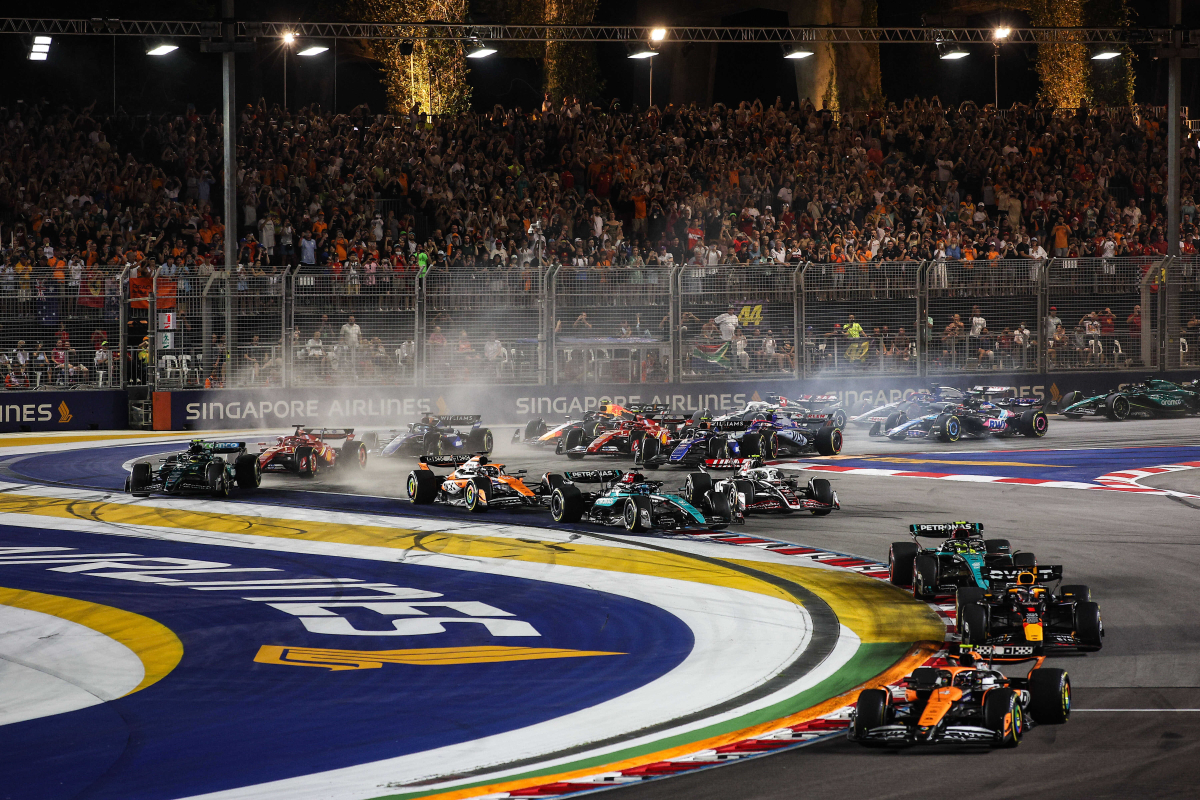

The influence of live race odds on the Formula 1 viewing experience
Watching Formula 1 has changed significantly in a short time thanks to live data, interactive platforms, and the ability to follow developments in real time. The integration of live race odds makes it more exciting for many fans to place every twist on track into context. Deeper insight into probabilities and risks creates a new, more engaged way to experience the sport.
You can see that Formula 1 is now about far more than lap times and overtakes alone, and the popularity of online betting markets, as seen through tennis betting online, has shown how strongly the experience changes when live odds are integrated into sport. Through second-screen use and advanced data, live race odds have become an increasingly important part of the fan experience. Insight into shifting prices, linked to events on track, attracts not only dedicated followers but also a wider sports audience. Because Formula 1 includes constant variables such as strategy and weather changes, this approach offers a distinctive way to follow the action.
Real time odds add depth to a race
Live race odds are dynamic probability calculations that are adjusted according to what is happening on track. In-play markets make it possible to react to small shifts, whether that involves a safety car period, an unexpected pit stop, or a crucial tyre change. That means every strategic decision can quickly influence how viewers interpret the race. A driver who looks secure in the lead may suddenly appear vulnerable once tyre degradation becomes clear. For fans, that creates a more layered viewing experience than the traditional focus on position alone.
These odds keep moving as new information becomes available and turn every sector or action into a measurable moment. When prices respond immediately to situations such as a threat of rain or a virtual safety car, an extra layer of tension emerges for the viewer. You are no longer watching only for the visible battle on screen, but also for the hidden consequences behind it. Small developments gain weight because they can signal a larger strategic swing. That makes the race feel more active, even during phases when overtaking is limited.
Why Formula 1 reacts so strongly to market shifts
Formula 1 is one of the most unpredictable forms of motorsport, partly because of strategic factors such as tyre management, team coordination, and the impact of reliability issues. As a result, live race odds are often more volatile than in sports with a fixed rhythm or clearer structure. One delayed pit stop or one lock-up can reshape expectations in seconds. A car that appears comfortably ahead may lose its advantage because of undercut risk. For viewers, those swings offer immediate context for decisions that might otherwise look subtle.
The timing of pit stops and the way teams respond to changing conditions have a direct effect on the odds during a race. Because Formula 1 is so fluid, those chances can shift dramatically within a single lap, intensifying the tension for anyone following closely. That volatility also rewards attention to detail. Fans who understand strategy can connect team radio, tyre life, and track position with the changing market picture. In that sense, odds do not replace race knowledge, but often sharpen it.
Micro moments shape the way you watch
If you pay closer attention to live race odds, your focus moves away from the fight for first place alone and toward micro moments such as sector performance, undercuts, or the ideal pit window. The midfield receives more attention because a possible points finish suddenly becomes visible and meaningful. A battle for ninth can matter as much as a fight for the podium when the wider picture is clear. That changes how you value screen time and commentary. It also makes long strategic phases feel less passive than they once did.
For some fans, a race becomes more intense because odds illuminate not only the podium battle but also duels and team strategies deeper in the field. Every incident can feel more significant, since even a brief lock-up or traffic issue may alter expectations. That creates a kind of second narrative running alongside the television broadcast. You start to read the race in layers rather than in a single linear story. In Formula 1, where margins are often tiny, that extra perspective can reshape the whole experience.
Data culture is now part of modern F1 fandom
Live race odds sit naturally within a wider data-driven culture that already defines modern Formula 1 coverage. Broadcast graphics, timing screens, tyre projections, and telemetry all encourage viewers to think in terms of probability, pressure, and opportunity. Even when odds are not shown directly, the presentation of information invites the same mindset. You are constantly asked to judge whether a driver can extend a stint, close a gap, or defend track position. The sport feels richer because information and interpretation now move together.
This overlap between media coverage and real-time numbers helps explain why live race odds have become such a noticeable part of the fan experience. Some viewers still prefer the pure sporting narrative, while others enjoy the added framework of expectation and risk. Both approaches now coexist within the same broadcast environment. That balance reflects the way Formula 1 has evolved as a spectacle. For many fans, understanding the changing probabilities is no longer separate from watching the race itself.
Related
More F1 news
Latest F1 news
Recommended by the editors
 F1 Monaco Grand Prix
F1 Monaco Grand Prix result could change AGAIN as Red Bull and McLaren begin courtroom battle
 Mercedes F1
$6billion Mercedes make bombshell claim in F1's upgrades race: 'We haven't got the money'
 F1 Dutch Grand Prix
Ferrari flops and Max misery: Five F1 things we learned from the Dutch Grand Prix
 F1 Social
'Is this AI?' - F1 fans speculate over controversial Max Verstappen crash footage at Dutch Grand Prix







Races
-
 Grand Prix of Australia 2026
-
 Grand Prix of China 2026
-
 Grand Prix of Japan 2026
-
 Saudi Arabian Grand Prix 2026
-
 Miami Grand Prix 2026
-
 Grand Prix du Canada 2026
-
 Grand Prix De Monaco 2026
-
 Gran Premio de Barcelona-Catalunya 2026
-
 Grand Prix of Austria 2026
-
 Grand Prix of Great Britain 2026
-
 Grand Prix of Belgium 2026
-
 Grand Prix of Hungary 2026
-
 Dutch Grand Prix 2026
-
 Grand Prix of Italy 2026
-
Gran Premio de España 2026
-
 Grand Prix of Azerbaijan 2026
-
 Grand Prix of Bahrain 2026
-
 Grand Prix of Singapore 2026
-
Grand Prix of the United States 2026
-
 Gran Premio de la Ciudad de Mexico 2026
-
 Grande Prêmio de São Paulo 2026
-
Las Vegas Grand Prix 2026
-
 Qatar Grand Prix 2026
-
 Grand Prix of Abu Dhabi 2026
Follow us on your favorite social media channel
Editorial & corporate information

Avenue HQ
10–12 East Parade
Leeds
LS1 2BH
United Kingdom Regional correspondence
View contact page