



F1 star bodyshamed by media just weeks after revealing weight issues
Content Warning: This article contains graphic depictions of eating disorders. If you need support you can contact Mind UK or Beat

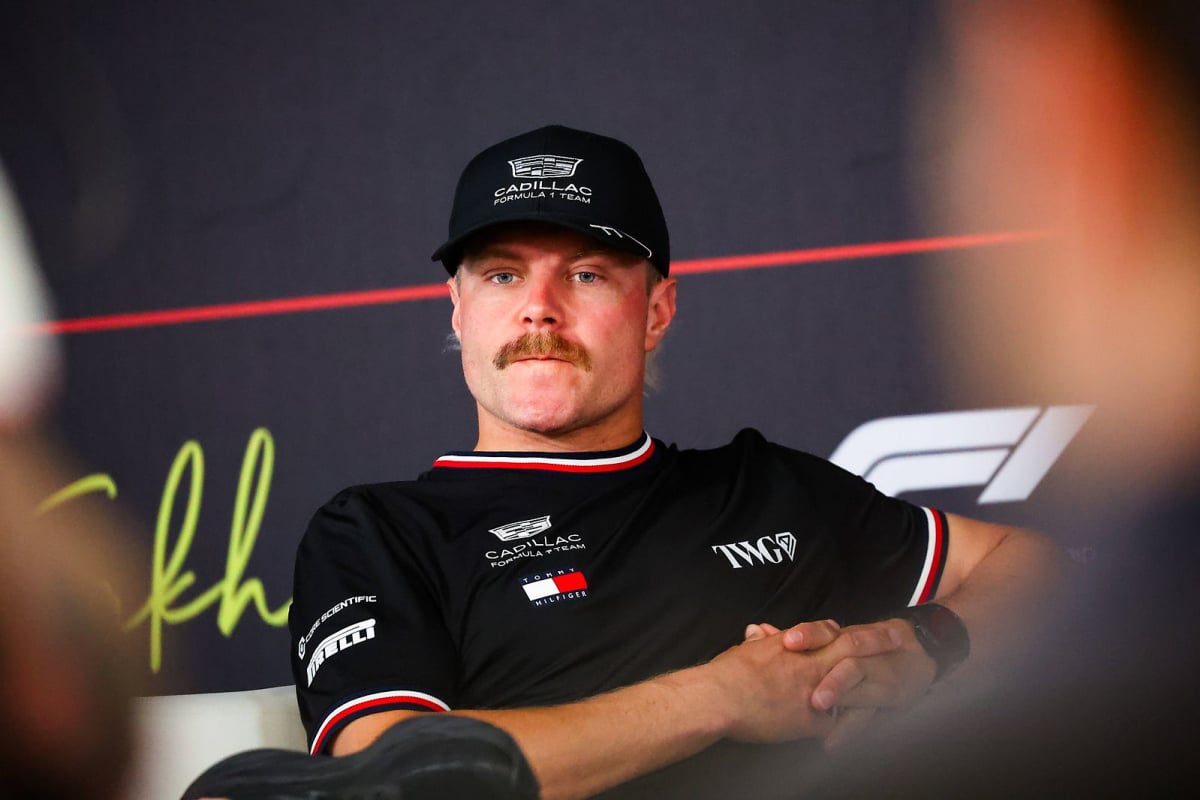
Cadillac F1 star Valtteri Bottas bravely shared his experience with an eating disorder in a piece written for the Players' Tribune.
The Finn recounted his journey into F1 up until present day, and revealed just how difficult it was racing in those early years, particularly regarding his relationship with his weight and food.
In the wake of this admission, however, Italian publication Corriere della Sera penned an insensitive review of Bottas at the Canadian Grand Prix, targeting his image rather than his driving.
In it, they claimed he was 'dressed like an old aunt' and 'gives the impression of being chubby', ending the review that 'he is like an extra, instead of being in grands prix, he observes them.'
Bottas shares experience with eating disorder
For Players' Tribune, Bottas revealed that during the early stages of his F1 career he suffered from an eating disorder.
He started by writing: "Back then, my entire identity was racing. I did not give a damn about anything else. It’s not a problem until it’s a problem. And in 2014, it became a big problem.
"OK, now the silly Finnish guy has to get a little bit serious. I won’t bore you, don’t worry. I am not going to cry here. We don’t have to play the dramatic music.
"But yeah….. Basically, I started starving myself.
"It started with a simple diet. After my rookie season, we went on winter break, and the Williams team was predicting an overweight car for 2014. This was back when there was no seat-plus-driver weight minimum, so the team suggested that I lose five kilos. If you put a clear goal like that in front of me, I am going to obsess over it.
"When you tell me five kilos in two months, my brain thinks, 'Five? Why not 10? We can make the car even quicker.' So I started eating steamed broccoli and a bit of steamed cauliflower for almost every meal. I can still smell the broccoli. Wet. Green. Plain. My god.
"It was like a game to me. I would wake up and weigh myself every morning, and when I’d see the number go down, I’d feel a deep satisfaction. I would come back from a 90-minute run and eat my little bowl of steamed broccoli, just to have enough energy so I could go for another 90-minute run.
"I had this GPS watch, and my coach could track my training, my heart rate, everything. I knew he would think I was burning myself out, so I started taking the watch off and leaving it at home before my second session. The game became completely consuming."
Bottas: My nerves were shot
Bottas continued: "After two months of spiralling, my nerves were shot. I would wake up at 4 o’clock in the morning on my own, no alarm. My heart would be beating out of my chest. I’d have all this energy, and I’d think, “This is so great. I have so much extra time in the day to do all my training.”
"I was like a drug addict. “I’ve never felt better!” Ha. Completely delusional. The actual reason I was waking up so early was that my body was in starvation mode.
"The worst part about it was that I would look in the mirror in the morning and I would see my silhouette, and I was so satisfied that my reflection was getting slimmer. It was not about racing anymore.
"I don’t even know how much weight I lost in those two months. I looked sick. And of course, after everything I put myself through, we came back from the break and started testing the car, what do you think happened? The damn thing was actually underweight. Welcome to F1.
"I started having these intense foggy spells. Not full-blown panic attacks exactly, but whenever I was in a crowd, I would start to feel dizzy and just …. weird, like I had to get out of there. I wanted to be alone, or in the car.
Bottas outlines turning point
Bottas then revealed when people started to notice he wasn't okay, and detailed the point he began to tackle disordered eating.
He wrote: "The strangest thing is that when I was on the grid, everything felt fine. I was driving very well. I was on the podium, smiling. Then I’d get home, and I looked like a ghost. People around me started to look at me like, 'Valtteri, what’s going on?' 'Me? I’m fine.'
"It got so bad that I actually started having heart palpitations when I was working out, and my coach knew something was wrong. But I was just in denial for so long. I kept telling everybody that I was OK. The turning point didn’t come until a very, very dark day, when my old teammate Jules Bianchi crashed at Suzuka.
"I remember flying back home from Japan, and we all knew that the situation was really bad, and that Jules was in a coma. I was sitting on the plane, and it just felt like nothing mattered to me anymore. I remember my ex-girlfriend texting me wishing me a safe flight, and I just thought, If the plane goes down, who cares? I will disappear and it will be over. I didn’t find joy in anything anymore.
"When I was back home, I was just so angry and negative about everything, and I remember my ex asking me if I ever worry when I’m in the car, because it’s so dangerous. I said, 'No. If I die, I die.'
"At that moment, I realised that I genuinely did not care what happened to me anymore. I was having a great season, but it wasn’t enough. Not long after that, I decided to get some help. I started seeing a psychologist, and I finally admitted out loud that I was unwell. That was a big relief, just to say it to somebody. When they took my bloodwork, it was crazy. The numbers were all over the place. My hormones and my nervous system were so out of whack. I had run myself into the ground – mentally and physically.
"My psychologist actually made an interesting observation about me. He said, 'You know Valtteri, you don’t seem to have any interests outside of racing. Nothing else that brings you joy. You’re almost like a machine.' He was right. My whole identity was the car.
"I kept everything from my team and even my teammates. Even my family didn’t know. In the paddock, you can’t show any weakness. Only my coach and my doctor knew what was going on. It took me almost two years to feel like myself again. It’s funny because if you just watched my races, you probably wouldn’t know anything was wrong."
F1 HEADLINES: Ferrari go fully electric, insider shocked
Related
More F1 news
Latest F1 news


Recommended by the editors
 Lewis Hamilton
Lewis Hamilton says people are trying to retire him, what if those people are Ferrari
 Mercedes
F1 fans point out George Russell hypocrisy over Max Verstappen 'violence' claim
 F1 2027
F1 2027 Grid: Verstappen and Hamilton questions as major dominoes set to fall
 Latest F1 News
F1 genius Ross Brawn joins new team







Races
-
 Grand Prix of Australia 2026
-
 Grand Prix of China 2026
-
 Grand Prix of Japan 2026
-
 Grand Prix of Bahrain 2026
-
 Saudi Arabian Grand Prix 2026
-
 Miami Grand Prix 2026
-
 Grand Prix du Canada 2026
-
 Grand Prix De Monaco 2026
-
 Gran Premio de Barcelona-Catalunya 2026
-
 Grand Prix of Austria 2026
-
 Grand Prix of Great Britain 2026
-
 Grand Prix of Belgium 2026
-
 Grand Prix of Hungary 2026
-
 Dutch Grand Prix 2026
-
 Grand Prix of Italy 2026
-
Gran Premio de España 2026
-
 Grand Prix of Azerbaijan 2026
-
 Grand Prix of Singapore 2026
-
Grand Prix of the United States 2026
-
 Gran Premio de la Ciudad de Mexico 2026
-
 Grande Prêmio de São Paulo 2026
-
Las Vegas Grand Prix 2026
-
 Qatar Grand Prix 2026
-
 Grand Prix of Abu Dhabi 2026
Follow us on your favorite social media channel
Editorial & corporate information

Avenue HQ
10–12 East Parade
Leeds
LS1 2BH
United Kingdom Regional correspondence
View contact page