


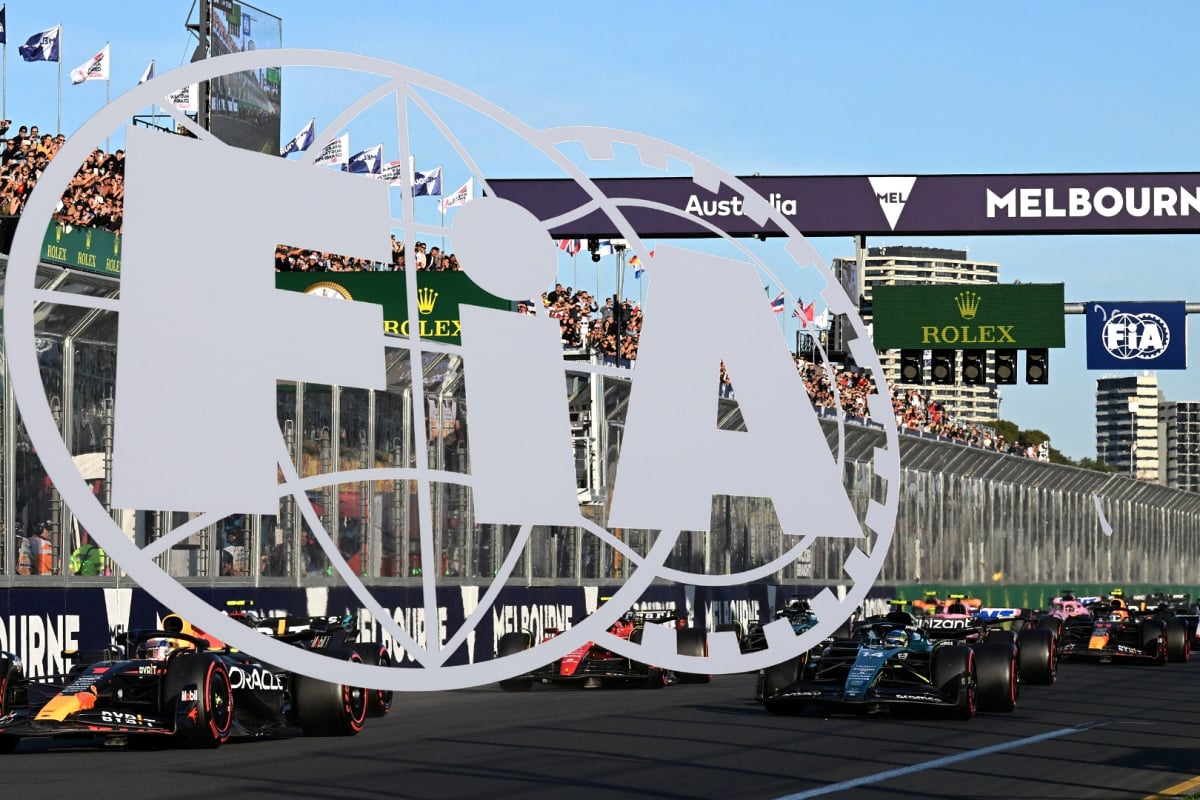

Australian Grand Prix EIGHT-CAR pileup sends F1 and FIA a major Melbourne warning
Albert Park is the venue again for the first Formula 1 race of the season this Sunday

Usually in Formula 1 it's impossible to predict whether a grand prix race start is going to go perfectly with all drivers getting through lap one... or just a huge mess which needs to be stopped with a red flag.
For the start of 2026 though there are fears that the latter scenario could be at an increased risk due to the new regulations for this season. Welcome to the Australian Grand Prix.
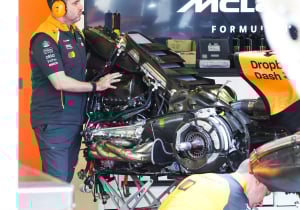
To put this as simple as possible, the new engines for 2026 require some charging before getting a perfect start off the line - and this takes time, and is not a simple procedure.
Ferrari, and customer teams that run their engines such as Cadillac and Haas, seem to have an advantage in that their cars take far less time to ensure they get the quickest start they can off the line.
For the Mercedes, Ford (Red Bull powertrains if you want to get technical), Audi and Honda (warning: this article is an Aston Martin joke free zone) powered cars, this perfect getaway takes a little longer.
Too long in fact, to the point that by the time the red lights come on and go out for the race start, they don't quite have the same power that the Ferraris do.
READ MORE: Ferrari F1 Season Preview: Hamilton can finally win record eighth title
F1 starts could be more dangerous than ever
Now if you are a Lewis Hamilton and Ferrari fan, you may be saying 'boo-hoo' to the other teams and 'just get better', and I certainly understand the sentiment, especially as Fred Vassuer claimed he raised concerns over the new start procedure back in 2025.
This isn't just about teams having better ways to limit turbo lag though, drivers are finding the new start procedure extremely complicated. And should multiple or even just one F1 driver get the procedure badly wrong come lights out in Melbourne, it could lead to a catastrophic race start.
The Albert Park circuit is not immune to first-corner carnage either. The 2002 season is largely remembered as Michael Schumacher's win and podium tour (he was never off it) but the start of the season was carnage.
The race start saw Ralf Schumacher in his Williams get off the line superbly, overtaking his brother's Ferrari before making a charge on the other red car and pole position man Rubens Barrichello.
As Barrichello braked for turn one slightly early, Ralf was completely caught out, crashing into the Ferrari's rear wing at 150mph before launching over the car and grazing Barrichello's crash helmet before landing on all four wheels and into a barrier without injuries. Barrichello too was ok but the incident sparked chaos behind them with six other cars wiped out from the race.
Giancarlo Fisichella, Felipe Massa, Nick Heidfeld, Jenson Button, Olivier Panis and Allan McNish all had to retire with damaged cars on lap one. Eight cars were eliminated in one fell swoop and it was incredibly fortunate nobody was hurt.
The race wasn't even red flagged as the wreckage and debris was sorted under a safety car, although by today's standards it would have been red flagged before Schumacher's car hit planet Earth again.
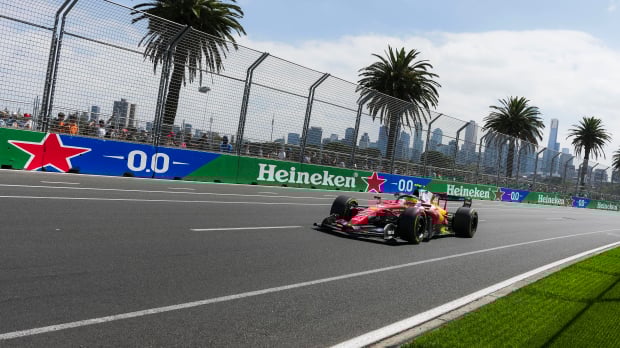
Albert Park requires race start risks
Albert Park can be a notoriously difficult place to overtake, so making up positions at the start can be crucial. Hence more risks could be taken and when you combine that with drivers having large range of errors in getting their race starts perfect, it's a recipe for a highly dangerous scenario.
The FIA have acted in fairness by adding a further five seconds for drivers to try and get good getaways, but this may still be not enough.
Of course we don't want to sanitise the start procedure completely by ensuring everyone has perfect getaways, but a balance needs to be struck. You can't have F1 drivers starting a race as if they are trying to reboot a computer while driving a 200mph car and be complacent about the dangers. F1 and the FIA you have your warning.
READ MORE: FIA president confirms he is 'assessing' Middle East F1 races after Iran missile attacks
Related
More F1 news
Latest F1 news
Recommended by the editors
 F1 Explained
F1 Engine Compression Ratio - What is it and why is it so controversial?
 F1 on TV
F1 on Apple TV: 2026 Presenter lineup and how to watch the Australian Grand Prix FREE
 F1 2026 Regulations
F1 2026 Regulations Explained: Every new rule, car change and key questions answered
 F1 on TV
F1 Commentators: Meet the Sky Sports and Channel 4 teams







Races
-
 Grand Prix of Australia 2026
-
 Grand Prix of China 2026
-
 Grand Prix of Japan 2026
-
 Grand Prix of Bahrain 2026
-
 Saudi Arabian Grand Prix 2026
-
 Miami Grand Prix 2026
-
 Grand Prix du Canada 2026
-
 Grand Prix De Monaco 2026
-
 Gran Premio de Barcelona-Catalunya 2026
-
 Grand Prix of Austria 2026
-
 Grand Prix of Great Britain 2026
-
 Grand Prix of Belgium 2026
-
 Grand Prix of Hungary 2026
-
 Dutch Grand Prix 2026
-
 Grand Prix of Italy 2026
-
Gran Premio de España 2026
-
 Grand Prix of Azerbaijan 2026
-
 Grand Prix of Singapore 2026
-
Grand Prix of the United States 2026
-
 Gran Premio de la Ciudad de Mexico 2026
-
 Grande Prêmio de São Paulo 2026
-
Las Vegas Grand Prix 2026
-
 Qatar Grand Prix 2026
-
 Grand Prix of Abu Dhabi 2026
Follow us on your favorite social media channel
Editorial & corporate information

Avenue HQ
10–12 East Parade
Leeds
LS1 2BH
United Kingdom Regional correspondence
View contact page