


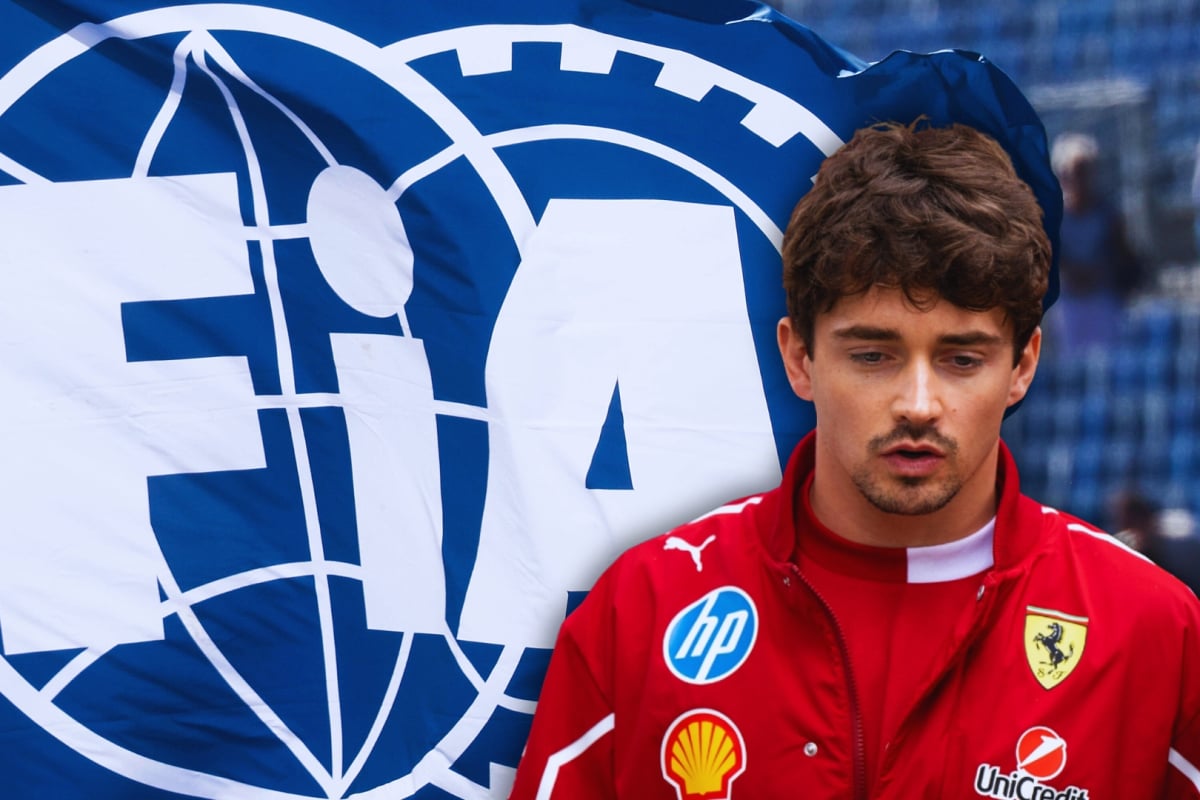

F1 star Charles Leclerc could miss Spanish GP, faces 'hardest return in sport' with FIA health test
Leclerc has a tight turnaround from Monza to Madring
The Italian Grand Prix is old news now, already yesterday's chip paper, but for Charles Leclerc and Ferrari it remains a central plot to this coming weekend in Madrid.
On Sunday it's the first Spanish Grand Prix to be held at the new Madring circuit but whether Leclerc will be racing there is still very much in question.
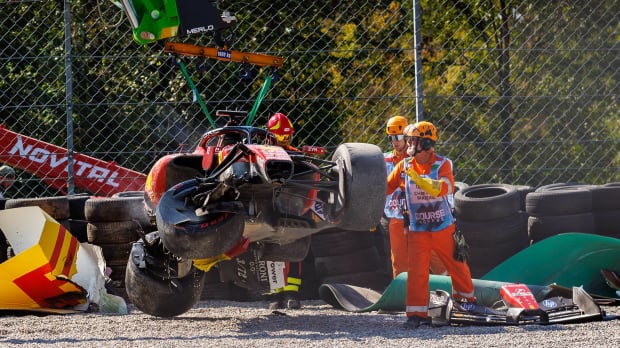
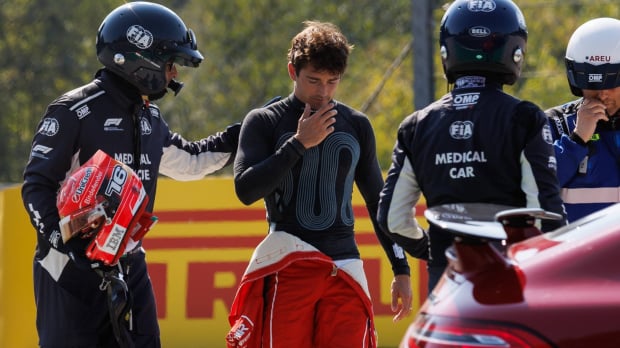
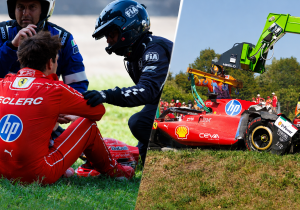
Leclerc suffered a big crash at Monza last Sunday after spinning rearwards into a crash barrier. While the 28-year-old was able to climb from his Ferrari wreck, he took respite off the track by sitting down for a few moments.
In addition he also later reported vision issues with his right eye having visited the medical centre at the race circuit, before saying it had recovered a short while later.
Dr. Isabel Ornaque will be head of the medical centre at the Spanish Grand Prix, and will ultimately decide whether Leclerc will be able to compete this weekend.
She told Marca that Leclerc's crash was around 23G (not the 50G that has been reported). The doctor has already treated Leclerc following his crash at the Barcelona-Catalunya Grand Prix in June which was measured at 22G.
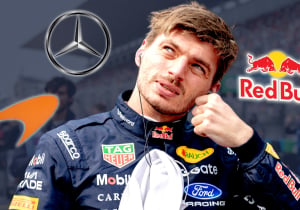
F1 HEADLINES: Verstappen admits McLaren and Mercedes talks as Red Bull sign Raikkonen
Leclerc due for immediate assessment at Madring
An assessment will be given to Leclerc on Thursday (September 10) at Madring but that won't be the last of it. Ferrari will have a contingency plan in place if Leclerc cannot race, and that is likely to include Antonio Giovinazzi racing.
The issue is what does recovery for Leclerc look like? Sadly, it's complicated.
Bradley Scanes who was Max Verstappen's performance coach between 2019 and 2023 has experience with FIA exams to determine a driver's mental fitness, and claims motor racing offers 'the hardest return in sport'.
The infamous Hamilton and Verstappen crash at Silverstone 2021 led to the Dutchman having to take the exam himself with Scanes up close to every step as he tried to prove his fitness ahead of the next race.
Luckily for Verstappen, that next race was two weeks away, but Leclerc doesn't have that buffer with his medical examination coming just four days after the Monza crash and the on-track action set to begin tomorrow (Friday).
Scanes wrote a fascinating essay on Substack to outline the issues and procedure, and claims professional racing drivers can return faster than the average person, taking between five to seven days.
The complications over head injuries
That all sounds promising for Leclerc, but that's not all as Scanes added that even after 48 hours of being asymptomatic, a scientific study revealed that college-age drivers displayed poorer vehicle control and more lane excursions.
Remember this isn't just about whether Leclerc is safe to drive an F1 car, it is also if he is not putting the other drivers' safety at risk.
Scanes also added that simulators are not the full test either, saying that replication of heart rate and 5G forces through the neck also need to be tested to see the brain's response.
This is why if Leclerc does take part in first practice, it's not going to be the all-clear for him, it's just going to be part of the test to see if he is able to compete.
There is a precedent for this with current F1 star Sergio Perez given given the all clear to compete at the Canadian Grand Prix two weeks after crashing in Monaco. But he felt ill after practice in Montreal and withdrew as a result - highlighting the difference between a medical exam and the real test in the field.
Leclerc's road to recovery
Scanes has highlighted a nine-step return for a minimal return providing no symptoms arise, which summarised here is:
Stage 0: Recognise and remove. This is the actual incident acknowledged by the CMO (chief medical officer) and the FIA medical delegate.
Stage 1: Relative rest. No driving, no gaming, loud environments or prolonged screen usage. This is a minimum 24 hours to 48 hours.
Stage 2a: Light aerobics. Around 55 per cent of the predicted maximum heart rate of cycling or walking. Minimum of 24 hours.
Stage 2b: Moderate aerobics. Same as before but 70 per cent. Road driving can be done if symptom free after exercise. Minimum 24 hours.
Stage 3: Short cognitive load. First F1 sim session at low intensity. Minimum 24 hours
Stage 4: High-demand cognitive load: Sim put into race pace with defensive driving. Minimum 24 to 72 hours
Stage 5: Full load and re-test: A 5km run, full strength session, neurocognitive test. This precedes a written report to an independent specialist and no recurrence within previous 48 hours. Minimum 24 to 48 hours.
Stage 6: FIA reintegration exam. Takes place at medical centre of next race, normal on a Thursday. A pass means free to compete.
Stage 7: Supervised on-track return. FP1 serves as the final stage. Symptom check after session.
Scanes notes that stages one to five require at least seven to nine days to give a clean case, which overshoots a back-to-back F1 race weekend, meaning based on the above there could be fears over Leclerc competing at Madring.
READ MORE: Lewis Hamilton made one big Ferrari mistake and now he is paying - 'Why didn't he get it sorted'
READ MORE: Ferrari insider has a new theory about massive Charles Leclerc Monza crash
Related
More F1 news
Latest F1 news
Recommended by the editors
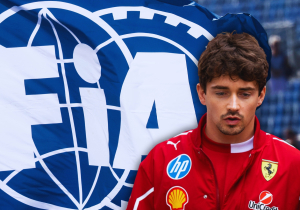 Charles Leclerc
F1 star Charles Leclerc could miss Spanish GP, faces 'hardest return in sport' with FIA health test
 Kimi Antonelli
F1 has an 'AI agent' driver and he's about to become the youngest world champion ever
 Charles Leclerc
Ferrari F1 insider has a new theory about massive Leclerc Monza crash
 Max Verstappen
F1 champion Max Verstappen reveals his 'bucket list' races after Nurburgring adventure







Races
-
 Grand Prix of Australia 2026
-
 Grand Prix of China 2026
-
 Grand Prix of Japan 2026
-
 Saudi Arabian Grand Prix 2026
-
 Miami Grand Prix 2026
-
 Grand Prix du Canada 2026
-
 Grand Prix De Monaco 2026
-
 Gran Premio de Barcelona-Catalunya 2026
-
 Grand Prix of Austria 2026
-
 Grand Prix of Great Britain 2026
-
 Grand Prix of Belgium 2026
-
 Grand Prix of Hungary 2026
-
 Dutch Grand Prix 2026
-
 Grand Prix of Italy 2026
-
Gran Premio de España 2026
-
 Grand Prix of Azerbaijan 2026
-
 Grand Prix of Bahrain 2026
-
 Grand Prix of Singapore 2026
-
Grand Prix of the United States 2026
-
 Gran Premio de la Ciudad de Mexico 2026
-
 Grande Prêmio de São Paulo 2026
-
Las Vegas Grand Prix 2026
-
 Qatar Grand Prix 2026
-
 Grand Prix of Abu Dhabi 2026
Follow us on your favorite social media channel
Editorial & corporate information

Avenue HQ
10–12 East Parade
Leeds
LS1 2BH
United Kingdom Regional correspondence
View contact page