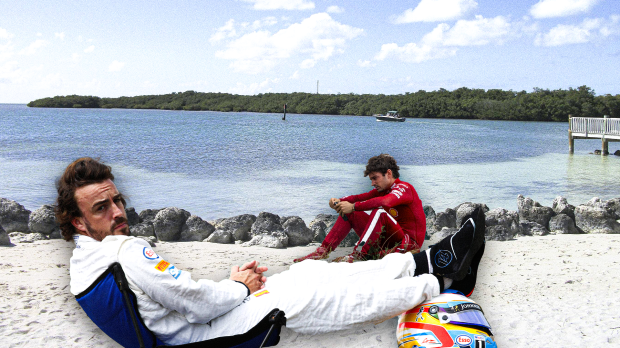

F1 enters the summer break shutdown and this is how the FIA enforce it
No sneaky working allowed
Starting today (July 31, 2026), Formula 1 factories will shut their doors for a mandatory two‐week summer break.
During this period, teams are not allowed to work on their cars. So how does the FIA ensure that nothing sneaky is happening behind the scenes?
Article 3.1 of the FIA’s operational regulations requires teams to close their factories for two weeks during July and August.
While teams often pick their preferred break dates, they usually align with one another to ensure smooth preparations for the Dutch Grand Prix, the first race after the summer hiatus.
READ MORE: Where F1 drivers live, and why so many choose Monaco?
Factory shutdowns
During the summer break, teams have very little work to do. The FIA monitors compliance in several ways.
Teams must log any activities during the shutdown period, and these records can be requested at any time.
In addition, access control systems at the factories allow the FIA to track who enters and exits the premises.
Restrictions on computers and remote work
Car development comes to a complete halt during the summer break. The FIA can later review files, such as CAD documents, wind tunnel data, CFD simulations, and other technical information, to check for any covert work.
And if you think staff might work on new parts from home, think again: any work related to car development is forbidden, even though no FIA inspector is likely to pop by a team member’s holiday home for a check.
Exceptions during the summer break
That said, there is an exception. Teams can continue work in their factories if they have a valid reason, for example, performing essential maintenance. Teams must be able to justify why such tasks needed to be carried out during the summer break.
Teams keeping each other in check
The FIA’s system largely rests on trust. If there are suspicions of rule-breaking, the FIA can conduct random checks and ask teams for further information.
Moreover, the competitive nature of F1 means that teams keep a close eye on each other.
If a team suspects that a rival is secretly resuming development work, they can report it to the international governing body.
Penalties and reputational damage
If a team is caught breaking the rules, the FIA can hand out fines or even impose sporting penalties.
Such behaviour is considered a form of competitive fraud, carrying the risk of severe punishment and lasting reputational damage.
F1 DRIVER SALARIES: F1 driver salaries: What stars including Hamilton and Verstappen earn




 Grand Prix of Australia 2026
  Grand Prix of China 2026
  Grand Prix of Japan 2026
  Saudi Arabian Grand Prix 2026
  Miami Grand Prix 2026
  Grand Prix du Canada 2026
  Grand Prix De Monaco 2026
  Gran Premio de Barcelona-Catalunya 2026
  Grand Prix of Austria 2026
  Grand Prix of Belgium 2026
  Grand Prix of Hungary 2026
  Grand Prix of Italy 2026
  Grand Prix of Azerbaijan 2026
  Grand Prix of Bahrain 2026
  Grand Prix of Singapore 2026
  Gran Premio de la Ciudad de Mexico 2026
  Grande Prêmio de São Paulo 2026
  Qatar Grand Prix 2026
  Grand Prix of Abu Dhabi 2026