


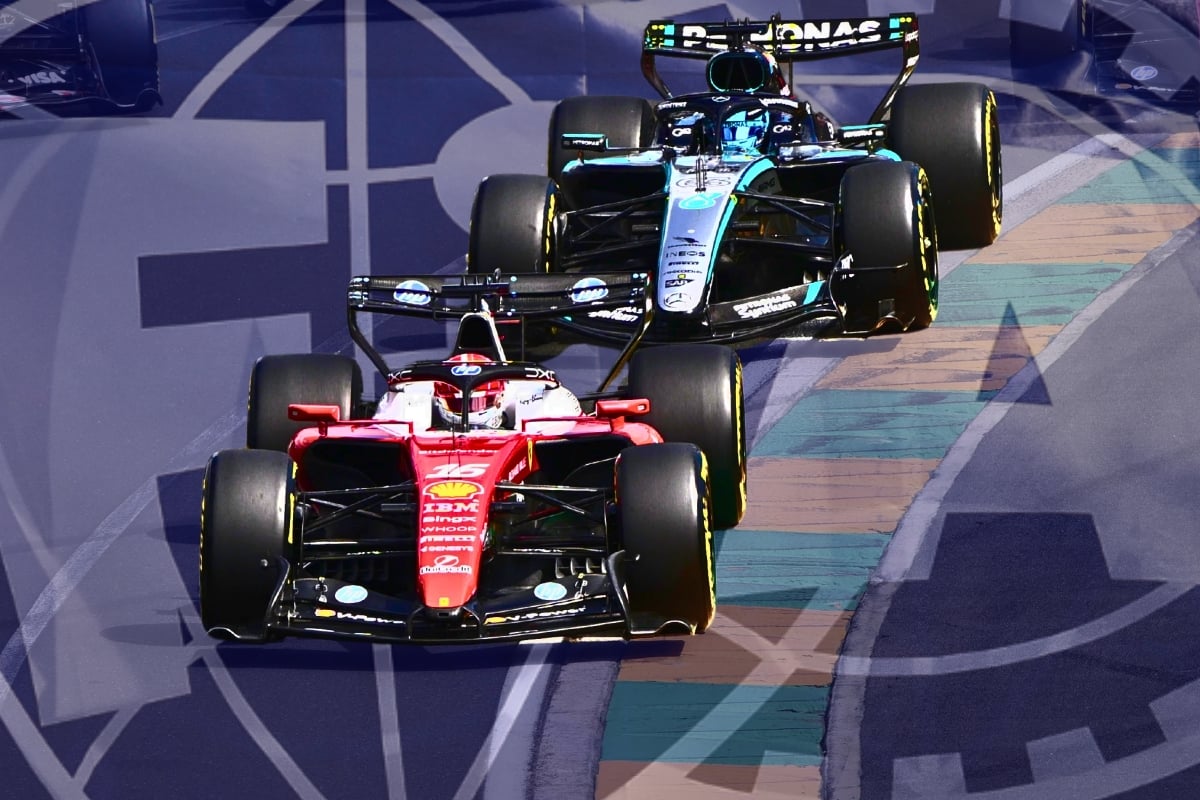

F1 teams just did something the FIA weren't expecting - here's what it means
The FIA have revealed that the F1 2026 teams have caught them by surprise

Teams on the F1 2026 grid have reportedly caught the FIA off guard as the governing body continues to look into making adjustments to the new regulations.
The 2026 campaign introduced a completely overhauled set of chassis and power unit rules, which haven't exactly gone down well with the majority of drivers across the opening rounds of the season.
After Haas F1 star Ollie Bearman suffered a terrifying crash at the Japanese GP that could be blamed on dangerous closing speeds (a new issue for 2026) the grid rallied together to call upon F1's governing body to make instant changes.
After a five-week enforced break from the calendar, the FIA rolled out 'tweaks' to this year's rules that had hoped to encourage more 'natural' racing, but some critics like Max Verstappen don't feel as if the changes have gone far enough.
The FIA have maintained they are still open to changing the regulations further, especially ahead of next season, and now, a potential review of the aerodynamic side of things has been unveiled.
F1 HEADLINES: Hamilton announces instant Ferrari change as champion sets out retirement terms
F1 team improvements 'challenge' FIA
According to The Race, F1 teams are set to discuss 'a downforce reduction plan' aimed at easing energy management issues in the new cars for next season onwards.
The idea is to reduce downforce, thereby requiring less energy management, an idea which the FIA has admitted was conjured up due to the teams causing an issue for them after showing unexpected levels of downforce.
The FIA claim that after evaluating the opening rounds of the 2026 championship, it has become clear that the performance of the new machinery through corners is having a major influence on the amount of energy available, because the quicker the cars are through turns, the less they can harvest.
The FIA's single-seater director Nikolas Tombazis has revealed that as a result, some of the current energy-management issues the drivers are struggling with are actually a result of the teams producing cars that are performing at a higher level than the FIA expected.
Speaking to The Race, Tombazis said: "One of the reasons it hasn't been right there from the start is that cars are going a bit faster [than anticipated].
"They [the teams] have found a bit more downforce than we were expecting, and therefore the energy recovered during braking is a bit lower than it would normally be.
"So we have a bit more of a challenge than we would have liked to have."
Tombazis admitted that he is content with the overall aerodynamic package for 2026, but that the downforce numbers need looking into as part of what F1's governing body sees as an over-reliance on energy management.
"We keep monitoring the performance of the cars, and we will make sure that, obviously through the governance process, cars remain roughly in the right envelope of performances that they need to be," he added.
The proposed solution is to reduce downforce, which in theory should help recover more energy. Additionally, it would lower the risk of tyre safety issues since lower corner speeds mean less stress on the tyres. Insiders are considering cuts of 20, 30, or even 40 points in downforce.
READ MORE: FIA president welcomes Christian Horner return to F1
Related
More F1 news


Recommended by the editors
 FIA News
F1 teams just did something the FIA weren't expecting - here's what it means
 Latest F1 News
F1 secure NEW '£1BILLION UK TV deal'
 Latest F1 News
George Russell out of excuses after Miami GP battering: 'Just laid down and taken it'
 Miami Grand Prix
Max Verstappen claims he's in the F1 jungle after Miami GP







Races
-
 Grand Prix of Australia 2026
-
 Grand Prix of China 2026
-
 Grand Prix of Japan 2026
-
 Grand Prix of Bahrain 2026
-
 Saudi Arabian Grand Prix 2026
-
 Miami Grand Prix 2026
-
 Grand Prix du Canada 2026
-
 Grand Prix De Monaco 2026
-
 Gran Premio de Barcelona-Catalunya 2026
-
 Grand Prix of Austria 2026
-
 Grand Prix of Great Britain 2026
-
 Grand Prix of Belgium 2026
-
 Grand Prix of Hungary 2026
-
 Dutch Grand Prix 2026
-
 Grand Prix of Italy 2026
-
Gran Premio de España 2026
-
 Grand Prix of Azerbaijan 2026
-
 Grand Prix of Singapore 2026
-
Grand Prix of the United States 2026
-
 Gran Premio de la Ciudad de Mexico 2026
-
 Grande Prêmio de São Paulo 2026
-
Las Vegas Grand Prix 2026
-
 Qatar Grand Prix 2026
-
 Grand Prix of Abu Dhabi 2026
Follow us on your favorite social media channel
Editorial & corporate information

Avenue HQ
10–12 East Parade
Leeds
LS1 2BH
United Kingdom Regional correspondence
View contact page