


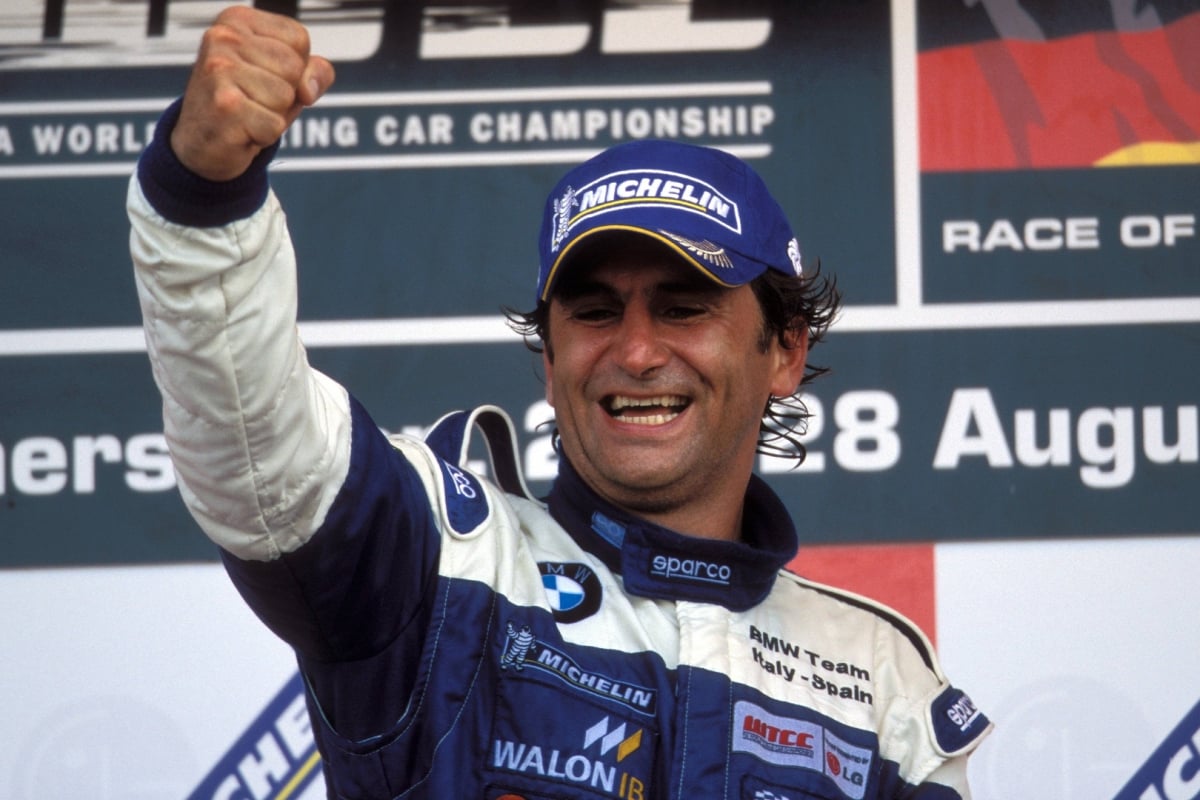
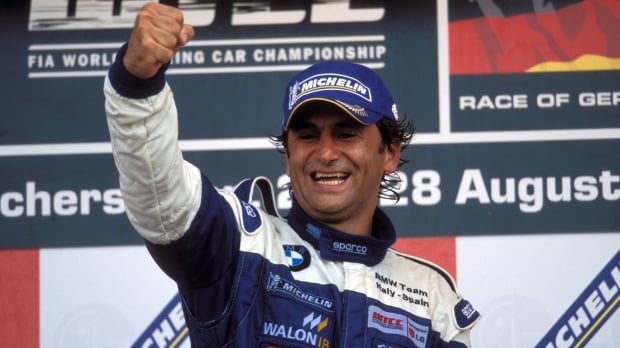

Alex Zanardi (1966-2026): The F1 star who refused to be defined by tragedy
Alex Zanardi leaves behind one of sport's great stories

Alex Zanardi was far more than a Formula 1 star.
The Italian, who has died at the age of 59, leaves behind one of the most remarkable stories in modern sport, having built one career in motorsport before creating another as a Paralympic champion.
Zanardi raced in F1 during the 1990s, became a two-time CART champion in the United States, survived a crash that cost him both legs, returned to racing, and then went on to win four Paralympic gold medals in hand-cycling.
Alex Zanardi death confirmed by family
Zanardi’s family confirmed the news in a statement, saying that the former F1 driver had died on the evening of May 1.
"Alex passed away peacefully, surrounded by the love of his family and friends," the statement read.
His family also thanked those who had offered support and asked for their grief and privacy to be respected during the period of mourning.
F1 president and CEO Stefano Domenicali also paid tribute to Zanardi, describing him as both a close friend and a source of inspiration.
"I am deeply saddened by the passing of my dear friend Alex Zanardi," Domenicali said.
"He was truly an inspirational person, as a human and as an athlete."
Alex Zanardi's F1 career
Zanardi was born in Bologna on October 23, 1966, and worked his way through junior motorsport before making his Formula 1 debut with Jordan in 1991.
He went on to race for Jordan, Minardi, Lotus and Williams across 41 grands prix, with his best F1 result coming at the 1993 Brazilian Grand Prix, where he finished sixth for Lotus.
His time in F1 never truly reflected the scale of his talent, but Zanardi found his perfect stage in American open-wheel racing. With Chip Ganassi Racing, he won back-to-back CART championships in 1997 and 1998, becoming one of the most celebrated drivers in the series.
For many fans, his defining racing moment came at Laguna Seca in 1996, when he produced his famous pass on Bryan Herta at the Corkscrew, a move still remembered as one of the great overtakes in American motorsport.
Alex Zanardi's life after horror crash
Zanardi’s life changed forever in September 2001, when he was involved in a horrific CART crash at the Lausitzring in Germany.
The accident led to the amputation of both legs, but Zanardi refused to let that become the end of his sporting career. He returned to motor racing less than two years later and later competed in the World Touring Car Championship with a specially adapted car.
His second sporting life then became even more extraordinary.
Zanardi moved into hand-cycling and became one of Italy’s most successful Paralympic athletes, winning two gold medals and one silver at London 2012 before adding another two golds and one silver at Rio 2016.
He also won multiple world titles in para-cycling and became a powerful advocate for athletes with disabilities, admired not only for what he won, but for the way he carried himself after unimaginable adversity.
Zanardi suffered another devastating setback in 2020 when he was seriously injured after being struck by a truck while competing in a charity handbike relay in Tuscany. He sustained serious head injuries and spent years undergoing treatment.
The legacy Alex Zanardi leaves behind
Zanardi’s legacy is difficult to contain within one sport.
In F1, he was a talented driver whose short spells never quite showed what he could really do. In CART, he was a champion. In Paralympic sport, he became a symbol of courage, resilience and reinvention.
But the reason his story reached so many people goes beyond trophies, medals or statistics.
Zanardi represented the refusal to be defined by tragedy. He rebuilt his life in public, with humour, determination and a level of strength that made him admired across motorsport, Paralympic sport and far beyond.
From F1 paddocks to Paralympic podiums, his story will remain one of the most powerful sport has ever produced.
Related
More F1 news
Latest F1 news
Recommended by the editors
 Max Verstappen
Max vs 100 Results: Final times and positions as Verstappen takes on epic Silverstone challenge
 Max Verstappen
'Max vs 100': Start time and how to watch live as Verstappen takes on epic Silverstone challenge
 F1 2027
F1 announce 34-race 2027 calendar as controversial Monaco Grand Prix decision confirmed
 F1 British Grand Prix
British Grand Prix Tickets: Top tips for Silverstone 2027 as calendar dates confirmed







Races
-
 Grand Prix of Australia 2026
-
 Grand Prix of China 2026
-
 Grand Prix of Japan 2026
-
 Saudi Arabian Grand Prix 2026
-
 Miami Grand Prix 2026
-
 Grand Prix du Canada 2026
-
 Grand Prix De Monaco 2026
-
 Gran Premio de Barcelona-Catalunya 2026
-
 Grand Prix of Austria 2026
-
 Grand Prix of Great Britain 2026
-
 Grand Prix of Belgium 2026
-
 Grand Prix of Hungary 2026
-
 Dutch Grand Prix 2026
-
 Grand Prix of Italy 2026
-
Gran Premio de España 2026
-
 Grand Prix of Azerbaijan 2026
-
 Grand Prix of Bahrain 2026
-
 Grand Prix of Singapore 2026
-
Grand Prix of the United States 2026
-
 Gran Premio de la Ciudad de Mexico 2026
-
 Grande Prêmio de São Paulo 2026
-
Las Vegas Grand Prix 2026
-
 Qatar Grand Prix 2026
-
 Grand Prix of Abu Dhabi 2026
Follow us on your favorite social media channel
Editorial & corporate information

Avenue HQ
10–12 East Parade
Leeds
LS1 2BH
United Kingdom Regional correspondence
View contact page