


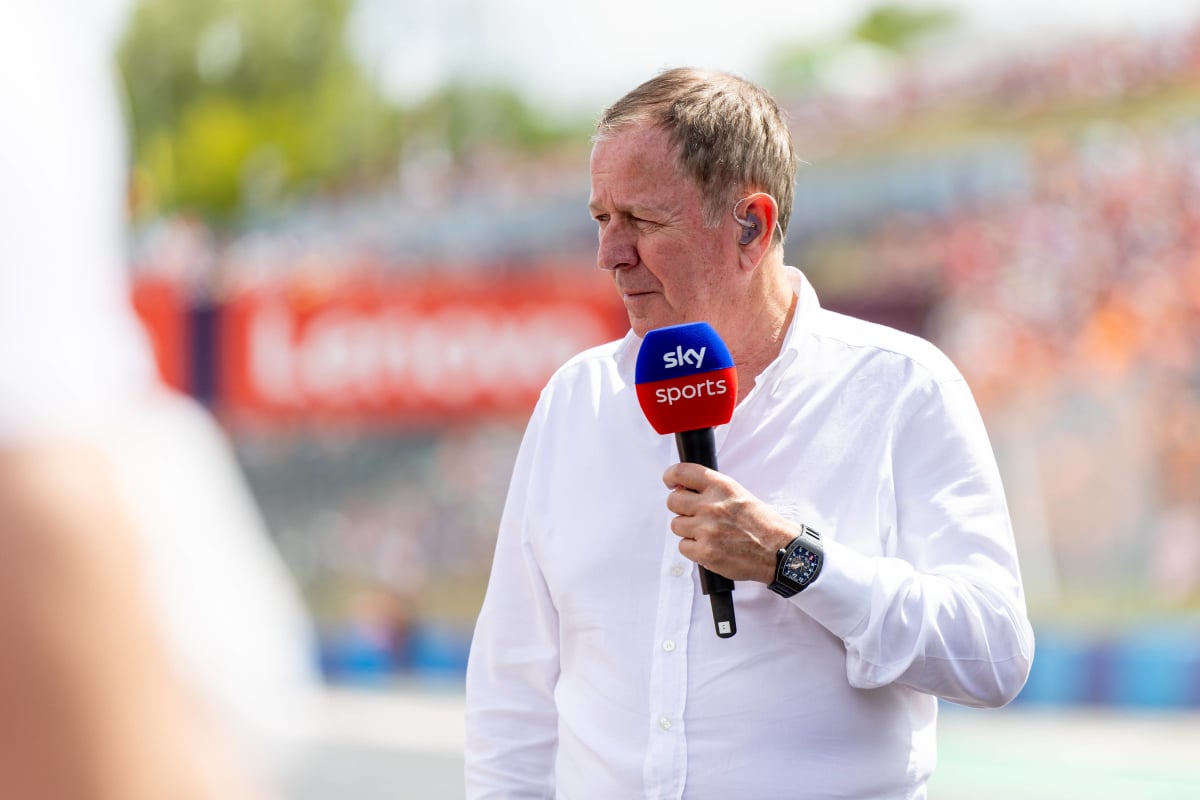

Martin Brundle F1 Disqualifications: The scandal that erased his ‘lost’ season
Martin Brundle's 1984 F1 season was packed full of scandal

The name Martin Brundle doesn’t show up on a list of F1 drivers thrown out of races for on‑track offences, unsafe driving or ignoring the stewards. Instead, seven of his eight disqualifications come from one moment: Tyrrell being kicked out of the 1984 World Championship and having all of its results scrubbed from the record.
On paper it looks brutal. A rookie delivers gritty, eye‑catching drives in an underpowered car, only to see the governing body reach back through the calendar and wipe them all away. But that only tells a small part of the incredible story.
Tyrrell’s ‘illegal’ ballast: How the scandal started
Tyrrell went into 1984 as the last normally aspirated hold‑out on a grid that was rapidly being taken over by manufacturer‑backed turbos. The team’s Cosworth‑powered 012 was often seconds off the pace in qualifying, so the team leaned on a clever water‑injection ballast system in the nose of the car to stay in the fight on Sundays. The scrutineers though did not like what they found.
Samples from Tyrrell’s water tank showed trace hydrocarbons, and the team was topping that fluid up late in races, while lead shot inside the tank doubled as ballast. The FISA Executive Committee joined the dots and decided this amounted to illegal refuelling plus a non‑compliant, movable ballast solution - a combination which they said left them 'no option' but to throw Tyrrell out of the World Championship and erase every result in 1984.
Ken Tyrrell flatly rejected that version of events, always maintaining that the fuel content in the water was within the rules, and that the lead shot counted as fixed ballast because it was sealed inside the tank and could only be removed with tools. From his point of view this was smart engineering at the edge of the regulations, not a smoking‑gun cheat device.
F1 COMMENTATORS: Meet the Sky Sports and Channel 4 teams including Martin Brundle, Naomi Schiff and Danica Patrick
Brundle’s rookie heroics, and how they vanished
All of this would be a technical footnote were it not for what Brundle did in that car. In 1984 he hustled the Tyrrell 012 to finishes that had no right to be possible for a Cosworth runner in the turbo era, particularly on street tracks and tighter circuits where engine power mattered less.
Detroit is the race everybody comes back to, where Brundle produced one of his finest early‑career drives on the bumpy street circuit, dragging the Tyrrell up the order and underlining why people inside the paddock rated him so highly. Monaco told a similar story - a driver with feel and racecraft outperforming an ageing chassis and a wheezy engine.
Then the ruling hit. When FISA expelled Tyrrell from the championship, every single one of those 1984 results disappeared from the official tables. Brundle’s points were stripped, his classified finishes were voided and his rookie season became a ghost year the statistics no longer acknowledge. As one period account put it, by the time he was recovering from his heavy Dallas crash, he was finding out from his hospital bed that all his hard work in Detroit 'had counted for nothing'.
REVEALED: Who are F1's richest team?
Brundle’s verdict: ‘Laughable’ treatment for a midfield team
Brundle has never been shy about how he views what happened. Looking back, he’s described the way Tyrrell were treated as 'laughable', pointing out that they were sometimes more than 10 seconds off the pace and hardly in a position to be gaming the system for a massive performance gain.
In other words: this wasn’t a dominant team caught red‑handed with a race‑winning illegal car. It was a midfield outfit scratching around for scraps, suddenly painted as the villains of a scandal big enough to justify wiping out an entire season. From a driver’s perspective, losing a whole year of stats over a disputed interpretation of ballast and water chemistry was always going to sting.
Brundle’s view underlines the imbalance at the heart of the story. The FIA insisted it was defending the integrity of the rules. Inside Tyrrell, and certainly from Brundle’s cockpit, the punishment looked wildly out of proportion to any real‑world advantage the car was gaining.
FISA vs Tyrrell: Two very different stories
Publicly, the governing body stuck to its line. The FISA Executive Committee argued that the combination of fuel‑contaminated water, mid‑race top‑ups and moving ballast meant Tyrrell had crossed a red line, and that exclusion from the championship was the only way to protect safety and sporting fairness.
Ken Tyrrell saw something else entirely. He argued that if you actually looked at the lap times and results, Tyrrell were hardly the sort of team you would expect to be exploiting some magic silver bullet. In his eyes they had pushed the regulations hard but stayed within the letter of the law, and the severity of the sanction owed more to politics than performance.
That clash - stewarding as rule‑book defence versus a privateer owner insisting he’d been made an example of - is why this case still gets dragged up whenever F1 fans talk about disqualifications that changed careers. Brundle’s lost season is the human face of that argument.
Politics, turbos and the ‘trumped‑up charge’ theory
You can’t separate the Tyrrell decision from the wider power struggle of the time. By 1984, F1 was heading firmly into a turbocharged future, with big manufacturers pushing for regulations which suited them. Tyrrell, still running a Cosworth V8, was the awkward outlier and Ken Tyrrell was one of the paddock’s loudest critics of fuel‑capacity rules designed around turbo cars.
Some period coverage and later retrospectives described the ballast case as a “trumped‑up charge” which conveniently removed both the last non‑turbo team and a vocal opponent of turbo‑friendly rules. With Tyrrell expelled, that dissenting voice and vote disappeared just as key decisions were being made about F1’s technical direction.
Several historians have since argued that, whether or not the system breached the rules on a strict reading, the punishment was politically very neat. It tidied up the grid, strengthened the hand of the manufacturers and sent a message about who really controlled the sport’s future. For Brundle, that bigger picture translated into a simple, brutal outcome: his best early work in F1 was sacrificed on the altar of a wider power play.
Was Brundle himself ever ‘thrown out’?
All of this noise can make it sound like Brundle was some sort of serial offender. He wasn’t. The crucial detail is that Tyrrell’s exclusion in 1984 was a team‑level penalty. It did not name Brundle as a driver guilty of cheating, it did not throw him out of individual races and it did not ban him from competing.
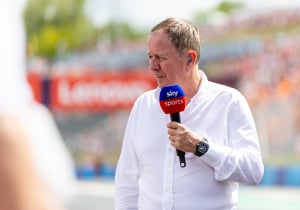
Once Tyrrell were expelled, his results went with them, that’s why 1984 disappears from his official points tally. Brundle carried on in F1 with Zakspeed, Brabham, Benetton, Ligier and Jordan before becoming one of the most respected voices in the paddock as a broadcaster with Sky Sports F1.
So when you see references to 'Martin Brundle disqualifications', you’re really looking at a statistical quirk created by a team being thrown out of the championship. The man himself wasn’t being black‑flagged week after week; he was the unlucky driver whose breakthrough year was erased in a boardroom.
Why this ‘lost season’ still matters
Four decades on, Brundle’s ghost year still gets people talking because it sits at the crossroads of everything that makes F1 political: clever engineering, grey‑area regulations, paddock power games and careers shaped by decisions made far away from the cockpit.
For Brundle, it means his early F1 story can’t be told just by glancing at a stats sheet. You have to add back in the context, the points that were scored, the drives that impressed, and the fact that an entire season was wiped by a ruling he still considers, in his words, “laughable” for a team that far off the front.
LEWIS HAMILTON: Career record with every pole, win and title
Related
More F1 news
Latest F1 news
Recommended by the editors
 Latest F1 News
Bahrain Grand Prix Cancelled: Why was race called off and who wins?
 Martin Brundle
Martin Brundle F1 Disqualifications: The scandal that erased his ‘lost’ season
 Racing News
Lance Stroll just tried and failed to copy Max Verstappen’s F1 escape
 F1 Stories
F1 legend Ayrton Senna was ready to sign for Ferrari, but the move never happened - here's why







Races
-
 Grand Prix of Australia 2026
-
 Grand Prix of China 2026
-
 Grand Prix of Japan 2026
-
 Grand Prix of Bahrain 2026
-
 Saudi Arabian Grand Prix 2026
-
 Miami Grand Prix 2026
-
 Grand Prix du Canada 2026
-
 Grand Prix De Monaco 2026
-
 Gran Premio de Barcelona-Catalunya 2026
-
 Grand Prix of Austria 2026
-
 Grand Prix of Great Britain 2026
-
 Grand Prix of Belgium 2026
-
 Grand Prix of Hungary 2026
-
 Dutch Grand Prix 2026
-
 Grand Prix of Italy 2026
-
Gran Premio de España 2026
-
 Grand Prix of Azerbaijan 2026
-
 Grand Prix of Singapore 2026
-
Grand Prix of the United States 2026
-
 Gran Premio de la Ciudad de Mexico 2026
-
 Grande Prêmio de São Paulo 2026
-
Las Vegas Grand Prix 2026
-
 Qatar Grand Prix 2026
-
 Grand Prix of Abu Dhabi 2026
Follow us on your favorite social media channel
Editorial & corporate information

Avenue HQ
10–12 East Parade
Leeds
LS1 2BH
United Kingdom Regional correspondence
View contact page