



In F1 size matters, so why are so many 2026 cars so overweight?
Red Bull and Williams have particularly heavy cars

As F1 2026 takes a break following the cancellations of the Saudi Arabian and Bahrain Grands Prix, a number of teams will be working hard to try and bring upgrades to their cars.
But, for some teams, they will be focusing on trying to reduce the weight of their car, before even thinking about adding heavy upgrade packages.
A number of teams - including Red Bull and Williams - are a significant chunk over the minimum weight threshold in F1 2026, weighing them down and hampering the performance of their cars.
But how do F1 teams get it so wrong when it comes to the weight of their cars? And in what areas does being overweight affect the performance of the car?
F1 2026 Regulations: Every new rule and car change explained
How much does an F1 car weigh?
Overall, an F1 car in 2026 has a minimum weight of 768kg, this is without fuel and is in an ideal world for F1 teams.
That minimum weight has been reduced by 32kg compared to 2025, in an attempt to reverse the direction of travel that had seen 200kg of weight added to F1 cars in the last 20 years.
Which teams' 2026 cars are overweight?
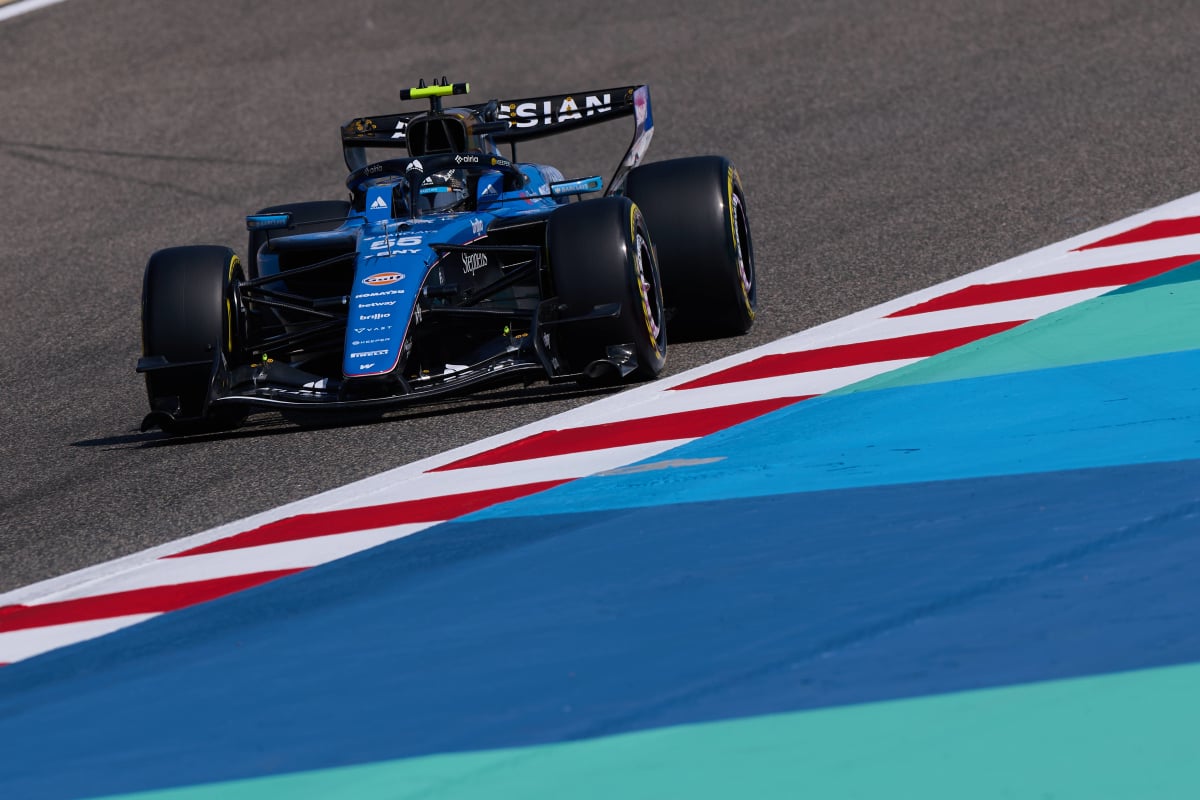
The most drastic weight issues in 2026 come from the Williams team, whose FW48 is more than 20kg above the minimum weight allowance. They are working extremely hard during the current five-week break from the sport to try and bring that down.
Meanwhile, Red Bull and the struggling Aston Martin outfit are believed to be around 10kg overweight, while the new Cadillac team are approximately six kilograms above the minimum.
Other teams who have minor weight issues in the early season are Racing Bulls, Alpine and Haas.
How does being overweight affect an F1 car?
Every 10kg above that minimum weight threshold is believed to add around 0.3 seconds of lap time per lap, which is one of the biggest reasons why Williams are struggling at the back of the pack this year despite having the dominant Mercedes power unit.
The extra mass reduces acceleration speeds and hampers braking because the power-weight ratio is far from the optimal ratio, while an F1 car being overweight also reduces cornering speed.
In low speed corners in particular, a heavy F1 car will feel more like a London bus, dragging itself around the apex in what is much more of a struggle for the driver.
On top of all this, a heavier car will also grain its tyres more, with higher energy being exerted on those very carefully prepared tyres, again, particularly in corners.
It all equates to quite a conundrum for the teams who have an overweight car, with time and resources having to be put in to try to reduce the car's weight, rather than developing upgrades.
How can the teams get their car weight so wrong?
With wholesale regulation changes accompanying the drop in weight ahead of the 2026 season, teams were likely working hard to try and ensure they had a reliable car and power unit combination for the first race in Australia.
But now reliability has become less of a concern for most teams, having a light, fast car is now the priority.
Williams' huge weight issues are understood to have been because of a failed crash test ahead of 2026 pre-season testing, which meant that they had to structurally reinforce their car, adding weight.
Bringing upgrades to the machinery as the season progresses will only increase the weight of the cars, which have been designed in 2026 to be smaller and more nimble than they were in 2025.
Safety regulations make the job of meeting the minimum weight limit harder, while some teams may have just been overcautious at the start of the season to try and avoid the harsh consequences of being even slightly underweight.
What happens if an F1 car is underweight?
While there is no maximum weight limit, teams try to stick as close to the minimum limit as possible to make their cars quicker.
If a car weighs less than 768kg, teams can add ballast, which is an extra weight used to bring it up to the required number. It can also be added to the car when a driver weighs less than 80kg - a minimum weight that includes their body weight, helmet, race suit, and shoes.
If a car is found to have violated the minimum 768kg weight rule, it faces the risk of disqualification. A recent example of this happened during the 2024 Belgian Grand Prix when George Russell's car was found to be underweight during post-race checks, and Lewis Hamilton inherited the race win in his final season with Mercedes.
F1 HEADLINES: Hamilton shares Ferrari masterplan as FIA meet for 2026 crunch talks
Related
More F1 news
Latest F1 news



Recommended by the editors
 F1 2026
In F1 size matters, so why are so many 2026 cars so overweight?
 Latest F1 News
FIA statement points to 'exciting' racing with 'tweaks' to F1 regulations after crunch talks
 Ferrari
Lewis Hamilton back on track despite F1 race hiatus
 Latest F1 News
McLaren announce official signing of Gianpiero Lambiase from Red Bull







Races
-
 Grand Prix of Australia 2026
-
 Grand Prix of China 2026
-
 Grand Prix of Japan 2026
-
 Grand Prix of Bahrain 2026
-
 Saudi Arabian Grand Prix 2026
-
 Miami Grand Prix 2026
-
 Grand Prix du Canada 2026
-
 Grand Prix De Monaco 2026
-
 Gran Premio de Barcelona-Catalunya 2026
-
 Grand Prix of Austria 2026
-
 Grand Prix of Great Britain 2026
-
 Grand Prix of Belgium 2026
-
 Grand Prix of Hungary 2026
-
 Dutch Grand Prix 2026
-
 Grand Prix of Italy 2026
-
Gran Premio de España 2026
-
 Grand Prix of Azerbaijan 2026
-
 Grand Prix of Singapore 2026
-
Grand Prix of the United States 2026
-
 Gran Premio de la Ciudad de Mexico 2026
-
 Grande Prêmio de São Paulo 2026
-
Las Vegas Grand Prix 2026
-
 Qatar Grand Prix 2026
-
 Grand Prix of Abu Dhabi 2026
Follow us on your favorite social media channel
Editorial & corporate information

Avenue HQ
10–12 East Parade
Leeds
LS1 2BH
United Kingdom Regional correspondence
View contact page