


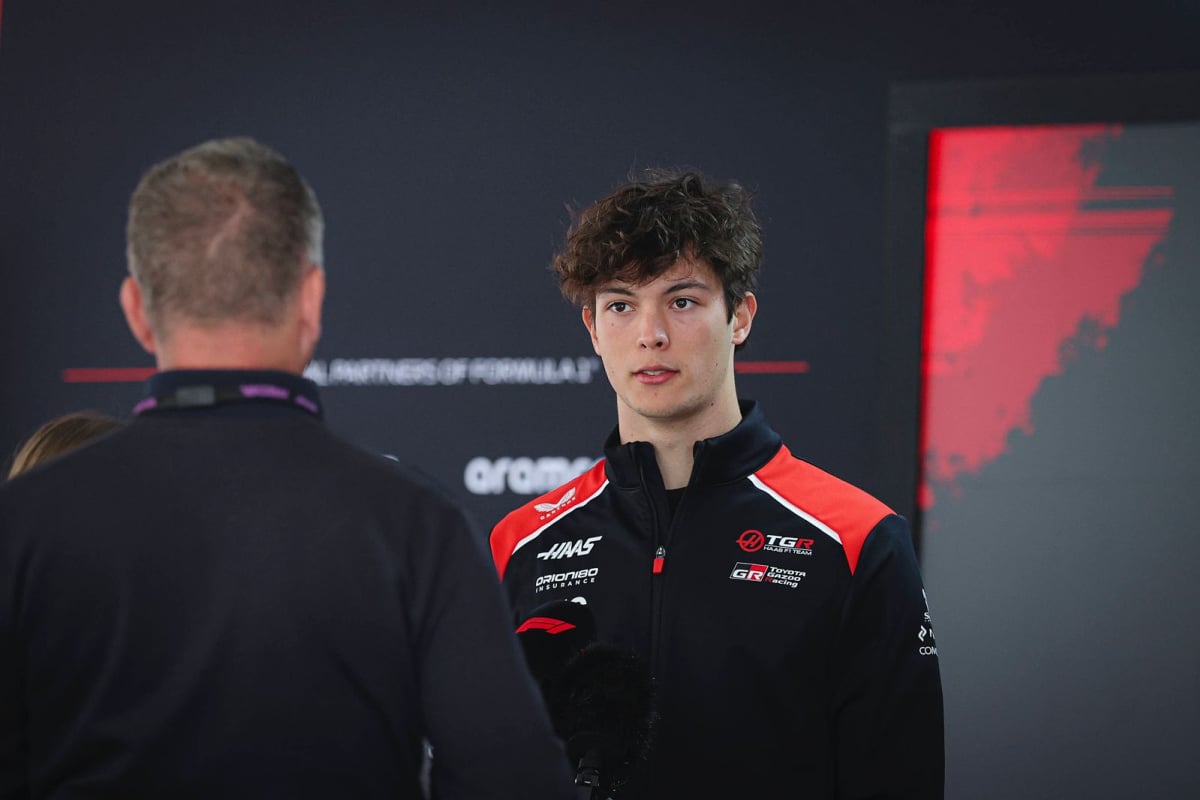

Ollie Bearman Suzuka crash shouldn't have happened, and everyone in F1 knows it
Bearman was medically cleared following the scary incident
The new F1 regulations are edging closer and closer to being a full-blown disaster for the sport.
FOM and the FIA can talk as much as they want about how the fans like the new regs package (that doesn't line up with what we've been hearing, but maybe they're just looking at their heavily-filtered Twitter replies), and it won't make a jot of difference.
We're three races into the season now, and the best driver in the sport is 'seriously considering' leaving the sport at the end of the year, before the age of 30. If he does, Max Verstappen will be the youngest ever F1 champion to retire.
Reigning champ Lando Norris is claiming that drivers' views are being ignored in favour of what the sport's regulators believe fans want. Fernando Alonso said this weekend that 'driver skill is not really needed anymore'.
This is all unedifying, but it's not what's actually important about what happened in Suzuka on Sunday.
F1 HEADLINES: Antonelli makes history, F1 star given medical update after huge crash
Ollie Bearman's terrifying Suzuka crash predictable – and avoidable
One of the scariest sights in F1 – or any racing series – is a driver coming across another car right in front of him, going drastically slower than he is.
We see it sometimes, of course. We see it in practice, when those slower drivers are being very clearly instructed to keep off the racing line, and when the driver behind knows that there's a slow-moving car ahead, and can be appropriately on guard. We also see it very, very occasionally when a car develops a fault and is moving slowly around the wrong side of a blind corner.
What F1 and the FIA have created is a racing environment when this can happen suddenly as part of the course of an actual race. On purpose. It happened to Ollie Bearman on Sunday, and he had to take to the grass at 300km/h – leaving him a passenger as his Haas slid across the greenery, the track, the run-off area and into the wall. The force of the impact was measured at 50G, one of the highest recorded in the sport's modern era.
Bearman, fortunately, was able to walk (well, limp) away from the impact. When hitting the wall at those speeds, that is in no way guaranteed.
This was bad. It could've been worse
Plainly, the battery deployment/harvesting system cannot continue as it stands. Bearman's accident was, as possible outcomes go, one of the best possible. What if Colapinto, the slow car in front of him, had moved over later in ignorance of how fast the Haas was approaching?
When an F1 car runs into the back of another with a closing speed of 10km/h, the wreckage usually requires a couple of flatbeds and pretty big brooms. With a closing speed closer to 50km/h, as Colapinto estimated after the incident, the resulting crash would be horrific.
Now let's say Colapinto didn't move over late, and Bearman still had to take dramatic evasive action, but the race was being held at a street circuit. Let's say that instead of grass to serve onto and a run-off area to scrub off some speed, it's just bam – Armco barrier.
This isn't just some geek with a keyboard coming up with worst-case hypotheticals, by the way. This is not a million miles from what Grand Prix Drivers' Association director and 12-year F1 veteran Carlos Sainz said after the race.
He said: "Here we were lucky there was an escape road. Now imagine going to Baku or going to Singapore or going to Vegas and having this kind of closing speeds and crashes next to the walls. We, as the GPDA, we've warned the FIA these accidents are going to happen a lot with this set of regulations, and we need to change something soon if we don't want them to happen.
"It was 50G I heard, which is higher than my crash in Russia in 2015, I was 46G. Just imagine what kind of crash you could have in Vegas, Baku, etc. I hope it serves as an example and the [FIA and FOM] listen to the drivers and not so much to the teams and people that said the racing was OK, because the racing is not OK."
The FIA have released a statement insisting that they always planned to have meetings in April to review the state of the new regs. "By design," they say, "these regulations include a number of adjustable parameters, particularly in relation to energy management, which allow for optimisation based on real-world data."
When it comes to conversations about drivers finding the racing boring, or not liking the style of driving, that's absolutely fair enough. F1 drivers moan about the quality of racing, they pretty much always have.
That doesn't wash when it comes to safety. When drivers have been warning you constantly – as Sainz has insisted that the GPDA have – that the way you're setting up to race is dangerous, you should be listening. No ifs. No buts. These are the people strapping themselves into carbon fibre missiles 24 weekends a year under your stewardship. They're not naturally risk-averse people. If they're concerned about this, it's because it's worth being concerned about.
"As drivers," Sainz said on Sunday, "we've been extremely vocal that the problem is not only qualifying, it's also racing, and we've been warning that this kind of accident was always going to happen."
If F1 and the FIA make some changes to reduce closing speeds in the coming weeks – and they should – it will be a tacit admission that they didn't pay enough attention to the safety warnings of the drivers risking their lives every time they step into a car. That's a mistake they can't afford to make again, whatever impact it has on the product they're selling.
READ MORE: F1 star's crash leaves George Russell fuming: 'Unbelievable'
Related
More F1 news
Latest F1 news
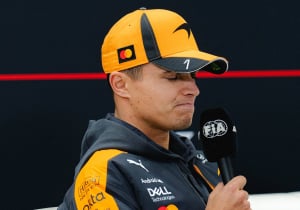
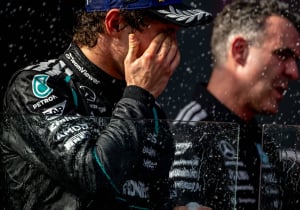
Recommended by the editors
 Japanese Grand Prix
Ollie Bearman Suzuka crash shouldn't have happened, and everyone in F1 knows it
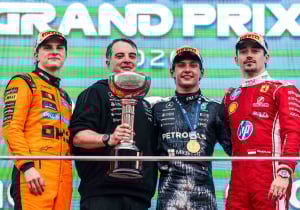 Japanese Grand Prix
F1 Japanese Grand Prix 2026 results: Final classification with penalties applied
 F1 News & Gossip
FIA announce meeting over controversial F1 regulations following terrifying crash
 F1 News & Gossip
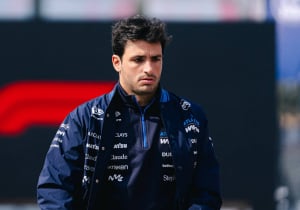
Carlos Sainz FURIOUS with F1 and FIA over ignored warnings after huge Japanese Grand Prix crash







Races
-
 Grand Prix of Australia 2026
-
 Grand Prix of China 2026
-
 Grand Prix of Japan 2026
-
 Grand Prix of Bahrain 2026
-
 Saudi Arabian Grand Prix 2026
-
 Miami Grand Prix 2026
-
 Grand Prix du Canada 2026
-
 Grand Prix De Monaco 2026
-
 Gran Premio de Barcelona-Catalunya 2026
-
 Grand Prix of Austria 2026
-
 Grand Prix of Great Britain 2026
-
 Grand Prix of Belgium 2026
-
 Grand Prix of Hungary 2026
-
 Dutch Grand Prix 2026
-
 Grand Prix of Italy 2026
-
Gran Premio de España 2026
-
 Grand Prix of Azerbaijan 2026
-
 Grand Prix of Singapore 2026
-
Grand Prix of the United States 2026
-
 Gran Premio de la Ciudad de Mexico 2026
-
 Grande Prêmio de São Paulo 2026
-
Las Vegas Grand Prix 2026
-
 Qatar Grand Prix 2026
-
 Grand Prix of Abu Dhabi 2026
Follow us on your favorite social media channel
Editorial & corporate information

Avenue HQ
10–12 East Parade
Leeds
LS1 2BH
United Kingdom Regional correspondence
View contact page