


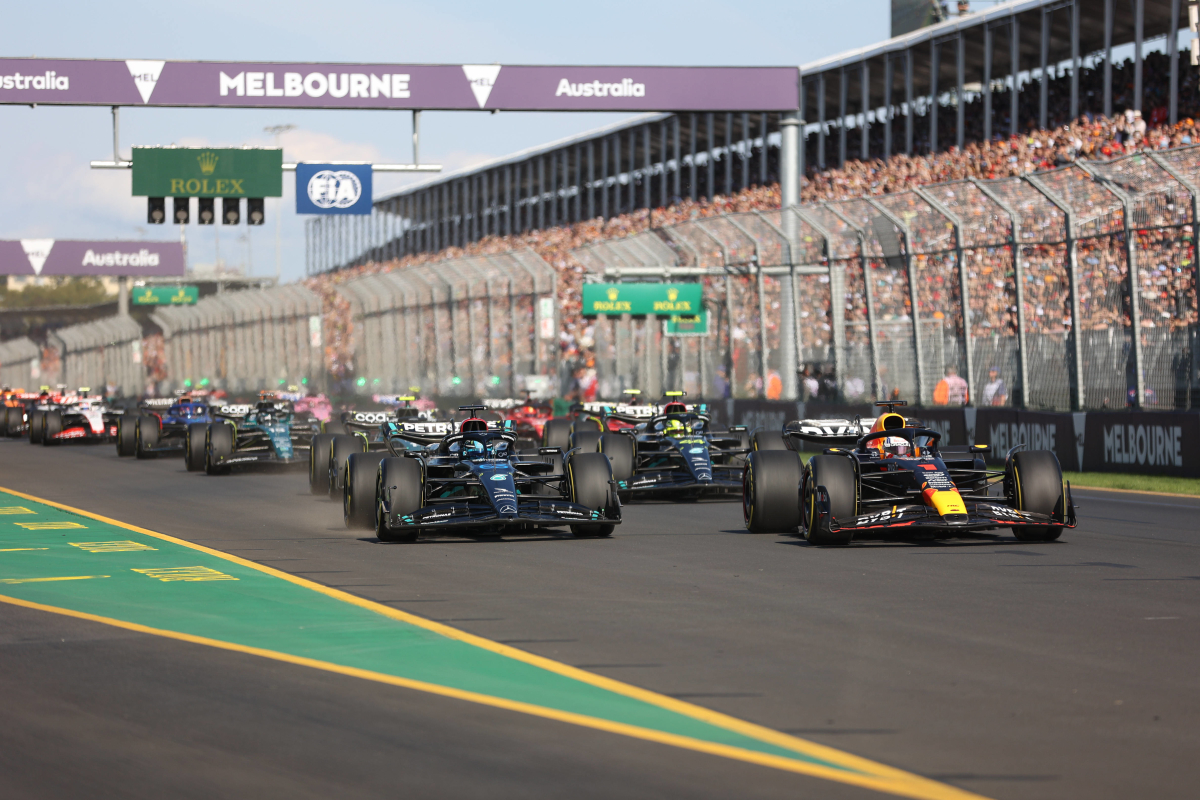

Albert Park F1 Circuit: Your essential guide to Melbourne’s Australian Grand Prix playground
The street circuit has hosted the Australian Grand Prix since 1996

The iconic Albert Park street circuit in Melbourne will again play host to the first race of the F1 season as 2026 kicks off with a bang at the Australian Grand Prix.
Lando Norris begins the defence of his title this weekend (Sunday March 8) as a sweeping set of new regulations threaten to turn the sport upside down.
The circuit has played host to Australia’s great race since 1996, when it took over from another street circuit in Adelaide as the home of F1 Down Under.
2026 will be the 40th running of the F1 Australian Grand Prix, and the 29th at Albert Park. The race has been held at 23 different venues since the first race at Phillip Island back in 1928, but it only became a fixture on the official F1 calendar in 1985
We have all you need to know about a track which ALWAYS provides thrills and spills to start the season.
Where Is Albert Park?
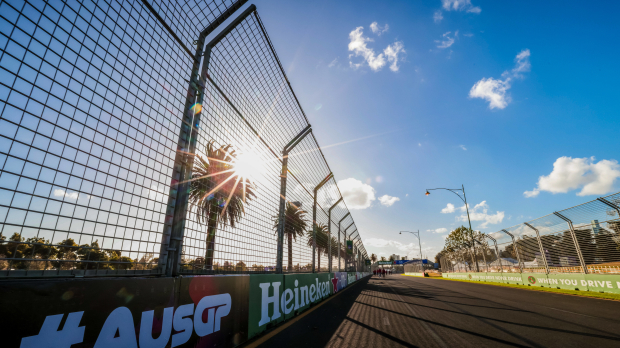
Albert Park is a temporary street circuit which is built each year to stage the race, snaking around Albert Park Lake just a few kilometres south of the CBD (the Central Business District and the heart of the city).
For 51 weeks of the year it’s a place for the public to enjoy, a true natural park. But for one weekend it comes gloriously alive with the sights and sounds of F1.
Key facts about the circuit
Location: Albert Park, Melbourne, Victoria, Australia.
Circuit type: Temporary street circuit laid out on public park roads.
First modern F1 race here: 1996 Australian Grand Prix after the move from Adelaide.
Length: Around 5.3 km (about 3.3 miles).
Corners: 16, a mix of medium and high‑speed with a few big braking zones.
Race distance: 58 laps, roughly 306 km in total.
Grade: FIA Grade 1, fully signed off for F1.
2026 race: Sunday March 8 (3pm local time, 4am UK, 11pm Saturday ET).
How Albert Park replaced Adelaide
It may have only hosted F1 races since 1996, but Albert Park is not a recent newcomer to hosting big races.
An earlier version of the track hosted events in the 1950s, including the Australian Grand Prix between 1953 and 1958, before public and political pressure sent motorsport elsewhere.
For decades the Australian GP found a permanent home in Adelaide, until the early 1990s when Victoria’s government wanted a marquee event to put Melbourne on the global map.
Since then the venue has become a calendar fixture, known as much for its parkland setting and packed banks of fans and a knack of producing early‑season storylines.
What It’s Like to Drive
Albert Park is in the awkward middle ground between a permanent circuit and a true concrete‑walled street track. The lap runs clockwise around the lake, linking quick chicanes and flowing sequences with heavier braking zones which reward a stable rear and confidence on turn‑in.
Remember these are public roads, so the track begins the weekend dusty and low‑grip, then rubbers in quickly as F1 sessions and support races begin to take place.
Corner‑by‑Corner: The Key Moments
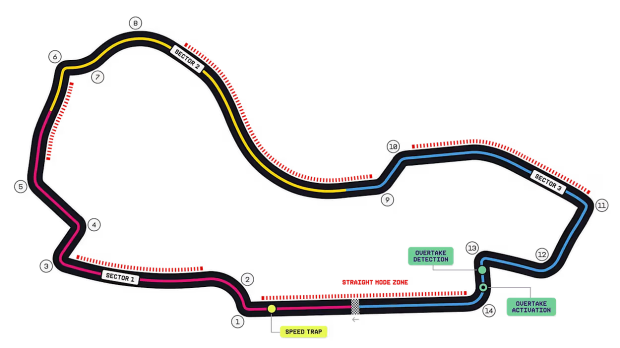
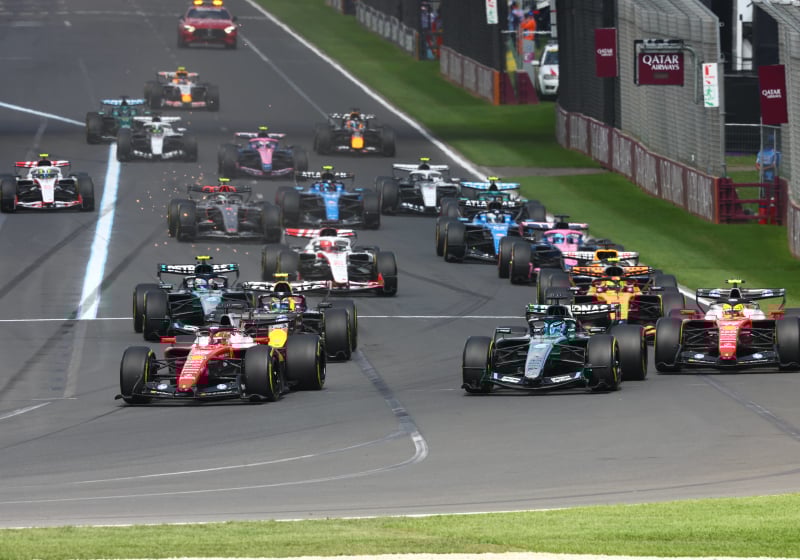
Turn 1–2: The first real flashpoint, a fast right–left chicane where late brakers dive down the inside after the main straight.
Turn 3: Heavy stop into a tight right‑hander, another obvious overtaking opportunity if you’ve managed to stay in the tow.
Middle sector: A string of medium‑speed changes of direction where precision, rotation and flow matter more than outright bravery.
Turn 13: A slower left‑hander that punishes anyone too greedy on the brakes and rewards drivers who get the car turned early for a clean exit.
To sum up, this is a circuit which is all about rhythm for the driver.
How 2022 changes transformed the track
When F1 returned post‑pandemic (the 2020 and 2021 races were cancelled as a result), Albert Park returned to F1 with a facelift. Several corners had been reprofiled and the old slow lakeside chicane was ripped out entirely, replaced by a flat‑out blast which nudged average speeds further north.
The new layout also added a fourth DRS zone along Lakeside Drive, briefly giving Albert Park more DRS zones than anywhere else on the calendar. The net result was more overtaking chances and tighter racing.
Lap Records: How Fast Is Albert Park Now?
Go back to the pre‑change era and the headline figure was Michael Schumacher’s 1:24.125 race lap in the legendary Ferrari F2004, a time set at an average speed north of 226 km/h.
With the revised layout cleaned up and the new generation of cars unleashed, Sergio Pérez registered the first benchmark on the faster configuration with a 1:20.235 race lap in 2023. But even that mark did last long.
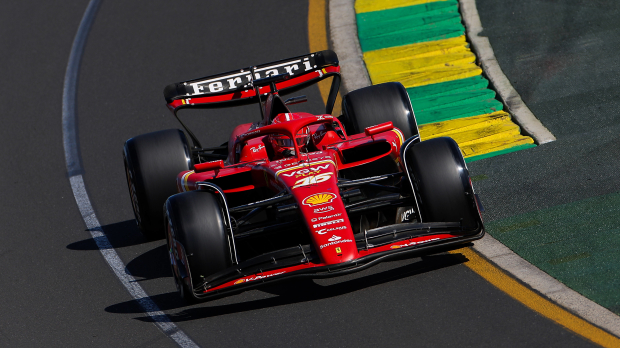
The current official race lap record stands at 1:19.813, set by Charles Leclerc for Ferrari during the 2024 Australian Grand Prix.
In qualifying trim things are even more breathtaking, with Lando Norris stopping the clocks at 1:15.096 in Q3 for the 2025 race, the quickest lap ever recorded around Albert Park.
One thing to note here is the new regulations sweeping into F1 in 2026. They are expected to make lap times SLOWER, at least to begin with. It would be a major shock to see the cars hitting anything like those current benchmarks.
Recent Winners: The last 10 times
The last 10 editions of the Australian Grand Prix at Albert Park have delivered a mix of familiar champions, Ferrari comebacks and pandemic‑era blanks:
| Year | Driver | Team |
|---|---|---|
| 2025 | Lando Norris | McLaren |
| 2024 | Carlos Sainz | Ferrari |
| 2023 | Max Verstappen | Red Bull |
| 2022 | Charles Leclerc | Ferrari |
| 2019 | Valtteri Bottas | Mercedes |
| 2018 | Sebastian Vettel | Ferrari |
| 2017 | Sebastian Vettel | Ferrari |
| 2016 | Nico Rosberg | Mercedes |
| 2015 | Lewis Hamilton | Mercedes |
| 2014 | Nico Rosberg | Mercedes |
NB: The race was not held in 2020 and 2021 due to the global COVID pandemic.
Michael Schumacher (4 wins) and McLaren and Ferrari (11 victories each) head the respective all-time win lists for drivers and constructors.
Getting to Albert Park: Smart travel plans
One of Albert Park’s biggest advantages is how easy it is to reach without your own transport, and on Grand Prix weekend leaving the car at home is definitely the smart play.
Road closures and heavy traffic can make driving a nightmare, while public transport can drop you right outside the entry gates. You have multiple options:
Trams: Dedicated GP Express services run from Southern Cross Station to several circuit entrances, including the Light Rail GP Express for Gates 1 and 2 and the Clarendon Street GP Express for Gates 3 and 4. Regular routes such as the 96 light rail from the CBD to Middle Park also drop you a short walk from the fencing.
Trains: Take a suburban train into Flinders Street or Southern Cross, then switch onto the free GP Express trams laid on specifically for the Grand Prix crowd.
Walking: From the heart of the CBD you’re looking at roughly 4.5–5 km. That sounds a long distance, but it's an achievable walk in under an hour if you’re happy to stretch the legs and follow the signed paths towards the lake.
Taxis and rideshare: Both operate to designated drop‑off points around the venue, but with closures in place, public transport tends to be the quicker, less stressful option once the crowds build.
How to buy Australian Grand Prix tickets
If you’re planning a trip, the safest place to start is with the official channels. But given the surge in interest in F1 (thanks again, Drive to Survive) you will need to be early to the party. These days tickets are not cheap and they sell out very fast.
The Australian Grand Prix Corporation’s website and Formula 1’s own ticket portal handle primary sales, covering everything from entry‑level Park Passes to grandstands and high‑end hospitality.
If you are not lucky enough to get tickets through official sellers, resale prices are likely to be on the high side as we approach race weekend in Melbourne.
Demand is of course at its strongest for Sunday and the more desirable grandstands, so moving early is key if you’ve got a specific view in mind.
Don’t rule out the General Admission option either - I did this on the Saturday of the 2016 race and had a terrific time (you can check out my fan guide here). Not only is it a really cost-effective option (about a quarter of the price of a grandstand ticket) you can walk round most of the track and get really close to the cars in the process.
2026 Ticket Prices: From the cheapest to the most expensive
Prices for 2026 have nudged up again, all figures below are indicative starting prices in AUD for adults:
Park Pass: The cheapest option
As we said, this is a great option if you don’t want to bust your budget and still really get the flavour of race weekend at Albert Park.
Park Pass gets you into the circuit and into the general admission zones ringing the lake; the trade‑off is that it’s first‑come, first‑served, so early starts become part of race day if you want the prime spots.
Single‑day Park Pass: Roughly 90 AUD (Friday), 160 AUD (Saturday) and 210 AUD (Sunday) for 2026.
4‑Day Park Pass: About 385 AUD for the full weekend, easily the best value if you’re committing to all four days.
Grandstands: A guaranteed (more expensive) view
Entry‑level grandstands: Four‑day seats in stands such as Button, Clark, Vettel, Waite and Webber start from roughly 565 AUD in 2026.
Other stands: Across the circuit, you’re broadly looking at 440–835 AUD depending on which corner you choose and the day combination.
Oscar Piastri Grandstand: New for 2026 and, fittingly, the priciest of the “regular” stands, with four‑day tickets starting at around 1045 AUD.
Grandstand tickets also include circuit entry and access to general admission areas so you can switch up the experience across your time at the circuit.
Hospitality: One for the high rollers
Entry‑level hospitality: Three‑day lounge access starts in the 2300–2400 AUD bracket (that’s per person).
Mid‑tier clubs and terraces: Depending on the package and inclusions, prices typically sit somewhere between about 2325 and 5995 AUD.
Top‑tier suites: At the very sharp end, ultra‑premium hospitality and corporate suites can reach roughly 6895 AUD for a three‑day pass in 2026.
What is the weather like in Melbourne in March?
Generally it's a beautiful place to start the F1 season. It's not the height of summer so you normally get pretty nice temperatures and some sunshine.
Summer is just ending, autumn is just beginning and temperatures normally hit a high of around 25C.
There are no guarantees of course, and the 2025 race did get under way in pretty wet conditions. Who could forget Isack Hadjar putting it in the wall on the formation lap of his first ever F1 Grand Prix...
Related
More F1 news
Latest F1 news


Recommended by the editors
 Nurburgring
Nurburgring LIVE: NLS3 schedule, times and FREE live stream after Max Verstappen mania
 Adrian Newey
Adrian Newey ‘wasting talent’ at Aston Martin
 GT World Challenge Europe
Lance Stroll GT3: How to watch Aston Martin F1 star in action at Paul Ricard for FREE
 FIA News
FIA reveals deadline for F1 2026 regulation 'tweaks'







Races
-
 Grand Prix of Australia 2026
-
 Grand Prix of China 2026
-
 Grand Prix of Japan 2026
-
 Grand Prix of Bahrain 2026
-
 Saudi Arabian Grand Prix 2026
-
 Miami Grand Prix 2026
-
 Grand Prix du Canada 2026
-
 Grand Prix De Monaco 2026
-
 Gran Premio de Barcelona-Catalunya 2026
-
 Grand Prix of Austria 2026
-
 Grand Prix of Great Britain 2026
-
 Grand Prix of Belgium 2026
-
 Grand Prix of Hungary 2026
-
 Dutch Grand Prix 2026
-
 Grand Prix of Italy 2026
-
Gran Premio de España 2026
-
 Grand Prix of Azerbaijan 2026
-
 Grand Prix of Singapore 2026
-
Grand Prix of the United States 2026
-
 Gran Premio de la Ciudad de Mexico 2026
-
 Grande Prêmio de São Paulo 2026
-
Las Vegas Grand Prix 2026
-
 Qatar Grand Prix 2026
-
 Grand Prix of Abu Dhabi 2026
Follow us on your favorite social media channel
Editorial & corporate information

Avenue HQ
10–12 East Parade
Leeds
LS1 2BH
United Kingdom Regional correspondence
View contact page