



F1 Explained: What is the 107% rule and will it KO Aston Martin at Australian Grand Prix?
Will Aston Martin be unable to compete in the Australian Grand Prix?

There are lots of new rules sweeping into F1 this year amid the regulations overhaul which is seeing completely redesigned power units and car chassis.
But there are also old F1 rules which are still in place, which might just become more relevant in 2026.
During the last 12 seasons since the implementation of the hybrid era in 2014, the performance between the top teams in the sport and the smaller, weaker teams has largely converged, evidenced by both Sauber and Haas' strong performances during the 2025 season.
One reason for this, of course, has been the cost cap, which has helped the smaller teams to operate on a more level playing field, but wholesale regulation changes, and a couple of new names on the grid, might just mean that the gap between the top and the bottom of F1 gets bigger in 2026.
And that could bring back into play the dreaded 107 per cent rule during grand prix weekends.
READ MORE: Aston Martin F1 Preview: Only Newey and Alonso can stop the shambles
What is the 107 per cent rule in F1?
The 107 per cent rule was introduced back in 1996 to make sure that cars are fast enough to start a grand prix, and that slow cars are not a hazard on track.
It basically determines that if you don't finish within 107 per cent of the fastest time in Q1 during a qualifying session, then you are not fast enough to start the race. It applies to both sprint and main races.
The 107 per cent rule is calculated using the following equation: Lap time (in seconds) multiplied by 107 and then divided by 100.
For example, if the fastest lap time is 1 minute 30 seconds (90 seconds), then the equation would be: (90 x 107) ÷ 100 = 96.3, or 1 minute 36.3 seconds.
This scenario would mean that all drivers must set a lap time in Q1 within 1 minute 36.3 seconds, or they will not be able to start the race.
There are some exceptional scenarios where the driver may still be allowed to participate in the race, however. One such scenario is if the driver could prove that they're fast enough to compete. If they set a suitable time during practice sessions, the stewards may allow them to start the race despite not meeting the required lap time during Q1.
Also, if the track is deemed to be a wet track during qualifying, then the 107 per cent rule goes out of the window, and if a driver crashes out of qualifying early on or faces a mechanical issue, then they may be given special dispensation to be able to race.
Will some F1 teams struggle to make the start line in 2026?
With there being two new names on the F1 grid in 2026 in Audi and Cadillac, the 107 per cent rule may become relevant once again.
Audi have taken over the Sauber team, and so will expect to be running comfortably in the midfield, but they are also producing F1 power units for the first time, and therefore could experience some issues early on with performance.
Cadillac, meanwhile, are a completely new entity, and team principal Graeme Lowdon has already admitted that they will be running right at the back of the pack in 2026.
The question for them will be how far off the other teams they will be, with there being a potential for them not to make all of the 24 grands prix if their testing lap times are anything to go off. Sergio Perez finished over seven seconds behind Charles Leclerc's best time of 1:31.992 on Friday at the Bahrain International Circuit.
Expect performance to converge throughout the year between all 11 teams, as some outfits get their heads around the regulation changes quicker than others, and upgrades are brought to certain race weekends.
Will Aston Martin miss Australian GP because of the 107 per cent rule?
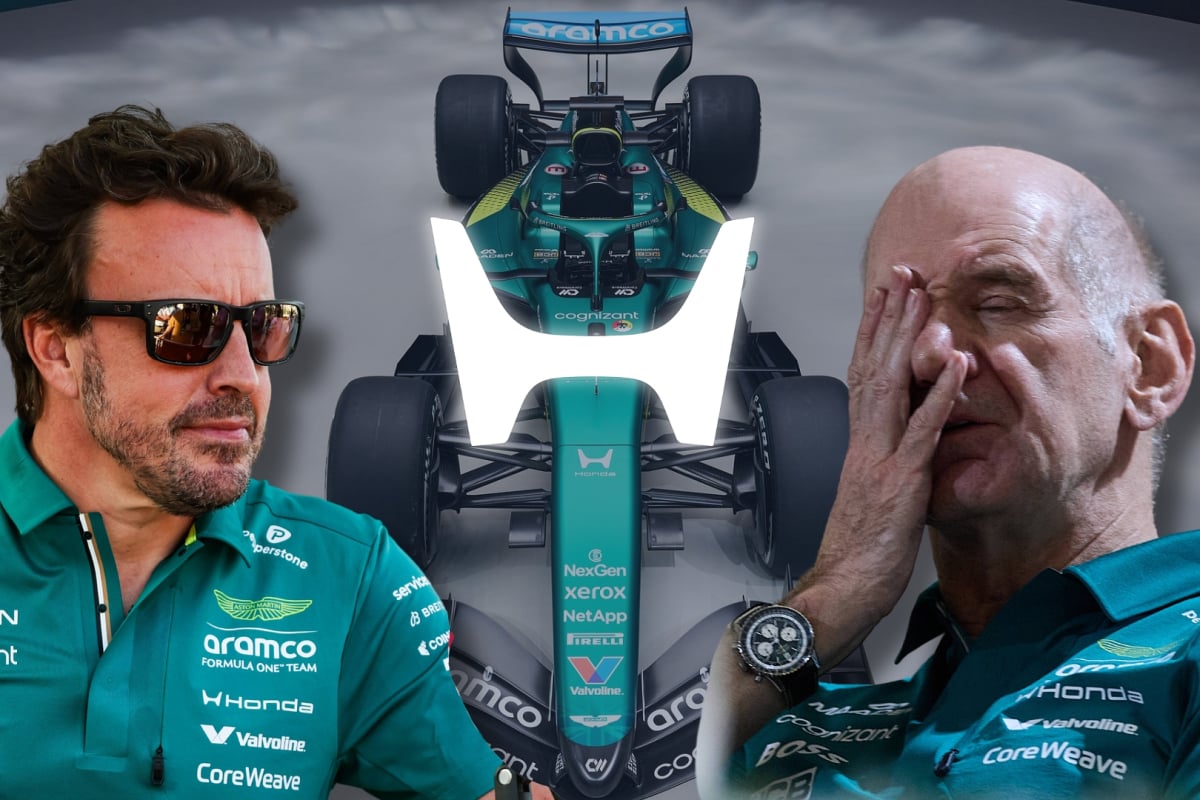
Much has been written about Aston Martin's crisis in the pre-season, and most recently Adrian Newey revealed the team may not even be able to complete a full race distance.
Due to vibrations into the AMR26's chassis, Newey has revealed Fernando Alonso and Lance Stroll could be susceptible to nerve damage behind the wheel of the car, with the drivers reporting a 15-25 lap threshold.
Aston Martin emerged from testing as the slowest team and a full four seconds behind the pace of leaders Ferrari, but if you take the best times from testing and calculate them under the 107 per cent rule, Aston Martin would be eligible to race based on the times they set on day one, week two.
The caveat remains, however, that testing isn't entirely representative. It's likely we may see an even quicker time in Melbourne than the 1:31.992 Charles Leclerc posted in Bahrain.
Likewise the vibrations in the Aston Martin could result in much slower lap times than those posted in testing, which in turn could see them fall into the clutches of the 107 per cent rule.
When was the 107 per cent rule last enforced?
If we do get an enforcement of the 107 per cent rule in 2026, it will be the first time since 2012 that a team has been prevented from racing due to that rule.
HRT had both of their drivers - Narain Karthikeyan and Pedro de la Rosa - prevented from running at the 2012 Australian Grand Prix, exactly one year after Karthikeyan and Vitantonio Liuzzi had not met the 107 per cent rule at the 2011 Australian Grand Prix.
Since its inception in 1996, it has been enforced on 28 occasions, with the 1996 season being the worst for enforcements, with 12 occasions all belonging to just three different drivers across the year.
The last two drivers to not meet the 107 per cent rule, but were allowed to race after showing much better times during practice sessions, were Logan Sargeant at the 2023 Saudi Arabian Grand Prix, and Nyck de Vries at the 2023 Azerbaijan GP.
READ MORE: Sky Sports F1 announce 2026 lineup and Danica Patrick is out
Related
More F1 news
Latest F1 news

Recommended by the editors
 Mercedes F1
'Think again!' George Russell hit by Mercedes F1 reality check
 F1 Stats
29 completely true F1 stats that seem like lies
 Australian Grand Prix
Demolition starts at much-loved F1 circuit as £210million rebuild begins
 F1 News & Gossip
F1 insider reveals reason behind Christian Horner and Adrian Newey split







Races
-
 Grand Prix of Australia 2026
-
 Grand Prix of China 2026
-
 Grand Prix of Japan 2026
-
 Grand Prix of Bahrain 2026
-
 Saudi Arabian Grand Prix 2026
-
 Miami Grand Prix 2026
-
 Grand Prix du Canada 2026
-
 Grand Prix De Monaco 2026
-
 Gran Premio de Barcelona-Catalunya 2026
-
 Grand Prix of Austria 2026
-
 Grand Prix of Great Britain 2026
-
 Grand Prix of Belgium 2026
-
 Grand Prix of Hungary 2026
-
 Dutch Grand Prix 2026
-
 Grand Prix of Italy 2026
-
Gran Premio de España 2026
-
 Grand Prix of Azerbaijan 2026
-
 Grand Prix of Singapore 2026
-
Grand Prix of the United States 2026
-
 Gran Premio de la Ciudad de Mexico 2026
-
 Grande Prêmio de São Paulo 2026
-
Las Vegas Grand Prix 2026
-
 Qatar Grand Prix 2026
-
 Grand Prix of Abu Dhabi 2026
Follow us on your favorite social media channel
Editorial & corporate information

Avenue HQ
10–12 East Parade
Leeds
LS1 2BH
United Kingdom Regional correspondence
View contact page