



F1 2026 Regulations: What is active aero?
Let's take a look at what active aero means in F1 in 2026

The time has come once again for F1 fans to get to grips with new terminology ahead of the 2026 campaign, something there is plenty of this year thanks to the new regulations.
This year's F1 championship will see the teams and drivers forced to get to grips with the biggest overhaul of chassis and engine regulations of the sport's modern era, with major changes to the aerodynamics of the new machinery as well.
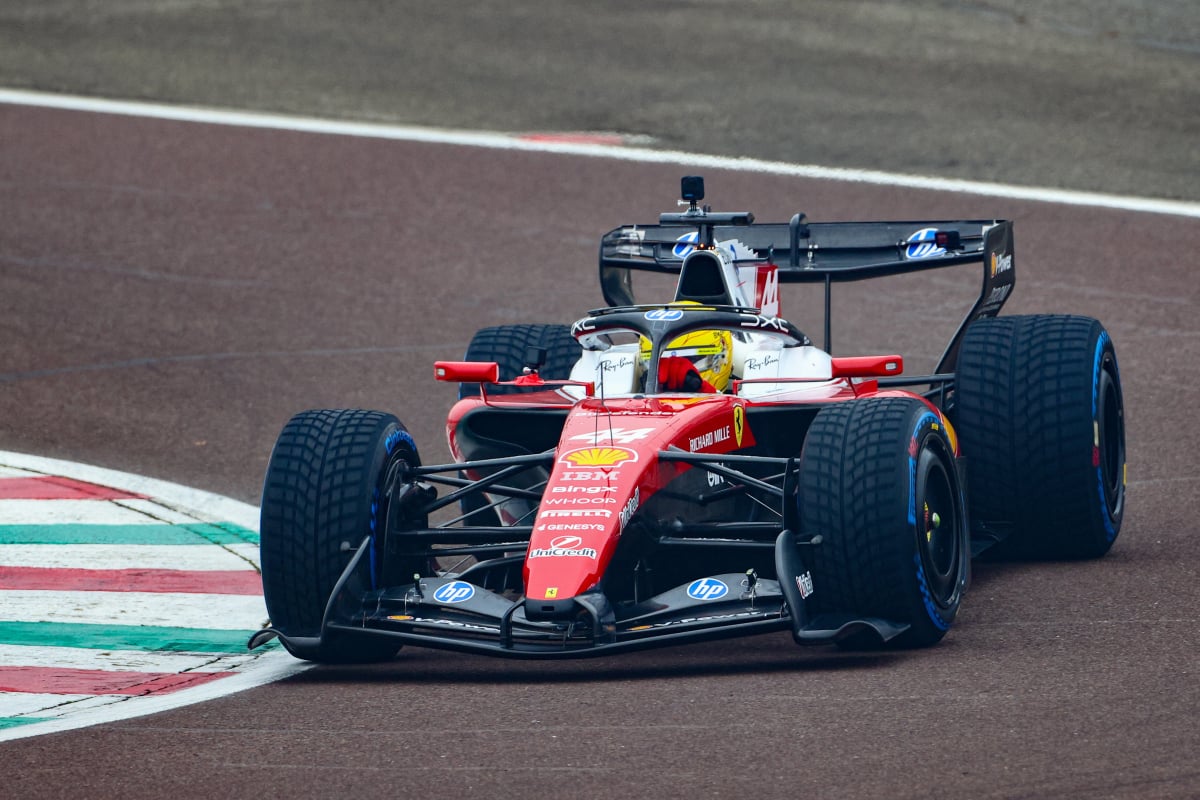
The latest era of cars are both smaller and lighter, but also feature moveable (active if you will) front and rear wings.
After 15 seasons of the beloved DRS, 2026 will see a new drag reduction system of sorts in the form of active aerodynamics- a term which encompasses both straight mode and corner mode.
Don’t be fooled by simplified terms though, active aero isn’t a straight swap for DRS. To the untrained eye however, the front and rear wings opening and closing around an F1 track may make it easy to confuse the two early on in the 2026 campaign.
That's where GPFans comes in to explain everything you need to know about the new active aerodynamics, and the difference between corner and straight mode.
F1 2026 REGULATIONS: F1 Engine Compression Ratio - What is it and why is it so controversial?
What is active aero?
Active aero allows both the front and rear wings on the new F1 cars to be dynamically adjusted by the drivers themselves during certain straight line and corner sections of the track.
F1's governing body, the FIA, have selected these designated areas on the circuits.
What is the difference between straight mode and corner mode?
Both the front and rear wings on each car now have active blades which can open and close. When the blades are ‘closed’ they provide downforce, but also cause a lot of drag. When they ‘open’ they reduce both drag and downforce.
This was designed to offer downforce for higher speeds through the corners (corner mode) and reduce the drag for higher speeds on the straights (straight mode).
Drivers can now manually switch between the two modes within the active aero design, with straight mode now available on more straights than DRS was previously offered.
When straight mode is deployed, both the front and rears wings will move into a lower angle to reduce the drag and offer more speed on the straights.
But when a driver then approaches a corner to break, they can switch back into corner mode again to return the wings to a high downforce state.
Corner mode can also be engaged automatically for safety reasons at specific points.
If conditions become wet or slippery across a race weekend from now on, active aero may be modified so that only one flap is available to open instead of two, hopefully ensuring the safety of the drivers.
To further clear up any confusion around the new active aero, it is worth noting that straight mode was previously labelled 'X mode' and corner mode was initially labelled as 'Y mode' before the new names were confirmed. So, don't be confused if any of the 2026 presenters slip up with their terminology on the live broadcasts this season, there's a lot of new terms to learn!
When does the 2026 F1 season start?
Following January's Barcelona shakedown and February's two stints of pre-season testing in Bahrain, all 11 teams will be in action when the 2026 season starts in Melbourne for the Australian Grand Prix.
The first race of the year takes place on March 8 at 3pm local time (AEDT), 4am GMT, and 11pm ET.
F1 2026 REGULATIONS: What is straight mode?
Related
More F1 news
Latest F1 news




Recommended by the editors
 Max Verstappen
Max Verstappen at scene of Japanese GP media pen damage
 Japanese Grand Prix
Max Verstappen misery deepens as Gianpiero Lambiase advice falls flat: 'Mate, this doesn't really help'
 Japanese Grand Prix
F1 star attacked by 'haters' after terrifying Japanese Grand Prix crash
 Latest F1 News
'Things happened which even I cannot comprehend': Toto Wolff tells all on Christian Horner







Races
-
 Grand Prix of Australia 2026
-
 Grand Prix of China 2026
-
 Grand Prix of Japan 2026
-
 Grand Prix of Bahrain 2026
-
 Saudi Arabian Grand Prix 2026
-
 Miami Grand Prix 2026
-
 Grand Prix du Canada 2026
-
 Grand Prix De Monaco 2026
-
 Gran Premio de Barcelona-Catalunya 2026
-
 Grand Prix of Austria 2026
-
 Grand Prix of Great Britain 2026
-
 Grand Prix of Belgium 2026
-
 Grand Prix of Hungary 2026
-
 Dutch Grand Prix 2026
-
 Grand Prix of Italy 2026
-
Gran Premio de España 2026
-
 Grand Prix of Azerbaijan 2026
-
 Grand Prix of Singapore 2026
-
Grand Prix of the United States 2026
-
 Gran Premio de la Ciudad de Mexico 2026
-
 Grande Prêmio de São Paulo 2026
-
Las Vegas Grand Prix 2026
-
 Qatar Grand Prix 2026
-
 Grand Prix of Abu Dhabi 2026
Follow us on your favorite social media channel
Editorial & corporate information

Avenue HQ
10–12 East Parade
Leeds
LS1 2BH
United Kingdom Regional correspondence
View contact page