



Why £1 million won't get you to F1
The cost of motorsport is an ever increasing problem

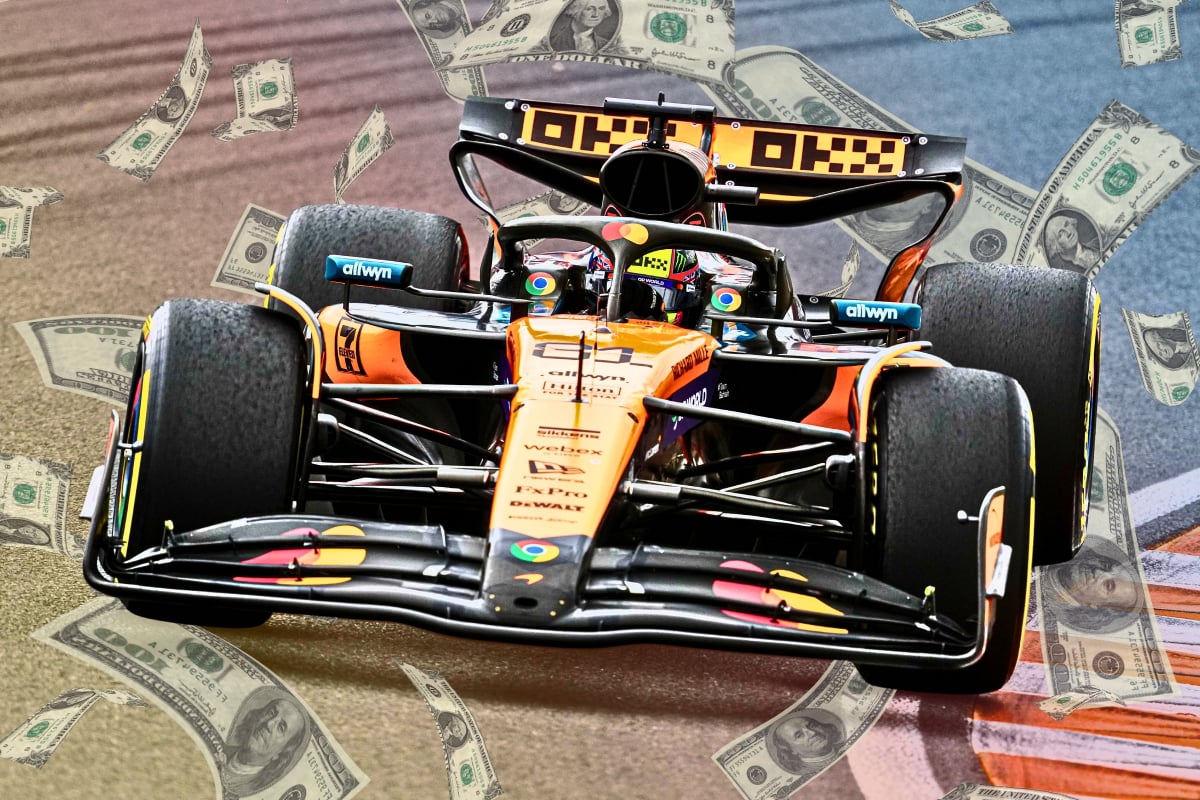
F1 won't be beating the allegations that it's for millionaires and rich kids anytime soon, as the cost of motorsport becomes increasingly expensive.
While Lando Norris undoubtedly applied hard work and sacrifice to win his first F1 world title, it was nonetheless pointed out that his father Adam Norris' wealth enabled him to soar to the dizzy heights of F1.
By no means is Norris unique in this regard, with most of his colleagues up and down the grid emerging from wealthy backgrounds, but the fact certainly reopens the conversation about the cost of F1 - and ultimately the type of people who rise to the upper echelons of motorsport.
Funding is one of the major barriers for young drivers who face immense costs to ascend the feeder series ladder, with Zak O'Sullivan being a recent and high profile example on how this can cut a talented motorsport career short.
The former Williams academy driver was forced to pull out of Formula 2 mid-season in 2024, due to funding issues. O'Sullivan was by no means a slouch in the series either, winning at iconic tracks such as Monaco and Spa in his first season and finished the 2023 F3 season second in the championship.
Funding can come from a variety of sources, in some cases sponsors or an F1 driver academy, but some are helped to a seat by their family - negatively known as 'paid drivers'.
In 2021, a full season of karting was estimated to cost £300,000 with costs climbing as you move further up the feeder series ladder. Needless to say, these costs will certainly have risen with inflation by 2025.
In an interview with the BBC, O'Sullivan confirmed that the costs to compete continue to grow and delved into the issue that cut his F2 career short.
"It's always been a problem in the sport but it's only getting more expensive," he said.
"Every year I've done racing even if you do the same championship twice, the next year it ends up being more expensive because people are just charging more and more.
"Obviously, I kind of fell foul of it but it's easy for me to sit here and say something needs to be changed but in reality the teams are just trying to keep themselves afloat as well.
"It would take something far bigger, something from the governing body, to change it. Until that happens, the situation won't change."
F1 and the issue of funding
Formula 2 and 3 CEO Bruno Michel, spoke to F1 in 2021 about the costs of motorsport in the two categories claiming they do 'as much as possible' to keep the costs low.
Michel also defended paid drivers, and added: "It is true that drivers from wealthy families have the possibility to go up into the ladder.
“But there have been many times in our junior categories where we had some drivers from wealthy families who are not only financing their own son or their own driver but also their teammate or also some other drivers in other teams or even team owners to help to do the job. So that's one very, very important part of the funding of the drivers.
“The academies are funding the drivers but they generally don't come up with the full budget, so the driver also has to find other sources of income to supplement it."
Even F1 driver George Russell revealed the financial sacrifice to compete at the top level of motorsport, claiming a million isn't enough to help you progress and that his family gave everything.
“Growing up, we were comfortable enough to live a good life, which I’m very grateful for," he wrote in the Players' Tribune.
“But just being honest, we were not wealthy enough to have a career in racing.
“Altogether, my father probably spent over a million pounds on my racing career. That’s a hell of a lot of money. Sadly in motorsport though, that doesn’t even get you halfway to F1.
“And that’s basically everything we had. He was just so deeply invested in the dream. We all were. Me, Dad, Mum, Benji, and Cara. But that’s just what it was. All the chips were pushed in on me.”
Whether official motorsport bodies such as the FIA intervene in the following years remains to be seen, but funding issues remains the tip of the iceberg when it comes to accessibility in motorsport.
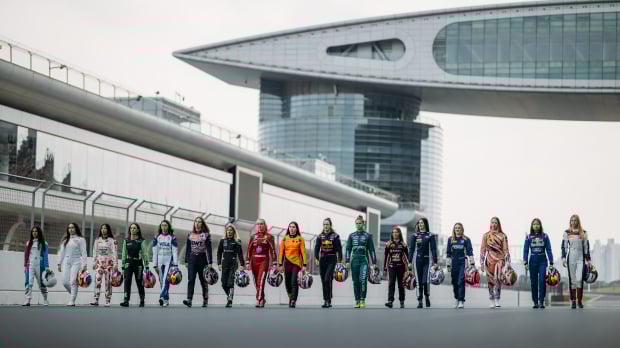
The F1 Academy is a recent attempt to help female racing drivers remain in the feeder series pipeline, with winners such as Abbi Pulling receiving a fully funded seat in the GB3 championship - a financial aid that should not be undervalued.
More Than Equal found in 2023 that girls specifically have problems raising funding due to prejudice, alongside other issues blocking participation such as a lack of female-specific training.
"The cost of competing is a universal challenge to both men and women," the study claimed.
"But too few investors and sponsors are willing to take a chance on female drivers early in their careers, preventing their progress at crucial periods."
F1 Academy's presence on the F1 calendar and the global stage is certainly a step in the right direction to remedy this, with big name sponsors joining the series such as Charlotte Tilbury, LEGO, American Express - a list that will only continue to grow and hopefully attach themselves to promising female talent.
Again, the success of the series can only be measured in the long-term if more women and girls remain in the feeder series pipeline - let alone before they reach F1.
F1 and the FIA are starting to make more progress than ever before to tackle inequality in motorsport, but sometimes patience in this process is tricky, especially when issues neglected for 75 years are only just being brought to light.
While yes, it does feel rather whingy to complain about F1 drivers and their millionaire parents, there is an even deeper issue than just their privilege. Instead, we should be concerned about the lack of desire from some to use their good fortune as a platform to help talented drivers who do not have the same safety net.
When this is acknowledged and taken seriously by drivers, teams and personnel throughout the racing world, then maybe then we are on our way to addressing inequality of opportunity in motorsport.
Right now, for some but by no means not all, I fear it is only a PR exercise.
READ MORE: New F1 track added to calendar as Zandvoort replacement announced
Related
More F1 news
Latest F1 news
Recommended by the editors
 Latest F1 News
Aston Martin and Adrian Newey set for F1 cost cap boost after FIA twist
 F1 News & Gossip
Max Verstappen told to speak to F1 rivals after causing storm over new 2026 rules
 Max Verstappen
Max Verstappen ally claims bad Red Bull start has triggered F1 champion's fury
 F1 News & Gossip
Max Verstappen F1 ally 'approached by Aston Martin' in shocking twist over Adrian Newey replacement







Races
-
 Grand Prix of Australia 2026
-
 Grand Prix of China 2026
-
 Grand Prix of Japan 2026
-
 Grand Prix of Bahrain 2026
-
 Saudi Arabian Grand Prix 2026
-
 Miami Grand Prix 2026
-
 Grand Prix du Canada 2026
-
 Grand Prix De Monaco 2026
-
 Gran Premio de Barcelona-Catalunya 2026
-
 Grand Prix of Austria 2026
-
 Grand Prix of Great Britain 2026
-
 Grand Prix of Belgium 2026
-
 Grand Prix of Hungary 2026
-
 Dutch Grand Prix 2026
-
 Grand Prix of Italy 2026
-
Gran Premio de España 2026
-
 Grand Prix of Azerbaijan 2026
-
 Grand Prix of Singapore 2026
-
Grand Prix of the United States 2026
-
 Gran Premio de la Ciudad de Mexico 2026
-
 Grande Prêmio de São Paulo 2026
-
Las Vegas Grand Prix 2026
-
 Qatar Grand Prix 2026
-
 Grand Prix of Abu Dhabi 2026
Follow us on your favorite social media channel
Editorial & corporate information

Avenue HQ
10–12 East Parade
Leeds
LS1 2BH
United Kingdom Regional correspondence
View contact page