



McLaren wants to avoid 'peaky' 2018 car
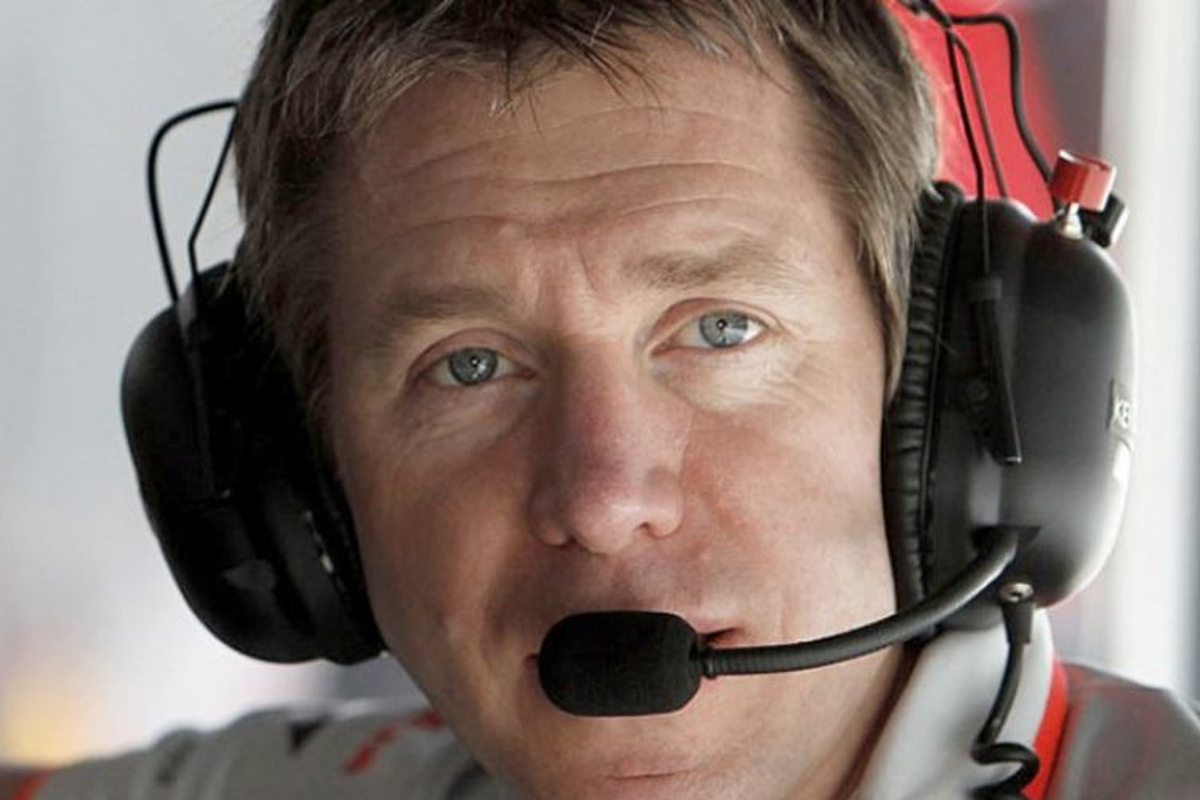
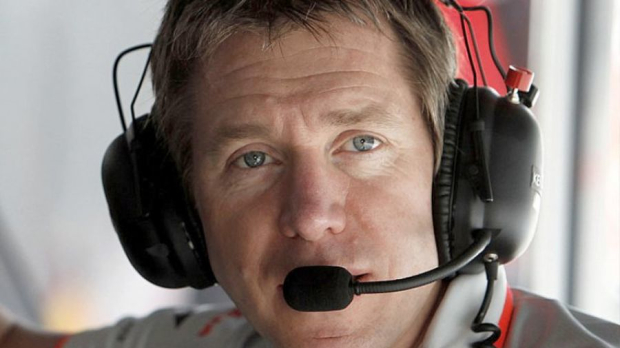
McLaren technical director Tim Goss has revealed that the main priority for the team in their preparations for the upcoming season is making a vehicle that Fernando Alonso and Stoffel Vandoorne can 'exploit' whilst also avoiding the construction of a 'peaky' F1 car.
The Woking-based outfit have not won the world championship in 20 years, while their lack of recent success has been attributed to unreliable Honda engines. They have since ditched Honda in favour of Renault parts, meaning that expectations have increased for the 2018 season.
Goss insists that McLaren need to create a car good enough for their drivers to compete.
"So much of producing a great F1 car these days is giving the driver a car that they can exploit," Goss told Motorsport.com.
"There is no point in giving them a car with very peaky performance. What we are trying to do is give the driver something that operates very well over a broad operating envelope."
"Initially we are not worried about what level of performance we are going to put on the car.
"What we wanted to do was understand the flow physics and try to get good, well-behaved aerodynamics across the range of the operating envelope of yaw/steer/roll and ride-height.
"And only when we did that and we were happy that we had well-behaved aerodynamics did we start to build the performance.
"So our approach these days is very much about giving the driver something they can trust and work with, and peaky load is in our view not the way to produce a quick aerodynamic package for the driver, or vehicle dynamics change."
Goss has highlighted the importance of being able to compete in a straight line, and revealed that McLaren's main tactic is to qualify in a high position then defend from the front.
"Even trimming a bit of downforce off the car and trimming to a lower wing level, we were still not going to get our car to the point where we have that raceability in a straight line," he continued.

"So our approach has been to always go for the quickest laptime and our tactics coming to a race weekend were to qualify as well as we can, and then aim to defend that position based on laptime. In some races that was extremely difficult.
"We improved the car quite considerably around the Hungarian GP, had a great race in Hungary and then got to Belgium and just went backwards.
"We went backwards not because of our laptime but because we had zero ability to defend in a straight line.
"That period of Belgium/Italy was immensely frustrating because we knew we had car performance but we couldn't defend.
"We are here to win races and win championships and with the car the approach we take is to design around success.
"Rather than put sticking plasters to try to cope with the fact that we had an underpowered engine, what we really wanted to do is develop the best car and assume the engine is going to come."
Recommended by the editors
 Helmut Marko
Helmut Marko lands new Red Bull role
 McLaren
McLaren take aim at Red Bull in Gianpiero Lambiase welcome statement
 Max Verstappen
Max Verstappen’s shot at 5th F1 title to blame for Red Bull disaster
 F1 News Today
F1 News Today: GP signs for McLaren, Verstappen sparks Nurburgring cancellations







Races
-
 Grand Prix of Australia 2026
-
 Grand Prix of China 2026
-
 Grand Prix of Japan 2026
-
 Grand Prix of Bahrain 2026
-
 Saudi Arabian Grand Prix 2026
-
 Miami Grand Prix 2026
-
 Grand Prix du Canada 2026
-
 Grand Prix De Monaco 2026
-
 Gran Premio de Barcelona-Catalunya 2026
-
 Grand Prix of Austria 2026
-
 Grand Prix of Great Britain 2026
-
 Grand Prix of Belgium 2026
-
 Grand Prix of Hungary 2026
-
 Dutch Grand Prix 2026
-
 Grand Prix of Italy 2026
-
Gran Premio de España 2026
-
 Grand Prix of Azerbaijan 2026
-
 Grand Prix of Singapore 2026
-
Grand Prix of the United States 2026
-
 Gran Premio de la Ciudad de Mexico 2026
-
 Grande Prêmio de São Paulo 2026
-
Las Vegas Grand Prix 2026
-
 Qatar Grand Prix 2026
-
 Grand Prix of Abu Dhabi 2026
Follow us on your favorite social media channel
Editorial & corporate information

Avenue HQ
10–12 East Parade
Leeds
LS1 2BH
United Kingdom Regional correspondence
View contact page