


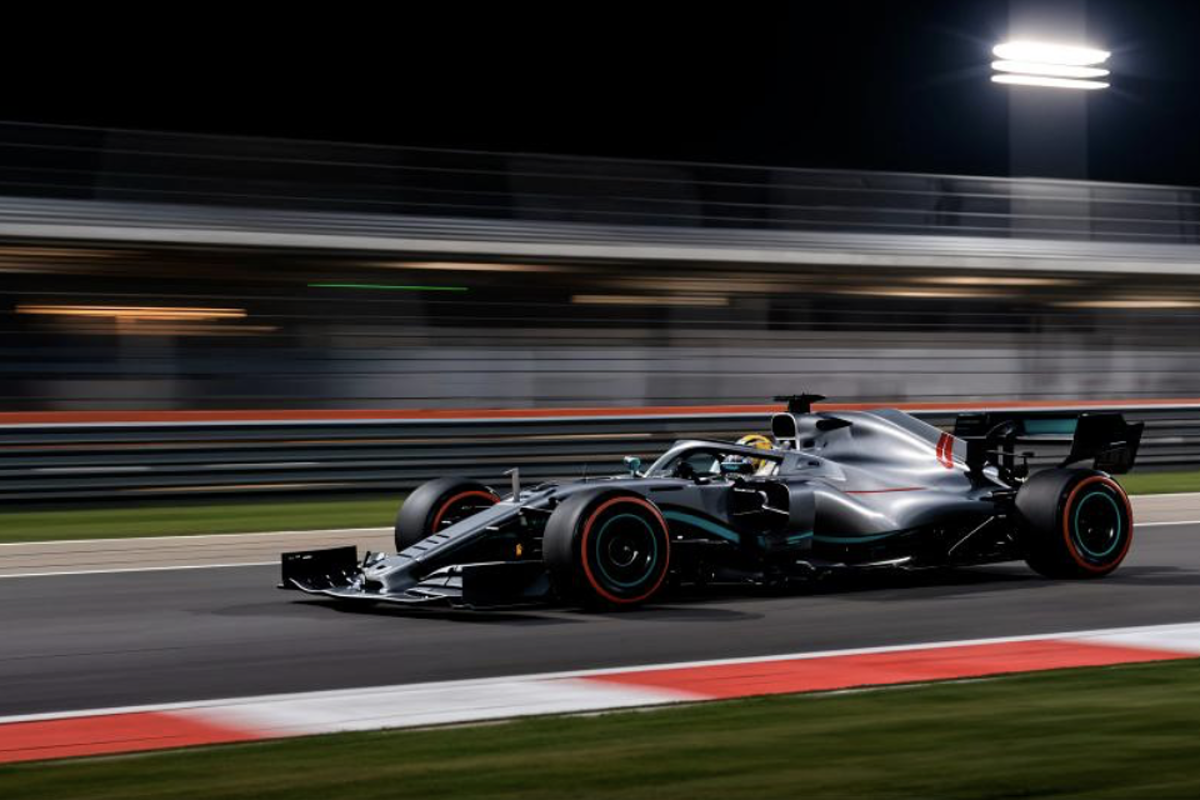

F1’s 2026 Energy Systems Add a Strategic Layer That Feels Increasingly Game-Like
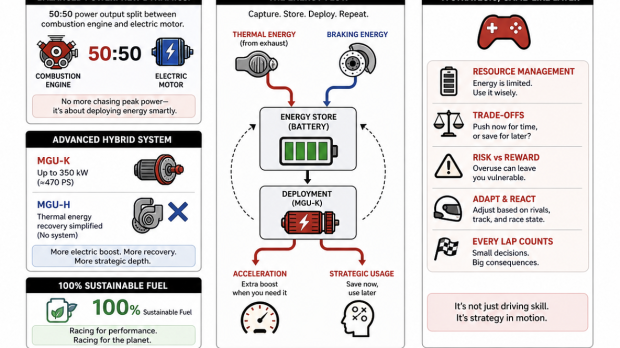
The 2026 Formula 1 regulations introduced a major technical overhaul that will transform the sport once again, making it more versatile, adding new layers and nuances for teams to consider. Increasing electrical contribution to car power from roughly 15-20% previously to close to a 50/50 split now, we may see new aspects like battery management becoming a central part of strategy and performance.
Game Like Driving
The new cars will bring more nuances to driving as well. Increasing the strategic layering, with approaches that sound more and more game-like.
Active Aero (X-Mode / Z-Mode): A replacement for traditional drag-reduction systems, where drivers can switch between high-downforce “cornering” configurations and low-drag “straight-line” configurations to optimise lap time.
Energy Deployment (Attack Boost): Drivers will have more flexible control over when to deploy stored electrical energy for overtakes or defence, making timing and positioning on track more important than ever.
Energy Harvesting Strategy: Instead of being purely automatic, energy recovery will play a bigger role in decision-making, with drivers needing to choose when to lift, coast, or brake more heavily to recharge the battery for later use.
Race-to-Race Energy Management: Teams will increasingly shape strategy around how energy is spent over a lap and across a stint, creating trade-offs between early aggression and late-race performance.
This brings more elements into the live decision space for drivers and team members, making the audience more engaged, similar to how live dealer casino in the UK gaming space engage the players more with live dealers, chat rooms, and other real players at the table.
Battery Management
Battery Management is Key: Races are now decided by how effectively teams and drivers manage their state of charge (SoC). Mismanaging this can lead to "clipping" (running out of electric power), making a car slow on straights.
"Lift and Coast": Drivers may have to lift off the throttle early to regenerate energy, allowing them to use more electric power at high speeds on the next straight, adding a tactical layer to fuel-saving.
"Super Clipping": A new tactic where drivers can charge their battery while at full throttle at the end of a straight, resulting in high energy harvesting but at a cost of lower top speed.
How Drivers and Fans Have Reacted
The reaction to the new F1 regulations shift hasn’t been one-sided. Some drivers have raised concerns about how much energy management could shape the racing, arguing that too much focus on battery strategy risks taking away from the instinctive, flat-out nature of Formula 1. Among fans, the response has been similarly mixed. While some are excited by the added complexity and the potential for more unpredictable racing, others are more skeptical, questioning whether it makes the sport feel less pure. That said, this kind of divide isn’t unusual in F1. Major regulation changes almost always spark debate at first, but opinions tend to evolve once people see how the racing actually plays out on track.
Final Words
Even if there’s some initial pushback from fans, the shift is likely to make race coverage more engaging over time. With more of the strategic “team play” being communicated over the radio, energy levels, deployment decisions, and harvesting phases, viewers will get a more immersive picture of what’s really happening during a race.
At the same time, this F1 electric evolution carries an educational aspect. As fans become more familiar with how these systems work, they’ll naturally build a better understanding of the hybrid technology. In the long run, that could even influence how people think about their own cars, making the transition to hybrid vehicles feel more accessible and relevant.
Related
More F1 news
Recommended by the editors
 Kimi Antonelli
Tragic death of Italian star reorders Antonelli priorities: 'First and foremost, health'
 F1 2026
F1 Odds: Bad news for Lewis Hamilton as 2026 title race takes a new twist
 F1 Monaco Grand Prix
F1 Monaco Grand Prix result could change AGAIN as Red Bull and McLaren begin FIA court battle
 Mercedes F1
$6billion Mercedes make bombshell claim in F1's upgrades race: 'We haven't got the money'







Races
-
 Grand Prix of Australia 2026
-
 Grand Prix of China 2026
-
 Grand Prix of Japan 2026
-
 Saudi Arabian Grand Prix 2026
-
 Miami Grand Prix 2026
-
 Grand Prix du Canada 2026
-
 Grand Prix De Monaco 2026
-
 Gran Premio de Barcelona-Catalunya 2026
-
 Grand Prix of Austria 2026
-
 Grand Prix of Great Britain 2026
-
 Grand Prix of Belgium 2026
-
 Grand Prix of Hungary 2026
-
 Dutch Grand Prix 2026
-
 Grand Prix of Italy 2026
-
Gran Premio de España 2026
-
 Grand Prix of Azerbaijan 2026
-
 Grand Prix of Bahrain 2026
-
 Grand Prix of Singapore 2026
-
Grand Prix of the United States 2026
-
 Gran Premio de la Ciudad de Mexico 2026
-
 Grande Prêmio de São Paulo 2026
-
Las Vegas Grand Prix 2026
-
 Qatar Grand Prix 2026
-
 Grand Prix of Abu Dhabi 2026
Follow us on your favorite social media channel
Editorial & corporate information

Avenue HQ
10–12 East Parade
Leeds
LS1 2BH
United Kingdom Regional correspondence
View contact page