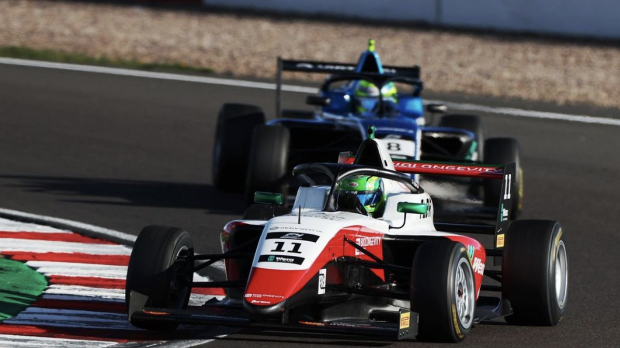

Inside the Routine: British F4 talents attracting attention from Formula 1 teams
At Donington Park, the opening round of the British Formula 4 Championship 2026 begins with tight margins and immediate pressure. Cars launch off the line into Turn 1 with minimal separation, and the field compresses quickly through the opening corners. For rookie drivers, the first laps often define the entire race. Cash Felber’s British F4 2026 season has turned into a real lesson in control.
While plenty of drivers push hard from the start to move up the order, Felber stands out because of his stability. His lines stay neat and consistent, and his positioning comes from smart, level-headed choices instead of reacting in the moment. In a championship where tiny errors can cost you big time, this approach makes a lot of sense. It’s also why he’s gaining attention as an American Formula 1 candidate – he’s developing through precision, not just raw aggression.
The 2026 season has an extra layer of interest, too: Cash is competing directly with his identical twin brother, Roman. As the Felber Twins, they’re among the few identical twins racing full-time together at this level, which creates a unique dynamic inside the same team.
You can spot the contrast right from early races and testing. Cash Felber is your precision guy — smooth, consistent. Roman, though, turns up the aggression once the green flag drops. That split in style makes their on-track battles more layered and definitely affects how they evolve as drivers.
Zoom out to the junior racing scene, and Cash is a first-generation American grinding through the European ladder. His step into British F4 puts him on a familiar pathway — the kind that’s launched plenty of drivers toward the higher categories.
The Ohio Roots & First-Generation Journey

Cash Felber’s path into European motorsport begins in Akron, Ohio, where both he and his brother first entered competitive karting in the United States. Unlike many drivers who come from established racing families, the Felbers built their trajectory independently.
The turning point came after attending a Formula 1 race in Austin in 2022, when the idea of pursuing motorsport became a concrete goal. As Josh Felber explained, “We actually went to the Formula 1 race in Austin in 2022, and after that weekend, they were like, just how can we do this? We want to do this. And I'm like, I don't know, let's figure it out.”
From there, things moved quickly. Around the age of 15, they relocated to Europe, which meant adapting to unfamiliar circuits, much stronger competition, and an entirely different racing culture — all while adjusting to life in a new country as teenagers.
Their father solved the problem by launching FLBR Motorsport. Suddenly, the brothers had a structured route through the ranks — no more depending on traditional racing pipelines. More and more ambitious American drivers are trying this same approach to crack the European system.
Sure, their karting days built a strong foundation in racecraft. But real progress in single-seaters? That meant taking the leap across the ocean.
Relocating at a young age introduced several challenges:
- Adapting to unfamiliar circuits;
- Competing against more experienced European drivers;
- Managing travel, logistics, and scheduling differences;
- Adjusting to new racing formats and conditions.
Despite the various hurdles they faced during the move, the transition ultimately proved successful. Both drivers managed to break into junior formula racing and continue pushing their development forward.
In 2025, Cash Felber reached a significant milestone by competing in the Ligier Junior Formula. He delivered a strong campaign and finished third in the standings overall. This result remains one of the most concrete pieces of evidence of his upward trajectory. It particularly highlighted his growing ability to stay consistent and perform at a high level week after week throughout a full season.
The phrase Cash Felber Ohio to British F4 reflects a path built step by step rather than through rapid advancement. Each stage of development—from karting to junior formulas—contributed to his readiness for the British Formula 4 Championship.
As a first-generation Formula 4 driver, Felber’s progress reflects a structured approach focused on experience, adaptation, and gradual improvement rather than immediate results.
The Twin Dynamic – Precision Sharpened by Aggression
When identical twins line up together in the same racing series, it naturally creates a special kind of competitive dynamic. For Cash and Roman Felber, this plays out within the same team environment. They share data, resources, and run under identical technical regulations and car specifications.
Yet despite these equal conditions, the brothers drive in quite different ways.
Cash Felber is typically linked with a precise style built around consistency and smart race management. His results tend to show steady positioning rather than dramatic swings. Roman, by contrast, brings a more aggressive flavour to his racing. He stands out especially in overtaking battles and when he needs to defend his position on track.
This contrast creates a natural performance balance. Roman’s willingness to push limits can highlight areas where more pace is possible, while Cash’s consistency provides a stable reference point for what can be repeated over multiple laps. This dynamic also reinforces Cash Felber precise driving style as a reliable benchmark within the team. Together, it creates an internal feedback loop that benefits both drivers.
The competitive element between them is constant, but it is not purely individual. As their father noted, “They're both within like tenths of seconds of each other when they're on the track and one time one is faster and another time another one is faster.” This level of closeness makes direct comparison unavoidable and highly valuable for development.
At the same time, their rivalry is supported by cooperation. “They're always working to help each other,” Josh Felber explained, adding that even in competition, both drivers prefer having each other nearby on track. This combination of competition and support is a defining feature of the Felber Twins twin rivalry.
Both drivers built up valuable experience during preseason testing at circuits like
- Silverstone
- Snetterton
- Donington
They drove under very similar conditions.
Even without public telemetry data, the team benefits hugely from running consecutive sessions on the same tracks. It lets them directly compare driving inputs and make smarter setup decisions.
Take braking points, corner entry speeds, and throttle application, for example. When the two drivers run near-identical laps, these small differences become clear. Roman’s aggressive inputs can uncover potential gains in specific spots, while Cash’s smoother technique helps the team figure out if those gains are sustainable lap after lap.
Off track, the relationship between the twins extends beyond direct competition. Their daily routine includes training, simulator work, and shared preparation, which reinforces both physical and mental development. Cash has emphasized the importance of discipline in racing, noting, “You have to be consistent, mentally tough. You have to be fit physically.”
This structured approach is supported by a strong personal connection. Despite the competitive nature of racing, both drivers openly acknowledge their bond. As Cash put it simply, “Yeah, we love each other,” highlighting that rivalry does not replace support.
The result is a dynamic where competition and collaboration exist at the same time. Roman’s aggressive style continues to push the limits, while Cash’s precision reinforces stability. Together, they create a system where both drivers benefit from constant comparison, making their development closely linked throughout the season.
Technical Development with Fortec Motorsport
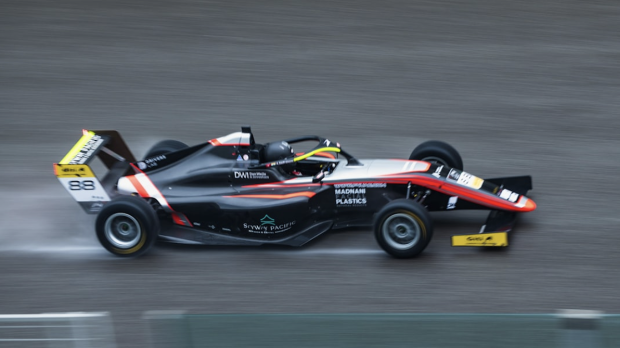
Cash Felber joins Fortec Motorsport for the 2026 British F4 season. The team has plenty of experience in these junior formulas, which should serve him well.
What makes this championship interesting is that all teams use identical machinery – the same Tatuus T421 chassis and Abarth engine. So it’s much more about what the driver can do with the car through setup and consistency rather than any mechanical edge.
That’s why preseason testing matters so much. In the British F4 2026 testing programme, you’ll find teams out at places like Silverstone, Snetterton, and Donington. These sessions give drivers time to get familiar with the tracks and the car’s behaviour in different conditions.
The goal isn’t simply to set the fastest lap. It’s about running consistent stints, gathering solid data, and making small adjustments that improve how the car handles.
Within this context, the Cash Felber Fortec Motorsport collaboration focuses on clarity and consistency in feedback. Drivers communicate how the car behaves at specific points on the track, including:
- Braking stability and entry control;
- Mid-corner balance and steering response;
- Traction and grip on the corner exit.
Engineers then translate this information into setup changes, often targeting areas such as suspension balance, tire pressures, and aerodynamic stability.
A big part of their development comes from the natural contrast between the Felber Twins themselves. Cash Felber usually drives with smoother inputs and very disciplined racing lines. His brother Roman, on the other hand, brings a noticeably more aggressive style to the track.
This difference turns out to be really useful during testing. When both drivers run under similar conditions, the team can clearly see variations in braking points, steering input, and throttle application. These small details often reveal where potential performance gains are hiding.
Take the corner entry as an example. A more aggressive approach might yield a faster lap on its own, but it can compromise stability across a longer run. A smoother style usually preserves the tires better and produces more consistent times. The team then works with both sets of data to create a setup that blends speed with the necessary control.
Driving style plays an important role in these adjustments. Cash Felber’s focus on controlled inputs supports car stability, particularly in technical sections of a circuit. This becomes especially relevant in British racing conditions, where the weather can change quickly and affect grip levels. Maintaining predictable handling is often more valuable than pursuing maximum performance in a single lap.
Although detailed telemetry data is not publicly available, teams in Formula 4 rely heavily on performance indicators such as:
- Sector time comparisons;
- Lap-to-lap consistency;
- Tire behavior over multiple laps.
It’s often the small things that pay off – carrying just a touch more speed through a corner or finding better traction on the exit can translate into noticeable gains by the end of a lap.
Beyond pure speed, the team also puts real emphasis on consistency. When you’re racing in such competitive, closely matched fields, reducing variation from one lap to the next can be every bit as important as chasing the fastest possible time. Drivers who can deliver repeatable laps are far better placed to keep their position and avoid costly errors when things get intense.
Overall, Fortec Motorsport’s development process brings together driver feedback, careful comparative work, and step-by-step refinement. Cash Felber’s consistent approach gives them a solid, stable baseline, while the contrast with different driving inputs helps the engineers identify exactly where they can keep pushing forward.
Donington Park Round 1 Recap & Lessons Learned
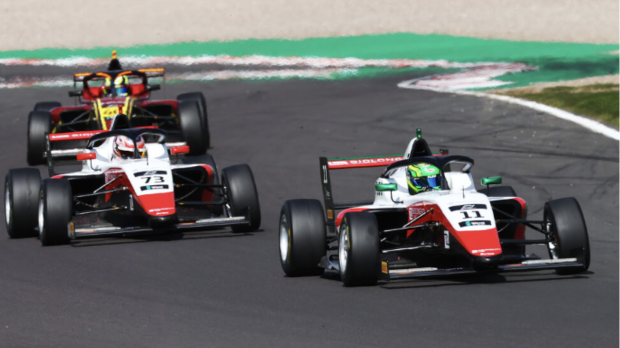
The opening round of the 2026 British F4 season at Donington Park provided everyone with the first clear picture of the year ahead.
In qualifying, the density of the grid became obvious straight away. So many drivers were separated by minimal time differences that each lap felt critical. The British F4 Round 1 weekend as a whole underlined how competitive the championship has become, with several competitors covered by only fractions of a second.
Cash Felber secured starting positions of P6, P7, and P6 across sessions. While not at the very front of the grid, these positions placed him firmly within the main competitive group and within reach of strong race results.
He went on to finish sixth in Race 1, which felt like a very encouraging result for a rookie in this kind of field. Roman Felber was also deeply involved in those close midfield battles across the weekend, which continued to highlight the direct on-track rivalry between the twins.
What stood out about Cash was how consistent his results remained over the three races. Instead of big swings in performance, he delivered steady runs. In situations where gaining track position proved difficult, simply maintaining your spot and avoiding trouble often mattered as much as pushing for overtakes. This approach was especially important in the heavy traffic, where small errors could quickly turn into lost positions.
The Cash Felber Donington Park 2026 weekend provided several key insights:
- Consistency can maintain competitive positioning even without podium finishes.
- Qualifying performance remains critical due to limited overtaking opportunities.
- Race starts, and early-lap positioning can influence overall results.
- Avoiding incidents in tight racing conditions is essential for securing points.
The competitive nature of the grid, with many drivers close in pace, means that small improvements can lead to significant changes in results. Even marginal gains in qualifying or race execution can shift a driver several positions forward.
For rookie drivers, early rounds often focus on:
- Building familiarity with race procedures.
- Improving confidence in close racing situations.
- Identifying areas for incremental improvement.
Felber’s performance at Donington suggests a solid foundation for the remainder of the season, with consistency and control already established as key strengths moving forward.
The Long-Term F1 Pathway & American Talent Context
The British Formula 4 Championship continues to be an important entry point into the European single-seater ladder and a significant part of the British F4 pathway to F1. It’s where many drivers take their first serious steps before advancing into Formula Regional and FIA Formula 3.
For American drivers like Cash Felber, often viewed as an American Formula 1 candidate, entering this system involves extra layers of difficulty. Relocation at a young age, adapting to unfamiliar circuits and regulations, and adjusting to European racing expectations all come into play.
He belongs to a fairly small group of U.S. drivers competing full-time in these junior formulas. This growing trend highlights how more American talents are now looking seriously at international pathways.
That said, turning early promise into a realistic Formula 1 career depends on several key factors:
- Consistent performance results over the course of a full season;
- Opportunities within competitive and well-resourced teams;
- Continued development and visible progress across different categories;
- Securing long-term sponsorship and financial backing;
- Creating a good professional network and staying mentally strong under pressure.
Right now, Formula 4 is primarily about accumulating experience and honing one's racecraft. Drivers at this level understand track restrictions, tire wear, and compete wheel-to-wheel on several circuits.
These first few years are really just a warm-up for what comes next – far more difficult battles further up the ladder, such as Formula Regional and F3, where the competition becomes stronger and the pressure increases.
Felber heads into 2026 looking to lock down a competitive spot in European racing. Another big part of that is showing he can handle rapid changes — new layouts, different engineers, unfamiliar teammates — and still match the pace of drivers who've been around longer.
Conclusion & Forward Look
Cash Felber's development as a driver reaches a key point in the 2026 British F4 season. Driving for Fortec Motorsport, his rookie campaign has been consistent and controlled.
The Felber twins being in the same championship creates a unique situation — they race each other hard but also grow together. Their opposing styles force both to get better, and that's a big reason they're emerging as promising American names in Europe's single-seater scene.
Fans can follow Cash Felber Formula 1 candidate in British F4 and his full 2026 campaign, staying updated on every lap at his official site.
The focus now becomes sustaining consistency and gaining momentum during the remaining rounds of the season.




 Grand Prix of Australia 2026
  Grand Prix of China 2026
  Grand Prix of Japan 2026
  Saudi Arabian Grand Prix 2026
  Miami Grand Prix 2026
  Grand Prix du Canada 2026
  Grand Prix De Monaco 2026
  Gran Premio de Barcelona-Catalunya 2026
  Grand Prix of Austria 2026
  Grand Prix of Belgium 2026
  Grand Prix of Hungary 2026
  Grand Prix of Italy 2026
  Grand Prix of Azerbaijan 2026
  Grand Prix of Bahrain 2026
  Grand Prix of Singapore 2026
  Gran Premio de la Ciudad de Mexico 2026
  Grande Prêmio de São Paulo 2026
  Qatar Grand Prix 2026
  Grand Prix of Abu Dhabi 2026