


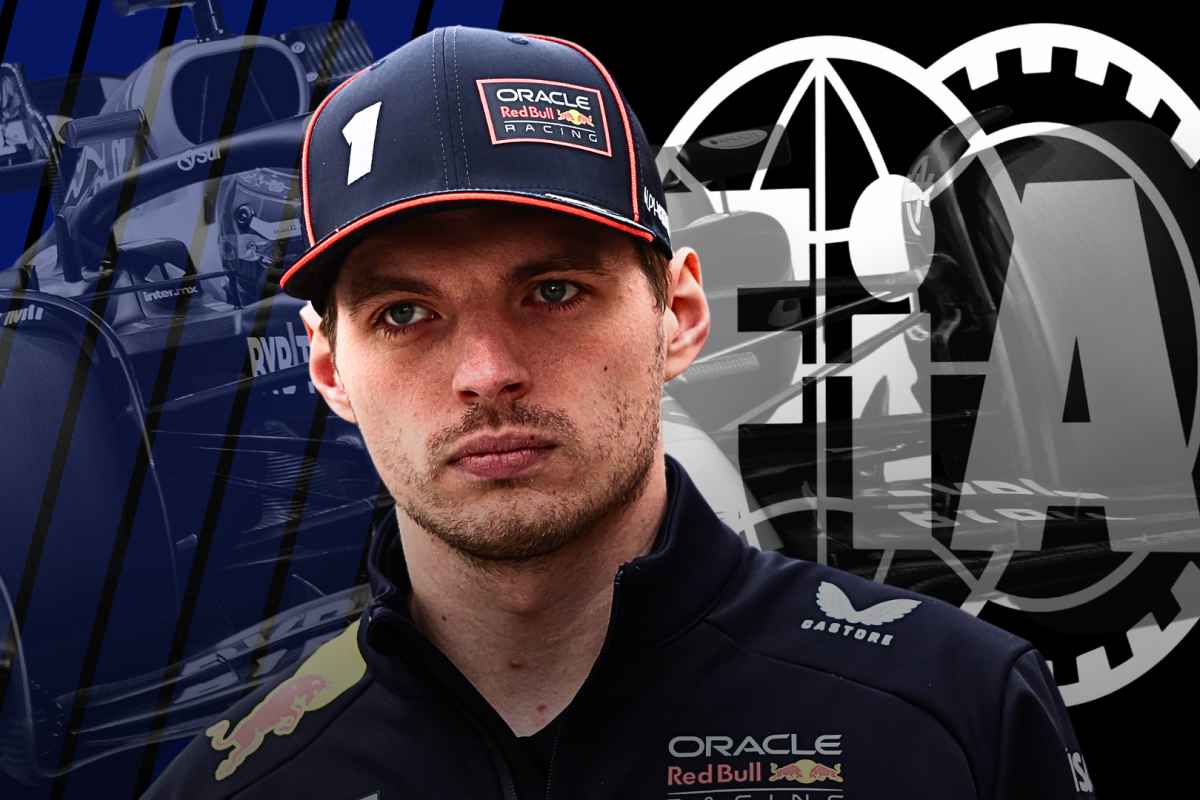

How the FIA can fix F1 at crunch talks this week
Who could have predicted the F1 2026 regulations would bring us here

F1's governing body, the FIA, are currently preparing for a meeting later this week, where the highly contentious 2026 regulations will take centre stage.
The Iran war has forced the sport into a five-week break from the calendar, with F1 and FOM taking the decision to cancel both of April's Bahrain and Saudi Arabian Grands Prix.
No replacement rounds were planned and as a result, the 2026 campaign will now follow a 22-race calendar. But after the events of last month's Japanese GP, the FIA have plenty of work to be getting on with during the spring break.
On Sunday, March 29, Haas F1 star Ollie Bearman was travelling at roughly 300km/h, following the Alpine of Franco Colapinto, who was harvesting energy as he approached the corner, thus reducing his speed significantly.
Just last year, this wouldn't have been an issue, but as a result of the new power unit regulations, Bearman, who was not harvesting, found himself going 50km/h faster than Colapinto into Spoon corner.
The British driver was forced into taking emergency avoiding action onto the grass, eventually spinning back across the track before hitting the barrier and suffering a 50G incident.
Thankfully, Bearman walked away unscathed, and though the new F1 regulations have hardly proved popular, this scary crash has rung alarm bells for many who have demanded urgent action from the FIA.
READ MORE: F1 champion’s Lewis Hamilton admission has Martin Brundle worried
What is so controversial about the new F1 rules?
Before the first round of the new regulations era had even begun, some of the sport's biggest names had made their reservations about the new rules very clear.
The overhauled near 50/50 power split between the internal combustion engine (ICE) and the MGU-K led four-time champion Max Verstappen to state the sport was more like 'Formula E on steroids' than F1.
Seven-time champion Lewis Hamilton also shared concerns that the "ridiculously complex" F1 rules would mean: "none of the fans are going to understand it".
As the 2026 season has gotten underway, these fears have not subsided, and now, even drivers like Charles Leclerc are calling for change despite initially admitting he was having 'fun' during on-track battles with the aid of the new overtake mode.
But the reality is that safety should be the number one priority for F1 and the FIA, and not as reigning champion Lando Norris implied, the opinion of fans.
For those who have enjoyed the yo-yo style of racing that has provided some great on-track entertainment at times in the opening rounds of 2026, then don't worry, it is understood that F1 doesn't feel the need to urgently change it anytime soon.
So what is likely to change?
What will the FIA discuss in 2026 regulation review meeting?
On Thursday, April 9, the FIA will meet to review 'whether' any changes need to be made to the new chassis and power unit regulations, with the energy management system the area most in need of tweaking.
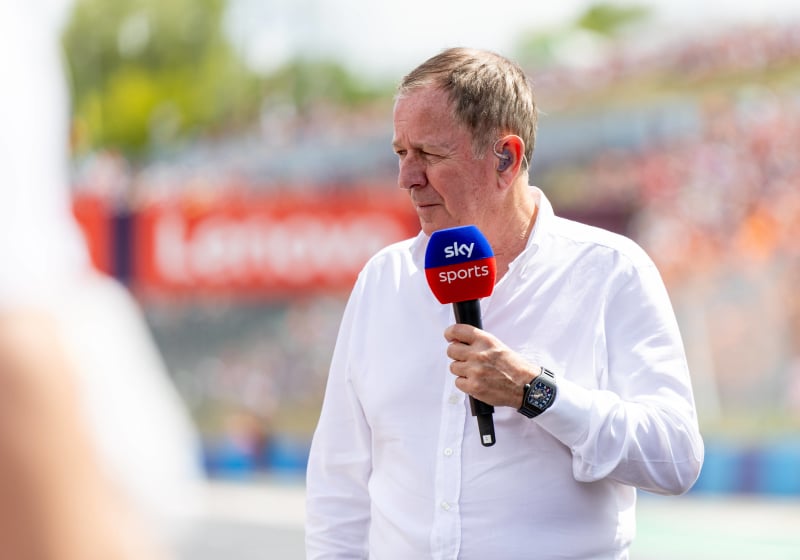
But it isn't just the drivers who have been complaining. F1 legend and Sky Sports pundit Martin Brundle has urged the governing body to sort themselves out, claiming that driver safety is only their fourth priority, labelling the 2026 regulations he was previously in support of as "fundamentally flawed."
McLaren team principal Andrea Stella also spoke of how he had raised concerns during pre-season testing over closing speeds such as those that caused Bearman’s Japanese GP crash, something Williams driver Carlos Sainz also claims he already warned the FIA about in his role as director of the Grand Prix Drivers Association (GPDA).
In a statement following Bearman's crash that demonstrated the dangerous issue presented by closing speeds, the FIA said: "Since their introduction, the 2026 regulations have been the subject of ongoing discussions between the FIA, Teams, Power Unit Manufacturers, Drivers and FOM. By design, these regulations include a number of adjustable parameters, particularly in relation to energy management, which allow for optimisation based on real-world data.
"It has been the consistent position of all stakeholders that a structured review would take place after the opening phase of the season, to allow for sufficient data to be gathered and analysed. A number of meetings are therefore scheduled in April to assess the operation of the new regulations and to determine whether any refinements are required.
"Any potential adjustments, particularly those related to energy management, require careful simulation and detailed analysis. The FIA will continue to work in close and constructive collaboration with all stakeholders to ensure the best possible outcome for the sport and safety will always remain a core element of the FIA's mission. At this stage, any speculation regarding the nature of potential changes would be premature. Further updates will be communicated in due course."
Changes to the issue of closing speeds, too much energy management during qualifying and the sheer speed drop off drivers are experiencing at the end of straights are likely to be looked into, with tweaks necessary before the sport is too deep into the rule cycle.
What should change about the F1 2026 rules?
But what can the FIA actually do to improve the safety and standard of racing by the time the next round of the 2026 championship kicks off on May 1?
Though some teams like Aston Martin are on the back foot with both their chassis and power unit, the changes to the chassis rules for 2026 haven't really triggered a wider issue across the grid, with the PU tweaks the area in need of urgent yet effective attention.
On top of this, any changes suggested by the FIA will need to be implemented in agreement with the five power unit manufacturers; Mercedes, Ferrari, Audi, Honda and Red Bull Ford Powertrains, so whilst the tweaks are likely to be ones that benefit the sport as a whole, don't expect any major changes, those may come in time for 2027.
If I was in charge of sorting out F1 in 2026, the first thing I'd turn my attention to fixing would be the starting procedure.
At the season-opening Australian GP, it didn't even look like all five lights lit up properly before going out, and don't get me started on the awful sound caused by the high revs (and they say the Mario Kart comparisons are unfair).
Unfortunately, not much can be done about that now that the MGU-H has been removed from the power unit altogether, so what can still be done to salvage the sport under the new regulations?
Well, when you consider the fact that qualifying sets the grid for a race, most of the problems in my opinion stem from the fact that the overemphasis on energy management has led to far too much super clipping during grand prix qualifying.
This has brought an abrupt end to the days of putting in a whopping final flying lap in Q3, where drivers used to be able to truly push their F1 cars to the limit.
Instead, fans have been flooded with depressing clips of driver onboards where the measly V6 hybrid engine can be heard ticking down on the straights instead of going flat-out.
One potential solution to this could be for the FIA to remap the energy usage per lap. If the base electrical allowance per lap was slightly increased during a race, with the harvesting windows smoothed out, drivers would not be compelled into extreme lift‑and‑coast at the end of long straights.
The maximum energy allowed in qualifying in 2026 was 9MJ per lap, but at the Japanese GP last time out, a last-minute reduction was introduced to bring it down to 8MJ.
Some have suggested the FIA should bring this down even lower to make it easier for drivers to hit the recharge limit and avoid excessive super clipping and using too much lift and coast.
So is this a good idea? Well it would allow drivers to push to the limit instead of having to worry about constantly recharging, but the trade off would be that this would be likely to increase the overall lap time, something that would be likely to happen with other energy tweaks as well.
This is a common theme when discussing any potential quick fixes the FIA could make, so good luck if you're the one at the governing body who has to tell Charles Leclerc the 2026 rule changes might make him even slower in qualifying.
But the cars aren’t always painfully slow, and something that has become more concerning is the fact that drivers such as Norris have even admitted the new battery deployment has caused them to overtake rivals on track when they didn’t even want to due to their inability to control the battery power.
A potential solution to this could be making software changes in an attempt to prevent accidental overtakes, finding the right balance between self-driving cars and giving the driver too much manual control over the energy deployment (something which could put their safety at risk should they become distracted whilst racing).
Where the dangerous closing speeds that caused Bearman's incident are concerned, perhaps F1's governing body could introduce a more standardised energy deployment rule that prevented drivers from going into heavy harvest if there is still another car deploying at full power within close range.
At this week's meeting, the FIA could look to reduce the amount of battery F1 drivers are able to charge and recharge over the course of a single lap, but the issue they face is that any move away from the electrical focus in the new power units would be a move away from their long-term goal of becoming an efficient hybrid sport.
In fact, the newly transformed Audi F1 team were convinced to join the sport because of the new hybrid engine regulations, which match up with the German giant's focus on sustainability and electrical power across their road car range.
The bottom line is that we know the FIA are willing to adjust the power unit and active‑aero rules as the 2026 season goes on, especially in the name of improving safety. But whatever the FIA decide to change ahead of next month’s Miami GP, they will by no means be the last tweaks we see in this regulations era.
READ MORE: The FIA double whammy set to stop Mercedes F1 dominance
Related
More F1 news
Latest F1 news

Recommended by the editors
 Latest F1 News
Martin Brundle to miss more F1 races as Sky pundit announces streamlined schedule
 F1 News & Gossip
F1 Drivers' WhatsApp Group: Toilets, Memes & Safety - what do they actually talk about?
 FIA News
How the FIA can fix F1 at crunch talks this week
 Lewis Hamilton
Lewis Hamilton reveals Ferrari have F1 masterplan to beat Mercedes







Races
-
 Grand Prix of Australia 2026
-
 Grand Prix of China 2026
-
 Grand Prix of Japan 2026
-
 Grand Prix of Bahrain 2026
-
 Saudi Arabian Grand Prix 2026
-
 Miami Grand Prix 2026
-
 Grand Prix du Canada 2026
-
 Grand Prix De Monaco 2026
-
 Gran Premio de Barcelona-Catalunya 2026
-
 Grand Prix of Austria 2026
-
 Grand Prix of Great Britain 2026
-
 Grand Prix of Belgium 2026
-
 Grand Prix of Hungary 2026
-
 Dutch Grand Prix 2026
-
 Grand Prix of Italy 2026
-
Gran Premio de España 2026
-
 Grand Prix of Azerbaijan 2026
-
 Grand Prix of Singapore 2026
-
Grand Prix of the United States 2026
-
 Gran Premio de la Ciudad de Mexico 2026
-
 Grande Prêmio de São Paulo 2026
-
Las Vegas Grand Prix 2026
-
 Qatar Grand Prix 2026
-
 Grand Prix of Abu Dhabi 2026
Follow us on your favorite social media channel
Editorial & corporate information

Avenue HQ
10–12 East Parade
Leeds
LS1 2BH
United Kingdom Regional correspondence
View contact page