



F1 2026 regulations: How much does an F1 car weigh?
Cars are set to be much lighter in 2026

There are lots of new regulations sweeping into F1 in 2026, and here at GPFans, we've got you covered if you're a little confused about them!
While new power unit regulations have kept power unit manufacturers busy over the last couple of years, the new aerodynamic car design changes are arguably even more radical.
F1 cars in 2026 are smaller, narrower, more nimble, and lighter, and this has been introduced to try and encourage better racing, particularly on some of the narrow street circuits on the F1 calendar.
But how much lighter are they? And how hard is it going to be for teams to meet the minimum weight?
F1 2026 DRIVER LINEUP: F1 grid SET as Red Bull complete driver jigsaw puzzle
How heavy is an F1 car?
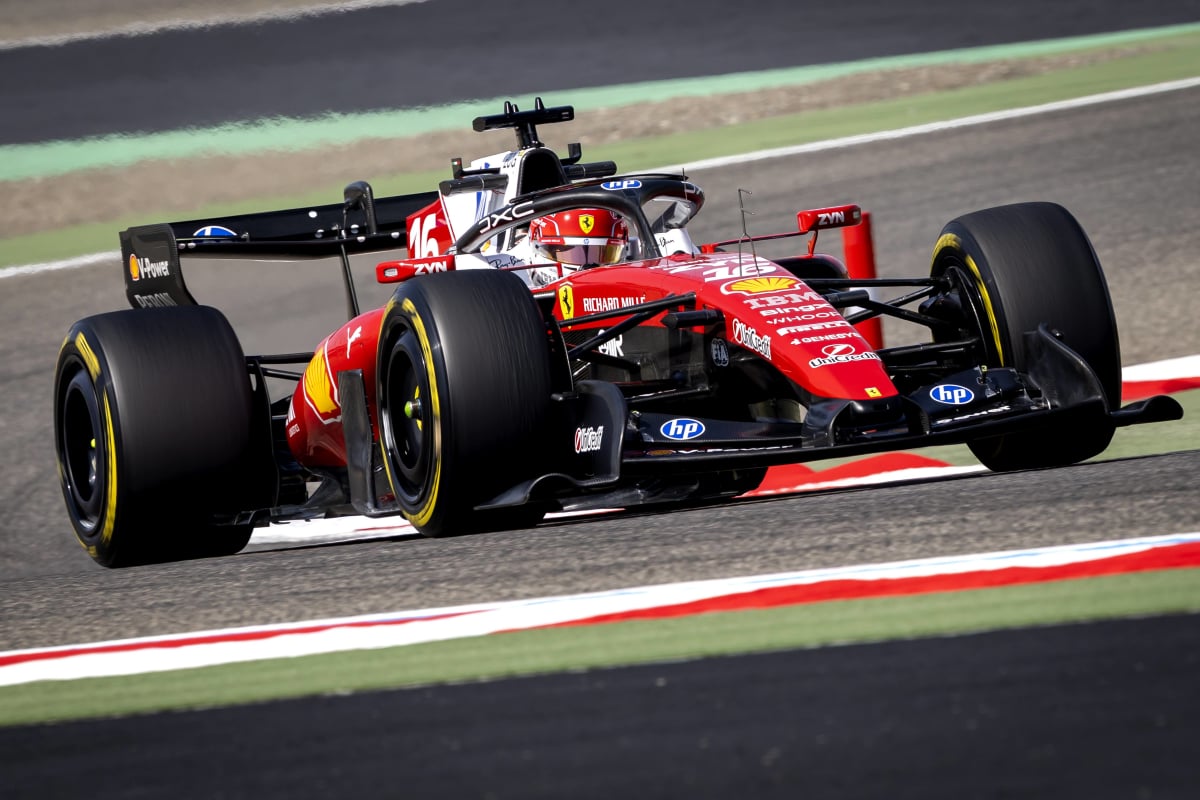
Overall, an F1 car in 2026 has a minimum weight of 768kg, this is without fuel and is in an ideal world for F1 teams, with them likely being heavier than this in the early weeks of the season.
That minimum weight has been reduced by 32kg compared to 2025, in an attempt to reverse the direction of travel that had seen 200kg of weight added to F1 cars in the last 20 years.
In order to achieve this new car weight, the wheelbase of the cars have been reduced by 20cm and the car width reduced by 10cm.
The maximum floor width has also been reduced by 15cm, while the width of the front tyres have been decreased by 2.5cm and the rears by 3cm.
Will teams struggle to meet new F1 2026 requirements?
While there is no maximum weight limit, teams try to stick as close to the minimum limit as possible to make their cars quicker.
If a car weighs less than 768kg, teams can add ballast, which is an extra weight used to bring it up to the required number. It can also be added to the car when a driver weighs less than 80kg - a minimum weight that includes their body weight, helmet, race suit, and shoes.
If a car is found to have violated the minimum 768kg weight rule, it faces the risk of disqualification. A recent example of this happened during the 2024 Belgian Grand Prix when George Russell's car was found to be underweight during post-race checks, and Lewis Hamilton inherited the race win in his final season with Mercedes.
Audi technical director James Key recently said that he's not sure how many teams will actually be able to meet the minimum requirement at the start of the year, with it set to be one of the engineering challenges of the season to start making the initial cars lighter.
"It's a really tough goal," Key told Auto Motor und Sport. "I'm not sure if everyone will achieve it, we don't even know for sure ourselves yet.
"The car we've been driving so far still had a lot of sensors on board. I hope we can get close to the limit."
Williams recently confirmed that the FW48 that they have recently launched weighs 772.4kg, so they are not too far away from that minimum weight target.
When does the 2026 F1 season start?
The 2026 F1 season gets underway on Friday, March 6, at the Albert Park Circuit, Melbourne for the Australian Grand Prix.
FP1 will mark the first session of the season at 12:30pm local time (1:30am GMT), while qualifying will get underway on Saturday, March 7 at 4pm local time (5am GMT). Lights out for the first grand prix of the year is at 3pm local time (4am GMT).
F1 2026: Which driver contracts expire this year?
Related
More F1 news
Latest F1 news




Recommended by the editors
 Lewis Hamilton
How Lewis Hamilton spent break with A-list star
 Las Vegas Grand Prix
What $50 and $28,000 F1 tickets will get you at the Las Vegas GP
 Kimi Antonelli
Kimi Antonelli dividing a nation as older generation fall in love with F1 star
 Ferrari
Lewis Hamilton and Ferrari to receive power unit 'boost' in Barcelona







Races
-
 Grand Prix of Australia 2026
-
 Grand Prix of China 2026
-
 Grand Prix of Japan 2026
-
 Grand Prix of Bahrain 2026
-
 Saudi Arabian Grand Prix 2026
-
 Miami Grand Prix 2026
-
 Grand Prix du Canada 2026
-
 Grand Prix De Monaco 2026
-
 Gran Premio de Barcelona-Catalunya 2026
-
 Grand Prix of Austria 2026
-
 Grand Prix of Great Britain 2026
-
 Grand Prix of Belgium 2026
-
 Grand Prix of Hungary 2026
-
 Dutch Grand Prix 2026
-
 Grand Prix of Italy 2026
-
Gran Premio de España 2026
-
 Grand Prix of Azerbaijan 2026
-
 Grand Prix of Singapore 2026
-
Grand Prix of the United States 2026
-
 Gran Premio de la Ciudad de Mexico 2026
-
 Grande Prêmio de São Paulo 2026
-
Las Vegas Grand Prix 2026
-
 Qatar Grand Prix 2026
-
 Grand Prix of Abu Dhabi 2026
Follow us on your favorite social media channel
Editorial & corporate information

Avenue HQ
10–12 East Parade
Leeds
LS1 2BH
United Kingdom Regional correspondence
View contact page