



F1 Testing - What are aero rakes?
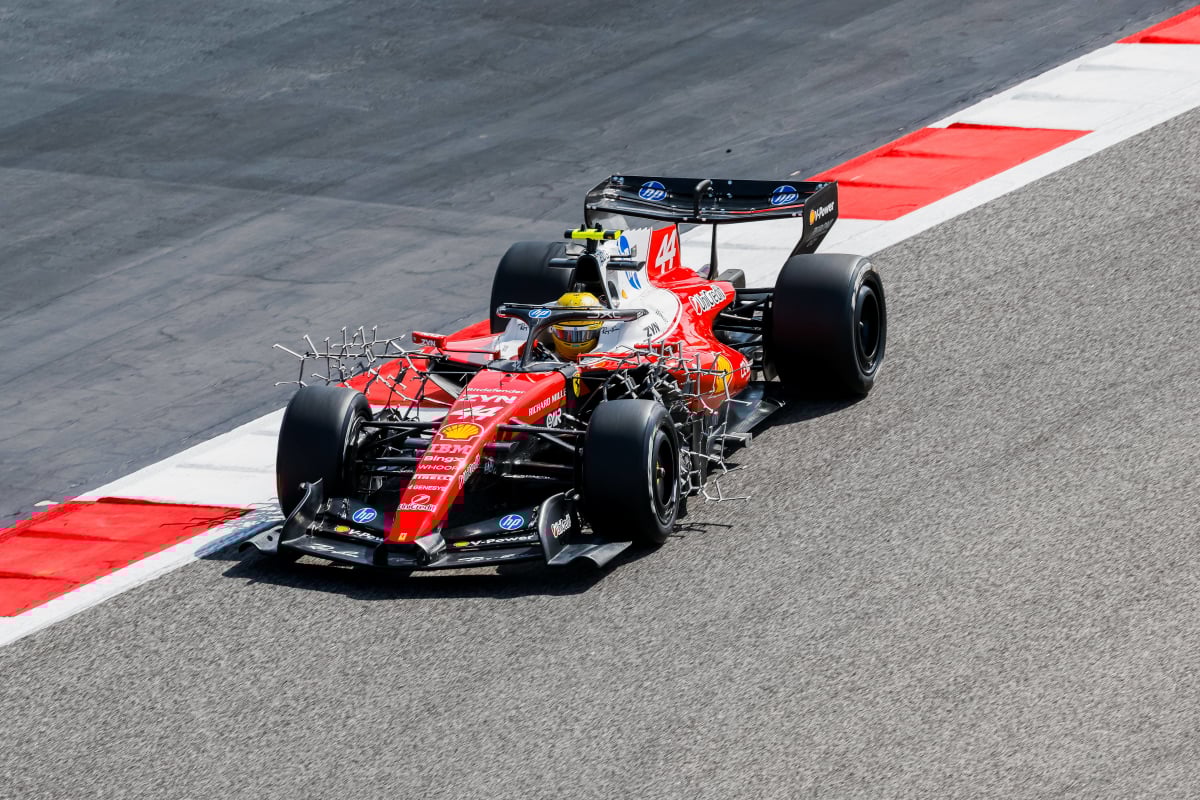
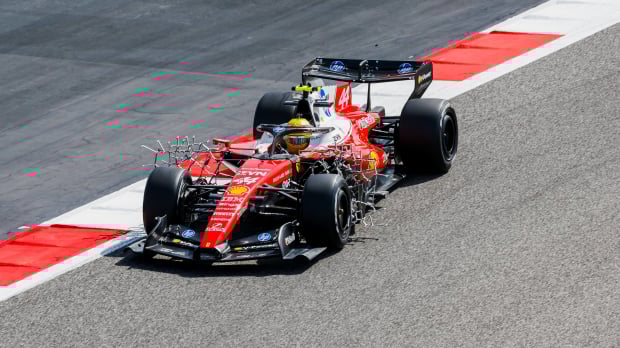
Aero rakes are present on the cars this week in testing

F1 pre-season testing is officially underway with the start of the televised Bahrain testing week.
Following a private shakedown last month in Barcelona in which very little information was made available to fans, all 11 teams have taken to the Bahrain International Circuit for a three-day testing event this week, before another three-day testing event takes place later this month.
For both of these, at least some live coverage will be provided, while all lap times and information on how many laps each team have run will also be readily available.
And as you're watching highlights of the day's action, or the one hour of live coverage that F1 are providing this week, you might notice something about the cars on the track, other than the massive changes caused by the regulations reset.
Aero rakes are a huge part of pre-season testing, but what are they and what are their function?
F1 TESTING 2026: Bahrain schedule, start times and how to watch live
What are aero rakes and why are they important?
Aero rakes resemble metal fences that are mounted on the car. The aero rakes consist of sensors that can measure pressure and temperature, for example, but can also measure how the airflow flows from, for example, the tyres or the front wing.
Teams can compare data from the wind tunnel with data from the aero rakes to come up with a better aerodynamic setup for a particular circuit.
This is going to be particularly important this year, with wholesale aerodynamic regulation changes sweeping into the sport which teams have been working on via their factories, wind tunnels and simulators for much of the last year, but have had limited time out on track up till now.
From the data from the aero rakes, teams can see how different settings change the car's performance.
In this way it can be determined whether, for example, the front wing needs to be adjusted a little for more downforce.
Former Ferrari engineer Rob Smedley explained to F1TV during last year's pre-season testing in Bahrain: "[The] information then goes back to the aerodynamics team, and they can then use that data in order to then optimise and improve the upstream flow structure generation.
"The data that comes back from the aero rakes is very quick - it’s almost real time. Teams have developed software that takes the raw data and spits out these really interesting images and video files.
"Some of the stuff, you can act on immediately. So if you’re doing a ‘front wing polar’, for example, which means stepping through from a low angle up to the maximum angle of the front wing, then we’re able to see if that front polar is healthy. Or we can see if there’s a point where the front wing ‘falls over’, as we term it, where we’re not generating the downforce on the front anymore. You might be getting a stall or a semi-stall, and at that point, the information from the aero rakes is telling the race engineers to stay away from that area of running the car.
"Equally, there are sometimes more fundamental things that we pick up from the aero rakes that we can’t solve at the track, and that then goes back to the aerodynamics team and they can deliberate on how to solve these fundamental problems and to put these flow structures in a more optimised position."
READ MORE: Red Bull F1 boss to miss Bahrain testing
Related
More F1 news
Latest F1 news



Recommended by the editors
 Max Verstappen
When Max Verstappen said he 'might headbutt someone', and an English journalist took the bait
 Latest F1 News
'It's not healthy': Max Verstappen is at breaking point over F1 future
 Japanese Grand Prix
F1 journalists call for FIA action after Max Verstappen kicked reporter out
 Japanese Grand Prix
Ollie Bearman Suzuka crash shouldn't have happened, and everyone in F1 knows it







Races
-
 Grand Prix of Australia 2026
-
 Grand Prix of China 2026
-
 Grand Prix of Japan 2026
-
 Grand Prix of Bahrain 2026
-
 Saudi Arabian Grand Prix 2026
-
 Miami Grand Prix 2026
-
 Grand Prix du Canada 2026
-
 Grand Prix De Monaco 2026
-
 Gran Premio de Barcelona-Catalunya 2026
-
 Grand Prix of Austria 2026
-
 Grand Prix of Great Britain 2026
-
 Grand Prix of Belgium 2026
-
 Grand Prix of Hungary 2026
-
 Dutch Grand Prix 2026
-
 Grand Prix of Italy 2026
-
Gran Premio de España 2026
-
 Grand Prix of Azerbaijan 2026
-
 Grand Prix of Singapore 2026
-
Grand Prix of the United States 2026
-
 Gran Premio de la Ciudad de Mexico 2026
-
 Grande Prêmio de São Paulo 2026
-
Las Vegas Grand Prix 2026
-
 Qatar Grand Prix 2026
-
 Grand Prix of Abu Dhabi 2026
Follow us on your favorite social media channel
Editorial & corporate information

Avenue HQ
10–12 East Parade
Leeds
LS1 2BH
United Kingdom Regional correspondence
View contact page