


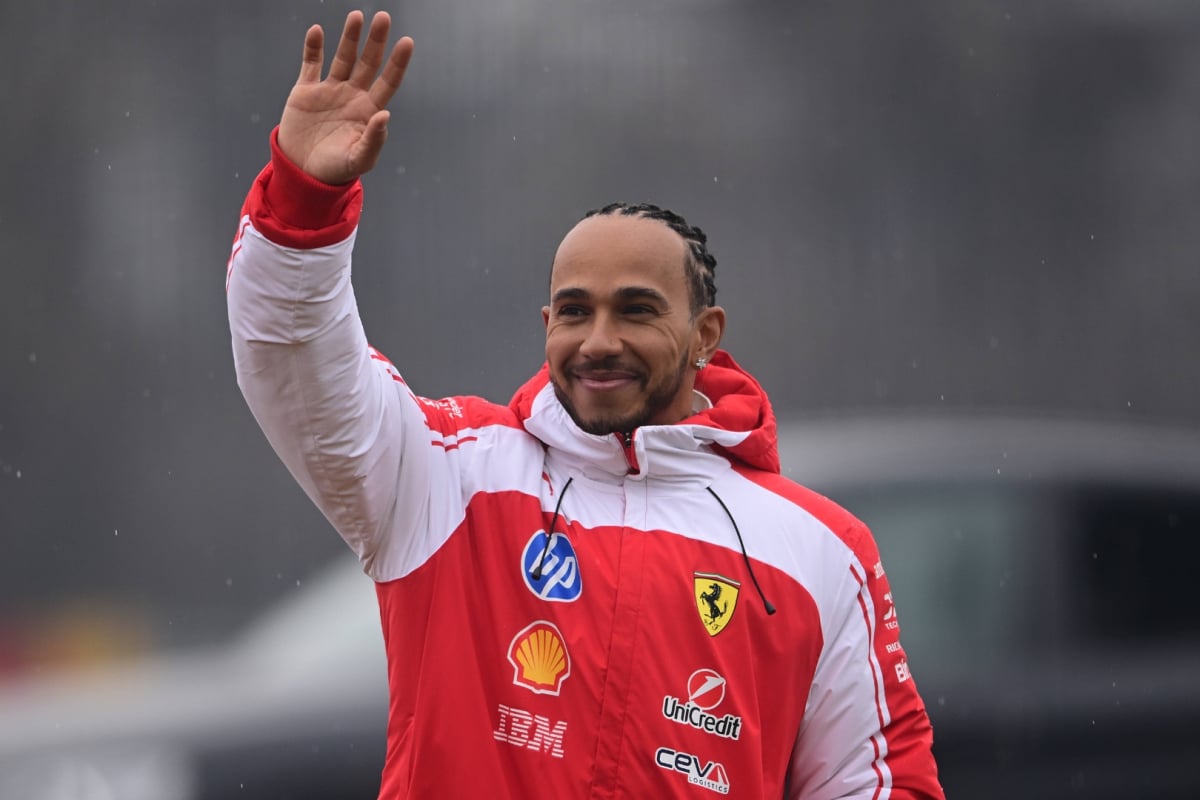

F1 Testing 2026: Barcelona schedule and times as Lewis Hamilton hits the track today
The waiting is over as 10 of the 11 teams take part in the shakedown

The waiting is over and F1 testing is under way in 2026 with five days of action on track in Barcelona through to Friday January 30.
With sweeping new regulations coming into the sport this year, a seismic shake-up on the grid is in prospect, particularly if all those Mercedes rumours turn out to be true.
But before any shake-up comes a shakedown, as 10 of the 11 teams (more on who is missing to come) take to the track at the Circuit de Catalunya this week to put their 2026 cars through their paces.
F1 HEADLINES: Adrian Newey ‘furious’ as Christian Horner in talks to return
Barcelona testing schedule and session start times
Testing in Barcelona began on Monday January 26 and runs through to Friday January 30 inclusive - five days of shakedown action. It should be noted though that each team can only run for three of the five days. We expect Lewis Hamilton to kick off Year 2 at Ferrari on Tuesday (January 27).
Testing each day begins at 0900 local time (CET), which is 0800 in the UK, 0300 Eastern or midnight Pacific on the West Coast of the US. The track is then open until 1700 local time (1600 UK, 1100 Eastern, 0800 Pacific). We are officially under way.
How to follow the action on TV
Okay so we’ve given you the good news - F1 cars out on track for the first time in 2026. But there is a catch. You won’t actually be able to see them.
There will be no live TV coverage of the cars on track this week, the week is a total blackout and everything takes place behind closed doors.
There is though a way that rabid fans can keep up with the action - thanks to a genius move from Sky Sports in the UK.
DRIVE to SURVIVE: Season 8 release date and big storylines
That comes thanks to a nightly TV highlights show (also on YouTube) fronted by the pitlane legend that is Ted Kravitz. That show will air at 2100 UK time (2200 CET, 1600 Eastern, 1300 Pacific) each evening on Sky Sports F1.
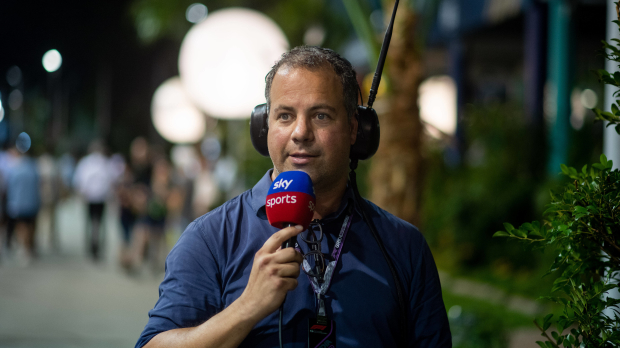
Once Barcelona is out of the way there are two three-day testing periods in Baharain set for February. February 11-13 will have one hour of live TV coverage each day, before February 18-20 has full coverage.
What to expect from F1 testing in 2026
The first thing we should not expect is to see any Williams cars out on track in Barcelona - the team announced late last week that it will be a total no show at Circuit de Catalunya.
An official team statement explained: "Atlassian Williams F1 Team has taken the decision not to participate in next week’s shakedown test in Barcelona following delays in the FW48 programme as we continue to push for maximum car performance.
"The team will instead conduct a series of tests including a VTT programme next week with the 2026 car to prepare for the first official test in Bahrain and the first race of the season in Melbourne.”
Reigning two-time Constructors’ champions McLaren will also not be around on Monday - with Team Principal Andrea Stella revealing it will be Tuesday or Wednesday before their cars are on track.
Stella explained: "We wanted to give ourselves as much time as possible for development, because every day of development, every day of design was adding a little bit of performance.”
F1 2026 DRIVER LINEUP: F1 grid SET as Red Bull complete driver jigsaw puzzle
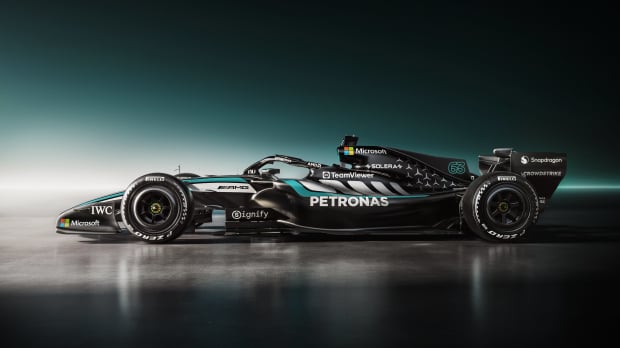
Outside of that, we expect everybody to be present, with all eyes on that new Mercedes W17 in particular, and the new Ferrari SF-26 as year 2 of the Lewis Hamilton Project begins at Maranello.
We also have two ‘new’ teams on the grid with Audi taking over from Sauber and US automotive giant Cadillac coming in as a totally fresh entrant.
Testing will also see some unusual elements which we only ever see at this time of year - including flow-vis paint (fluorescent fluid that allows aerodynamicists to analyse the airflow over aero surfaces such as the sidepods, rear wing and front wing while it’s on track.)
Also expect to see the return of aero rakes, a light scaffolding mounted on the car that contains sensors that can measure pressure and temperature, or can measure how the airflow flows from the tyres or the front wing, for example. Teams can compare data from the wind tunnel with data from the aero rakes to come up with a better aerodynamic setup for a particular circuit.
So why is F1 testing secret in Barcelona?
Private testing means that the media will not have access to Barcelona's shakedown, and only a small crew will be admitted to film content for teams and drivers.
There will be no data or timing screens available to the public during the first test, but it seems as the main focus is for teams to gain mileage, performance and the timesheets will not be too crucial nor representative of what we will eventually see in Melbourne when practice begins at Albert Park on Friday March 6.
As for that rule around teams only being able to run for three days of five, it’s actually intended to help them. It means should bad weather impact proceedings (it is January in Europe after all), they would still have enough time to take up their allotted sessions.
F1 DRIVER SALARIES: F1 driver salaries: What stars including Hamilton and Verstappen earn
Related
More F1 news
Latest F1 news


Recommended by the editors
 Australian Grand Prix
Lewis Hamilton is the biggest winner from the Australian Grand Prix - this is why
 Australian Grand Prix
F1 Australian Grand Prix 2026 results: Final classification with penalties applied
 F1 2026
F1’s new cars in 2026 are how much slower? Australian Grand Prix confirms the sad truth
 F1 Explained
F1 Engine Compression Ratio - What is it and why is it so controversial?







Races
-
 Grand Prix of Australia 2026
-
 Grand Prix of China 2026
-
 Grand Prix of Japan 2026
-
 Grand Prix of Bahrain 2026
-
 Saudi Arabian Grand Prix 2026
-
 Miami Grand Prix 2026
-
 Grand Prix du Canada 2026
-
 Grand Prix De Monaco 2026
-
 Gran Premio de Barcelona-Catalunya 2026
-
 Grand Prix of Austria 2026
-
 Grand Prix of Great Britain 2026
-
 Grand Prix of Belgium 2026
-
 Grand Prix of Hungary 2026
-
 Dutch Grand Prix 2026
-
 Grand Prix of Italy 2026
-
Gran Premio de España 2026
-
 Grand Prix of Azerbaijan 2026
-
 Grand Prix of Singapore 2026
-
Grand Prix of the United States 2026
-
 Gran Premio de la Ciudad de Mexico 2026
-
 Grande Prêmio de São Paulo 2026
-
Las Vegas Grand Prix 2026
-
 Qatar Grand Prix 2026
-
 Grand Prix of Abu Dhabi 2026
Follow us on your favorite social media channel
Editorial & corporate information

Avenue HQ
10–12 East Parade
Leeds
LS1 2BH
United Kingdom Regional correspondence
View contact page