



F1 star reveals how abandoned concept harmed drivers' health
Pierre Gasly was with Alpine for the ground effect era

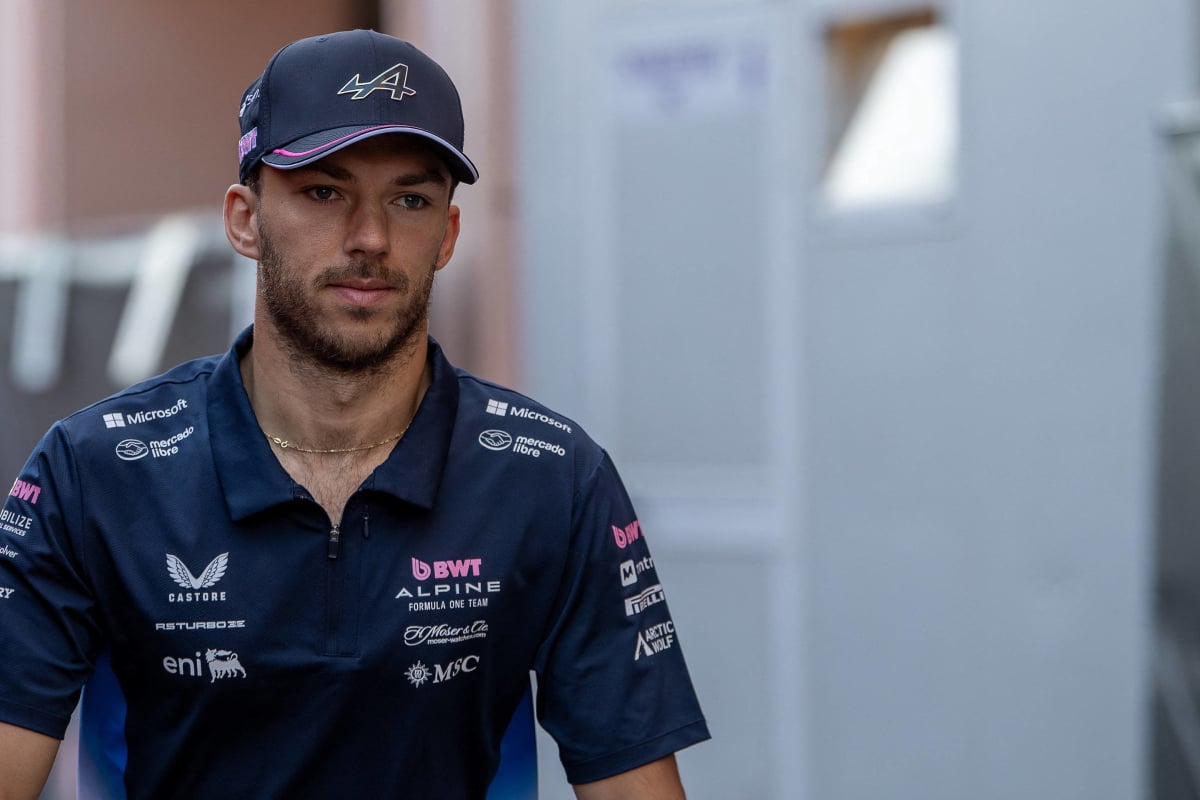
Alpine F1 star Pierre Gasly has spoken out about the health issues that the recent ground effect era caused F1 drivers.
The ground effect era in F1 ran from 2022 to 2025, with Max Verstappen winning three of the four drivers' championships in that time.
Red Bull and McLaren will go down as the two teams that really mastered the last set of regulations, while previously successful teams including Ferrari, Mercedes and Alpine all struggled.
Next season sees new regulations sweeping into the sport, both on the car design side of things and with power units.
And Gasly is one driver who is happy that change is coming, with the Alpine star revealing the back issues that the ground effect cars could cause during long races.
Teams struggled with porpoising throughout the era, an issue that was particularly bad in 2022 when cars appeared to bounce up and down quite violently along the straights.
At the 2022 Azerbaijan Grand Prix, Lewis Hamilton, in a Mercedes at the time, said that he was 'praying' for the grand prix to finish due to the bouncing and added stress on his back.
"The one thing we haven’t really been too happy as drivers is just the amount of bouncing," Gasly told media at the Abu Dhabi Grand Prix.
"Obviously, ground effect cars need to run as low as you can, but physically for our backs, I think we all agree that it’s been rough.
"It’s not sustainable over like a full career, so I think that’s a good thing, that they sort of moved away from it."
Will the new F1 cars experience porpoising?
The new cars should not experience porpoising anywhere near as badly as in the ground effect era, as they will not be running as low to the ground.
New aerodynamic regulations have been aimed at trying to create more exciting racing, by making cars smaller and more agile.
Cars will be lighter by 30kg in 2026, the wheelbase will be reduced by 20cm and the car width will be reduced by 10cm.
The maximum floor width will also be reduced by 15cm, while the width of the front tyres will be decreased by 2.5cm and the rears by 3cm.
Meanwhile, F1 front wings will be 10cm narrower and will feature a two-element active flap. The rear wing will then have a three-element flap and the lower beam wing has been removed.
The removal of this is key, to ensure that a following car will encounter less turbulence or 'dirty air', a major impediment to overtaking this past year.
On top of this, from 2026 two aero modes will feature, straight mode and corner mode, which will be known as active aerodynamics.
Straight mode is when the front and rear wing flaps open to reduce overall drag and increase top speed, which will be made available to all drivers.
Corner mode takes place at the corners, where the front and rear wing flaps close which increases downforce and therefore cornering speeds.
F1 HEADLINES: Christian Horner contact revealed as team ‘swoop' for axed star
Related
More F1 news
Latest F1 news
Recommended by the editors
 F1 News Recap
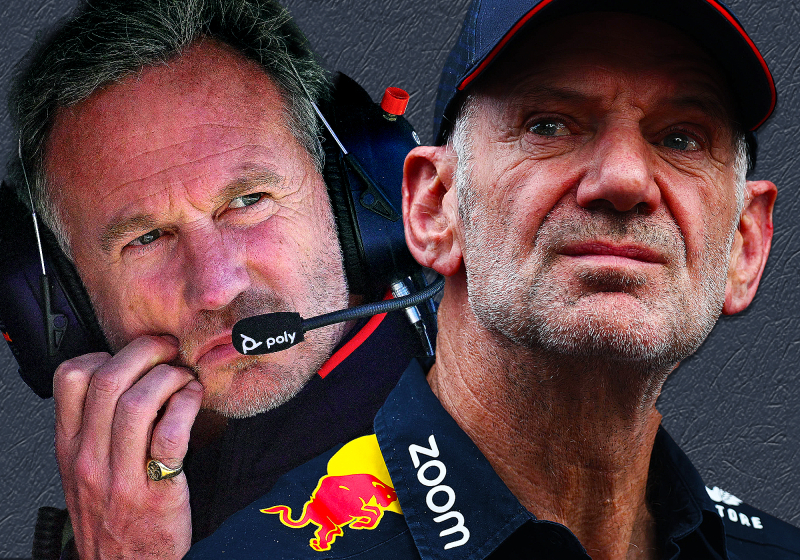
Why Horner and Newey split, why Red Bull are in crisis and Brundle's big fear - F1 News Recap
 F1 Drivers
'Welcome to paradise': Inside F1 star's incredible new Australian home, where you can stay too
 Max Verstappen
F1 champion 'did a Verstappen' and kicked top BBC insider out of team motorhome
 Mercedes
Mercedes F1 star furious after Japanese GP







Races
-
 Grand Prix of Australia 2026
-
 Grand Prix of China 2026
-
 Grand Prix of Japan 2026
-
 Grand Prix of Bahrain 2026
-
 Saudi Arabian Grand Prix 2026
-
 Miami Grand Prix 2026
-
 Grand Prix du Canada 2026
-
 Grand Prix De Monaco 2026
-
 Gran Premio de Barcelona-Catalunya 2026
-
 Grand Prix of Austria 2026
-
 Grand Prix of Great Britain 2026
-
 Grand Prix of Belgium 2026
-
 Grand Prix of Hungary 2026
-
 Dutch Grand Prix 2026
-
 Grand Prix of Italy 2026
-
Gran Premio de España 2026
-
 Grand Prix of Azerbaijan 2026
-
 Grand Prix of Singapore 2026
-
Grand Prix of the United States 2026
-
 Gran Premio de la Ciudad de Mexico 2026
-
 Grande Prêmio de São Paulo 2026
-
Las Vegas Grand Prix 2026
-
 Qatar Grand Prix 2026
-
 Grand Prix of Abu Dhabi 2026
Follow us on your favorite social media channel
Editorial & corporate information

Avenue HQ
10–12 East Parade
Leeds
LS1 2BH
United Kingdom Regional correspondence
View contact page