



F1 has a huge reliability problem here's how to fix it
F1 needs to take a step back in time

As Formula 1 seasons go, 2025 has delivered a treat in that we have had a three-way title fight that has changed momentum multiple times while also having many great stories outside of it too.
The main focus has been Norris, Verstappen and Piastri scrapping for the title but we've had amazing stories such as Nico Hulkenberg's first podium at the British Grand Prix, the rise, fall and rise again of Kimi Antonelli and the welcomed fighting return of Williams.
Lewis Hamilton's disappointing first year at Ferrari is nothing to celebrate but is part of the narrative that has made 2025 so compelling.
But F1 is still not good enough
Yet I have a complaint (surprise...), F1 has accidentally lost a spark and a factor that could make the sport far more entertaining and add to amazing moments in grand prix history. It would make races compelling watching right up until the final lap, yet it's a tricky thing to try and reintroduce to the sport.
I'm talking about reliability, or lack of it. F1 has a huge problem. In the fact it's too damn good.
You see, I watched Lando Norris cruise home to third place in Abu Dhabi knowing that once he dispatched of Yuki Tsunoda without much issue there was nothing that could stop him, except for the smallest chances of a mechanical failure which in F1 these days is rarer than a decent Ferrari weekend.
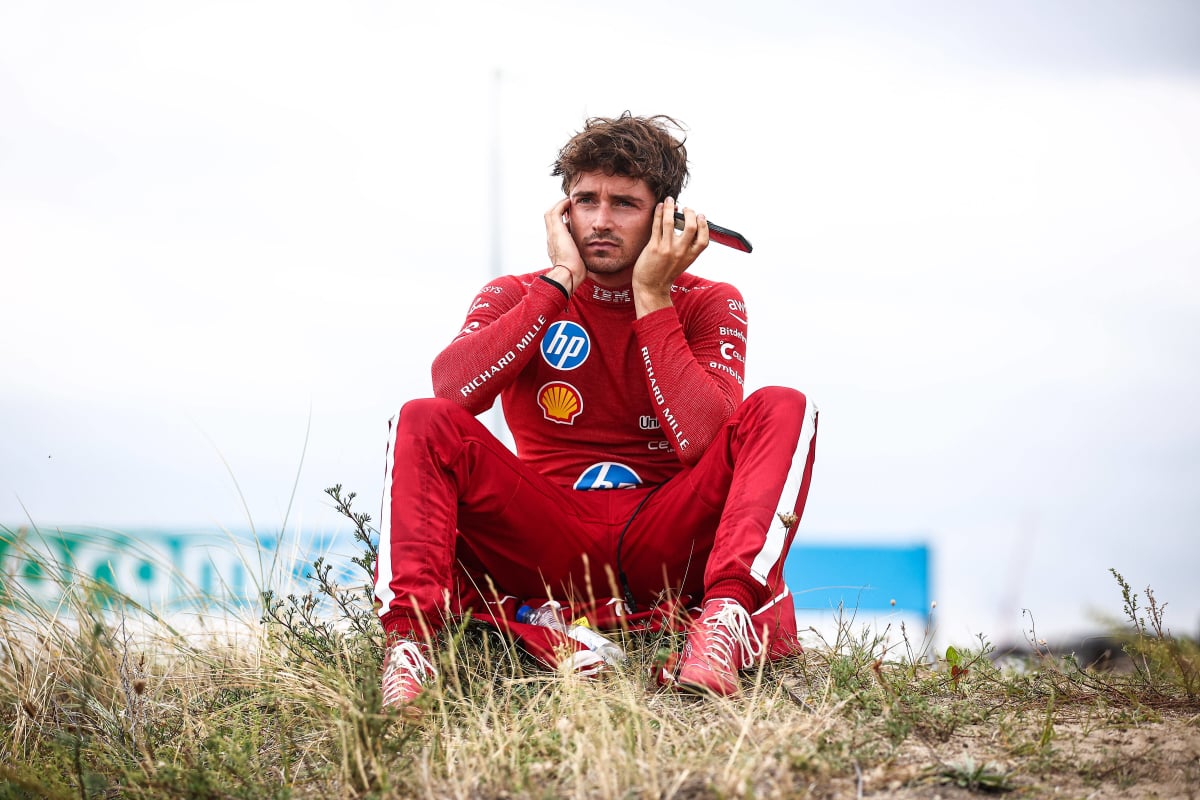
"But, Dan, Dan!" (insert Alan Partidge.gif here) I can hear you screaming. "What about Zandvoort where Norris retired with an engine failure?"
Yes, you are correct. It was a fascinating moment from the race and was one of the iconic images of the season. But that was Norris's only mechanical failure of the year. His team-mate Oscar Piastri by the way had none.
And that's not just McLaren being bullet proof, reliability across the grid has improved massively in the 21st century.
This is a problem from a spectator's view because if you have a race leader that sprints off into the distance, the chances are only weather or the gimmicky safety car can deny them victory.
F1 needs more DNFs
The drama and the excitement of the reliability failure has all but disappeared, and the sport is worse off for it. Up until 2003, the sport used to reward points only down to six places, but that wouldn't stop multiple teams picking up multiple points as so many drivers and teams would just not get to the end of the race. It really wasn't unusual for a race to finish with 10 cars.
And look at some of the moments. Gerhard Berger's engine blowing up three laps from the end of the German Grand Prix, Damon Hill's Williams giving up the ghost in Monaco, and what about Michael Schumacher's Ferrari blowing up on the warm up lap in France. This all happened in 1996 by the way.
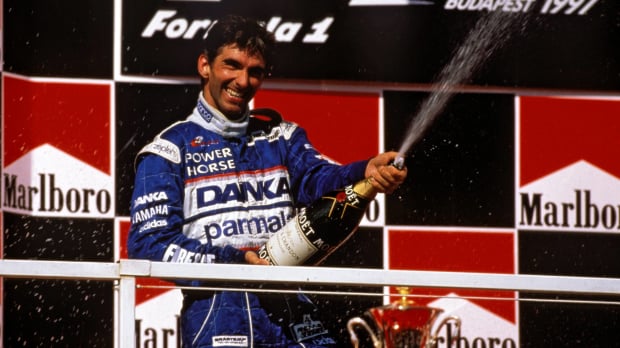
How about Hill the following year in Hungary when a famous race win for Arrows was robbed by a hydraulics failure caused by a part literally worth 50p with just three laps to go.
Even at the start of the 2000s reliability wasn't the best. Who can forget Mika Hakkinen's McLaren expiring on the final lap of the 2021 Spanish Grand Prix. I could go on, there are countless examples.
Here is proof of the stark difference between the two eras - I have taken three years from each for sample. Don't forget in the 1990s you would have no more than 17 races compared to the 24 we now have. For clarity, drivers who suffered mechanical failures but were classified finishers have been included (Norris 2025 Dutch GP for example).
| Year | Driver Retirements |
|---|---|
| 1996 | 160 |
| 1997 | 167 |
| 1998 | 153 |
| 2023 | 60 |
| 2024 | 50 |
| 2025 | 50 |
In summary, you have on average two retirements per race now while back in 1996 (16-race season) you would have 10. Of course driver error is factor in some of these, but not enough to produce such a swing.
How did F1 cars get better reliability?
It all started to change in the early 2000s when new rules meant cars could not be touched after qualifying in parc ferme, and probably more importantly, when components had to last multiple races.
I mean if an engine for instance is designed to last four race (random number) it's hardly likely to go bang on race one. But if you make an engine to last only one race in exchange for more pace?...
Now of course there was a good reason for this change and that was to cut cost for teams which at the time were spiralling out of control.
And this applies today. Should we lift the costcap and allow teams to spend what they want? We may get more car failures but only a few teams really able to compete out in front. Teams like Williams for instance wouldn't have a chance of competing against the big money outfits like Mercedes, Ferrari and now Aston Martin. So a balance needs to be had.
So I'm not pretending it's an easy fix, and I am ruling out random grenades being put in the engine bays of cars during the race as a solution.
But F1 needs to find a way to bring more jeopardy for drivers and teams into races without making it a gimmick. Cheaper components maybe? You know those V8s were quite popular back in the day...
What I am saying F1 is, where there is a will, there's a way...
Recommended by the editors
 Latest F1 News
Aston Martin and Adrian Newey set for F1 cost cap boost after FIA twist
 F1 News & Gossip
Max Verstappen told to speak to F1 rivals after causing storm over new 2026 rules
 Max Verstappen
Max Verstappen ally claims bad Red Bull start has triggered F1 champion's fury
 F1 News & Gossip
Max Verstappen F1 ally 'approached by Aston Martin' in shocking twist over Adrian Newey replacement







Races
-
 Grand Prix of Australia 2026
-
 Grand Prix of China 2026
-
 Grand Prix of Japan 2026
-
 Grand Prix of Bahrain 2026
-
 Saudi Arabian Grand Prix 2026
-
 Miami Grand Prix 2026
-
 Grand Prix du Canada 2026
-
 Grand Prix De Monaco 2026
-
 Gran Premio de Barcelona-Catalunya 2026
-
 Grand Prix of Austria 2026
-
 Grand Prix of Great Britain 2026
-
 Grand Prix of Belgium 2026
-
 Grand Prix of Hungary 2026
-
 Dutch Grand Prix 2026
-
 Grand Prix of Italy 2026
-
Gran Premio de España 2026
-
 Grand Prix of Azerbaijan 2026
-
 Grand Prix of Singapore 2026
-
Grand Prix of the United States 2026
-
 Gran Premio de la Ciudad de Mexico 2026
-
 Grande Prêmio de São Paulo 2026
-
Las Vegas Grand Prix 2026
-
 Qatar Grand Prix 2026
-
 Grand Prix of Abu Dhabi 2026
Follow us on your favorite social media channel
Editorial & corporate information

Avenue HQ
10–12 East Parade
Leeds
LS1 2BH
United Kingdom Regional correspondence
View contact page