


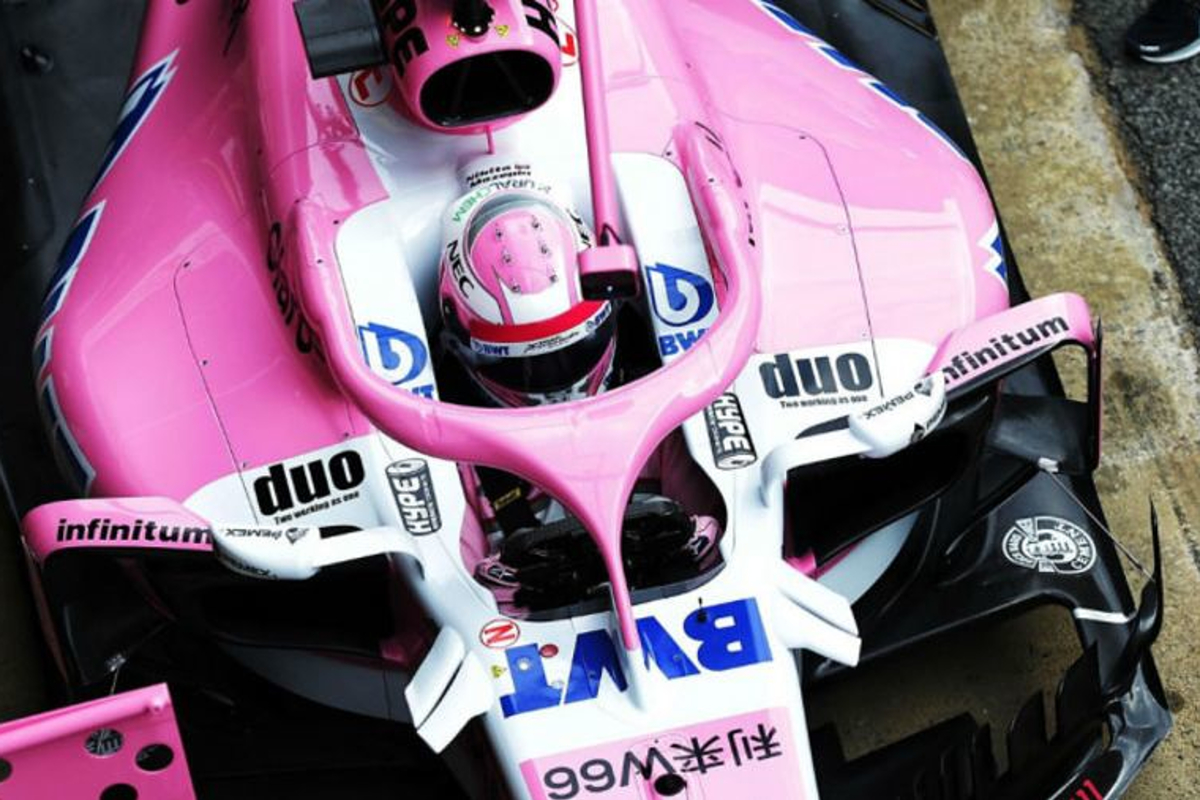
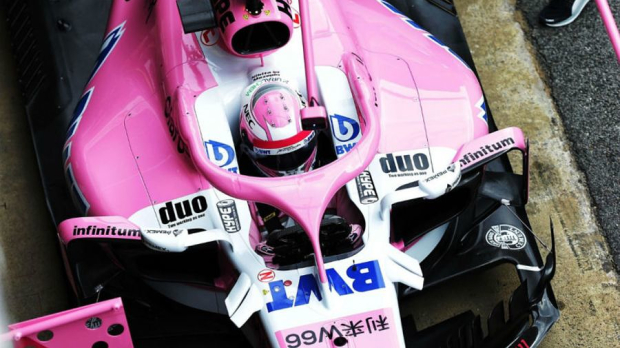

Halo playing havoc at Force India
The Halo safety device has baffled Force India, who are yet to solve the aerodynamic challenges posed by the cockpit protection. Technical director Andrew Green has also revealed the "huge" financial cost that has hit the team in incorporating it.
Opinion remains split over the Halo device, which has been seen on each and every car at the first pre-season test of 2018 at the Circuit de Catalunya in Barcelona.
Less than a month removed from the season-opening race in Melbourne, Green reveals Force India are still struggling to get their heads around the Halo.
"From an aerodynamic perspective, the work is still ongoing really," Green said. "There's a significant downstream effect [from halo], especially around the rear wing area.
"It's not designed to be an aerodynamic device. It doesn't do us any favours in that department.
"It requires a lot of work to mitigate the issues that it causes, and we're still actively working on that, and I don't think we’ll have a solution until Melbourne.

"I'm confident that we'll have it under control by then."
Green also discussed the financial impact that has hit Force India for a second off-season in a row after the fresh regulations ahead of the 2017 campaign.
"Expense-wise, it's huge, because we had to do a new chassis," he said.
"We wouldn't have anticipated doing a new chassis this year, given the amount of changes that we made last year.
"For a team like us, we'd always look to try and get two years out of the chassis if possible.
"In that respect it cost us a huge amount to redevelop and redesign a new chassis - it's in the hundreds of thousands if not million-dollar mark to put that halo on the car.
"It was a huge challenge [anyway]; for a team like us it was massive."
Recommended by the editors
 F1 2026
In F1 size matters, so why are so many 2026 cars so overweight?
 Latest F1 News
FIA statement points to 'exciting' racing with 'tweaks' to F1 regulations after crunch talks
 Ferrari
Lewis Hamilton back on track despite F1 race hiatus
 Latest F1 News
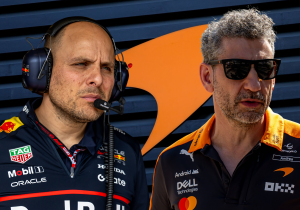
McLaren announce official signing of Gianpiero Lambiase from Red Bull







Races
-
 Grand Prix of Australia 2026
-
 Grand Prix of China 2026
-
 Grand Prix of Japan 2026
-
 Grand Prix of Bahrain 2026
-
 Saudi Arabian Grand Prix 2026
-
 Miami Grand Prix 2026
-
 Grand Prix du Canada 2026
-
 Grand Prix De Monaco 2026
-
 Gran Premio de Barcelona-Catalunya 2026
-
 Grand Prix of Austria 2026
-
 Grand Prix of Great Britain 2026
-
 Grand Prix of Belgium 2026
-
 Grand Prix of Hungary 2026
-
 Dutch Grand Prix 2026
-
 Grand Prix of Italy 2026
-
Gran Premio de España 2026
-
 Grand Prix of Azerbaijan 2026
-
 Grand Prix of Singapore 2026
-
Grand Prix of the United States 2026
-
 Gran Premio de la Ciudad de Mexico 2026
-
 Grande Prêmio de São Paulo 2026
-
Las Vegas Grand Prix 2026
-
 Qatar Grand Prix 2026
-
 Grand Prix of Abu Dhabi 2026
Follow us on your favorite social media channel
Editorial & corporate information

Avenue HQ
10–12 East Parade
Leeds
LS1 2BH
United Kingdom Regional correspondence
View contact page