



Three-engine rule requires 'no new science' - Mercedes
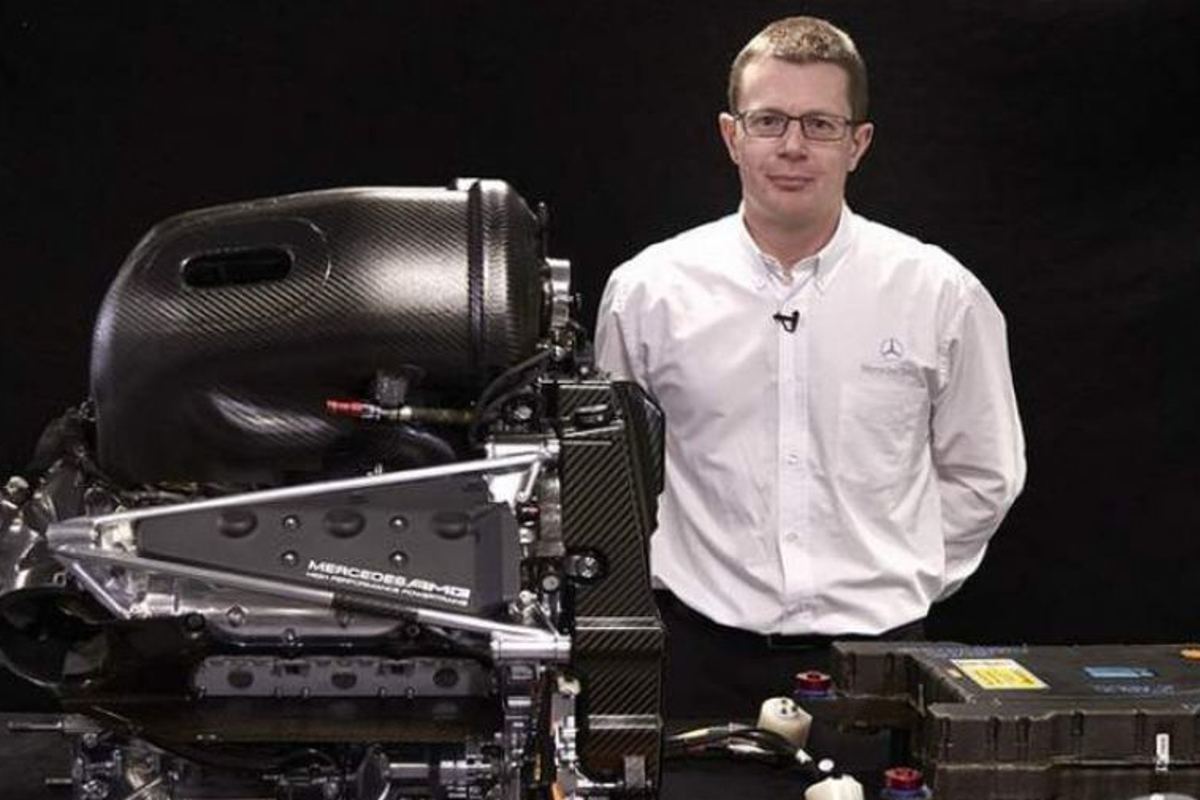
Mercedes' engine chief Andy Cowell has claimed that the step down from four allowed engines per season to three for constructor teams will require 'no new science' and emphasised an 'attention to detail' that is required to make the parts last longer this campaign.
This season, teams will receive grid penalties should they go over the three-engine limit and the decision has caused much controversy with many figures in the sport lamenting the fact it could decrease the amount of power drivers would be willing to allow as it may run down the engines quicker.
Cowell, however, claims the change will not be that different, citing it as a 'change of number' and not a change of 'science'.
"The move to the three engines means that you need to do seven races with each power unit, rather than five," Cowell told Motorsport.com.
"That's a reasonable step forward but for the last 10 years every single engine engineer has had a progressively increasing life requirement from everything that he or she's been working on, and so it's not a new science, it's just a different number.
"We had qualifying engines when they were permitted but we then said no that's ridiculous to have a qualifying engine and then fit a race engine, it's going to be the same spec of engine throughout a race weekend. That was the first time.

"That's the point where you have to balance off qualifying performance and race durability. Then we said it was two race weekends and then we said it's eight engines per driver and then we said it's five power units per driver, because KERS was completely free, and it's all done for cost."
The electronic elements of the chassis and engine will also be limited, but Cowell emphasised an 'attention to detail' to get those parts right.
"It's attention to detail on those bits," the Mercedes man continued.
"You will see what's been consumed by the drivers this year - the energy store and the control electronics are the lowest numbers out of all the teams. So that's probably their easiest area to extend the life.
"Often with electrical components, as long as you've not got high-temperature components, they will last so long as the mechanical design of the support of all the electronic components is robust.
"So if you've managed the vibration mounting, then those parts will last a long time."
Recommended by the editors











Races
-
 Grand Prix of Australia 2026
-
 Grand Prix of China 2026
-
 Grand Prix of Japan 2026
-
 Grand Prix of Bahrain 2026
-
 Saudi Arabian Grand Prix 2026
-
 Miami Grand Prix 2026
-
 Grand Prix du Canada 2026
-
 Grand Prix De Monaco 2026
-
 Gran Premio de Barcelona-Catalunya 2026
-
 Grand Prix of Austria 2026
-
 Grand Prix of Great Britain 2026
-
 Grand Prix of Belgium 2026
-
 Grand Prix of Hungary 2026
-
 Dutch Grand Prix 2026
-
 Grand Prix of Italy 2026
-
Gran Premio de España 2026
-
 Grand Prix of Azerbaijan 2026
-
 Grand Prix of Singapore 2026
-
Grand Prix of the United States 2026
-
 Gran Premio de la Ciudad de Mexico 2026
-
 Grande Prêmio de São Paulo 2026
-
Las Vegas Grand Prix 2026
-
 Qatar Grand Prix 2026
-
 Grand Prix of Abu Dhabi 2026
Follow us on your favorite social media channel
Editorial & corporate information

Avenue HQ
10–12 East Parade
Leeds
LS1 2BH
United Kingdom Regional correspondence
View contact page