


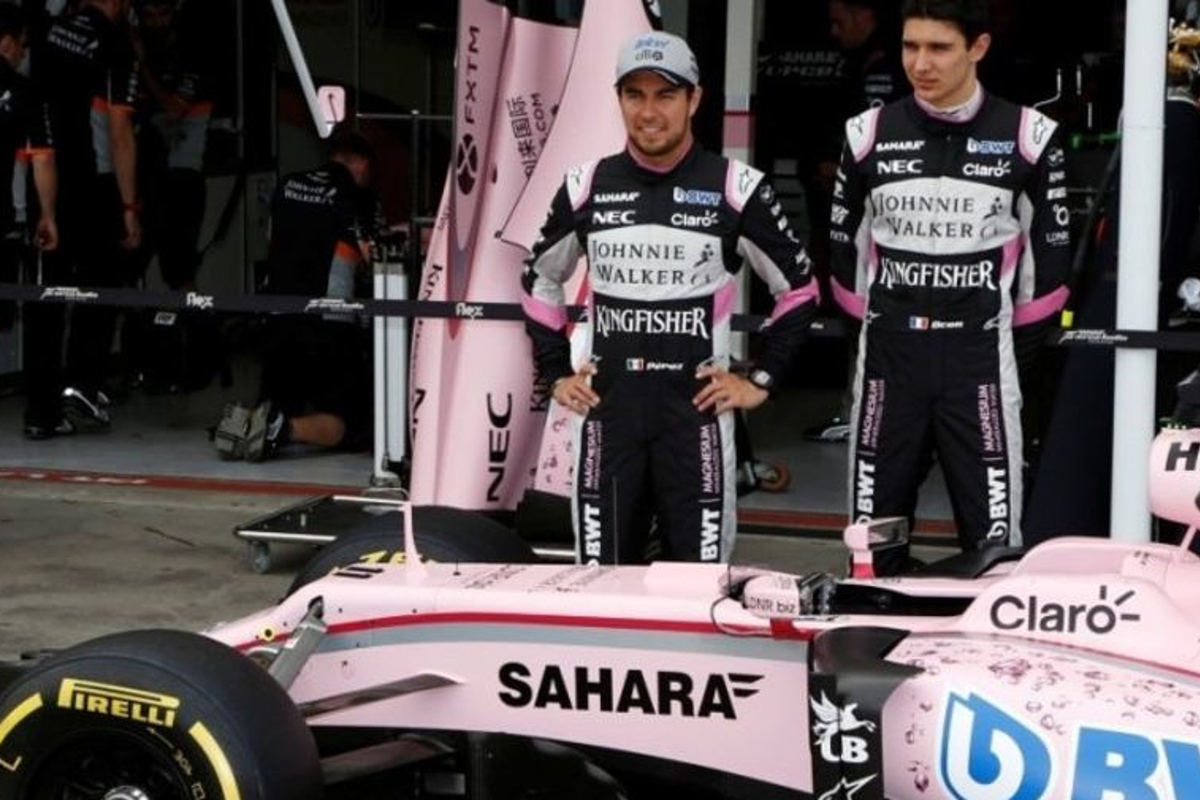
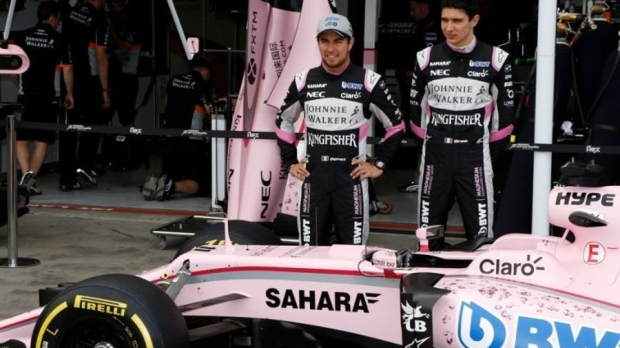

'It can take six months to improve 0.01s'
Force India senior design engineer Dan Marshall has been discussing the process of creating a Formula One car that can compete on the track, and has claimed that it can take up to six months to even make a 0.01 second improvement on the grid.
Speaking to Sportsmail, Marshall's key role involves co-ordinating the aerodynamics of the car, taking it from computer modelling into reality in the most efficient way possible.
The use of computer simulations are used to examine the effects on certain car parts before they are then tested for real in their wind tunnel in Germany, completed nearly 15,000 individual tests per year.
All of this feeds into the painstaking process of marginal gains, and Marshall suggests that patience is requirement when making up even the smallest amount of time.
He said: "The difference in a Formula One grid can be anywhere between one second or two seconds.
"We can spend up to six months developing an item which might give us 0.01 second of a gain. If we spend lots of time doing an upgrade and we're going the wrong direction that can either gain or lose us half a second, that will be the difference being either first, half way down the grid or either last.
"It's basically the small margins we are talking about really!"
Marshall works with one of the smallest budgets in F1 - dwarfed by the likes of Mercedes and Ferrari - and he added that getting around cash flow issues in order to achieve maximum results is challenging, but also drives ingenuity.
He continued: "Being at a small budget team, we have to maximise our efficiency to ensure every test and upgrade we send to the race car is fulfilled to its fulfil potential.
'We can only sometimes send one or two physical components to the track. For example, the front wing. If a driver has a crash on the weekend and destroys a particular front wing, we don't get the performance from that item, or any data, which we need to help with our projects and developments."
Finally, Marshall commented on the controversial introduction of the halo device, and said that the majority of the close season will be spent attempting to counter any aerodynamic issues that the new structure will cause.
He said: "The main regulation change for us is the introduction of the halo driver safety system.
"The Halo will send a different air flow to the rear end of the car. That variation and airflow means we will have to change various parts of the back-end for the car to help cater for that to regain any performance we might have lost."
Recommended by the editors
 Adrian Newey
Adrian Newey ‘wasting talent’ at Aston Martin
 GT World Challenge Europe
Lance Stroll GT3: How to watch Aston Martin F1 star in action at Paul Ricard for FREE
 FIA News
FIA reveals deadline for F1 2026 regulation 'tweaks'
 Max Verstappen
Max Verstappen to McLaren - Zak Brown has just knocked over seismic first domino







Races
-
 Grand Prix of Australia 2026
-
 Grand Prix of China 2026
-
 Grand Prix of Japan 2026
-
 Grand Prix of Bahrain 2026
-
 Saudi Arabian Grand Prix 2026
-
 Miami Grand Prix 2026
-
 Grand Prix du Canada 2026
-
 Grand Prix De Monaco 2026
-
 Gran Premio de Barcelona-Catalunya 2026
-
 Grand Prix of Austria 2026
-
 Grand Prix of Great Britain 2026
-
 Grand Prix of Belgium 2026
-
 Grand Prix of Hungary 2026
-
 Dutch Grand Prix 2026
-
 Grand Prix of Italy 2026
-
Gran Premio de España 2026
-
 Grand Prix of Azerbaijan 2026
-
 Grand Prix of Singapore 2026
-
Grand Prix of the United States 2026
-
 Gran Premio de la Ciudad de Mexico 2026
-
 Grande Prêmio de São Paulo 2026
-
Las Vegas Grand Prix 2026
-
 Qatar Grand Prix 2026
-
 Grand Prix of Abu Dhabi 2026
Follow us on your favorite social media channel
Editorial & corporate information

Avenue HQ
10–12 East Parade
Leeds
LS1 2BH
United Kingdom Regional correspondence
View contact page