



Everyone else is wrong - F1 isn't boring in 2026
We've had some great races so far

F1's new regulations that were brought in for the 2026 season have received mixed reviews so far, but the start of the 2026 season has been much more exciting than the whole of 2025!
Ahead of the season, new rules were brought in both on the power unit side of things, and when it comes to the actual cars.
The hybrid power units now have triple the amount of electrical energy than they did in 2025, making it more important for drivers to harvest as much energy as possible via their MGU-K, and more battery management responsibility has been placed on the drivers.
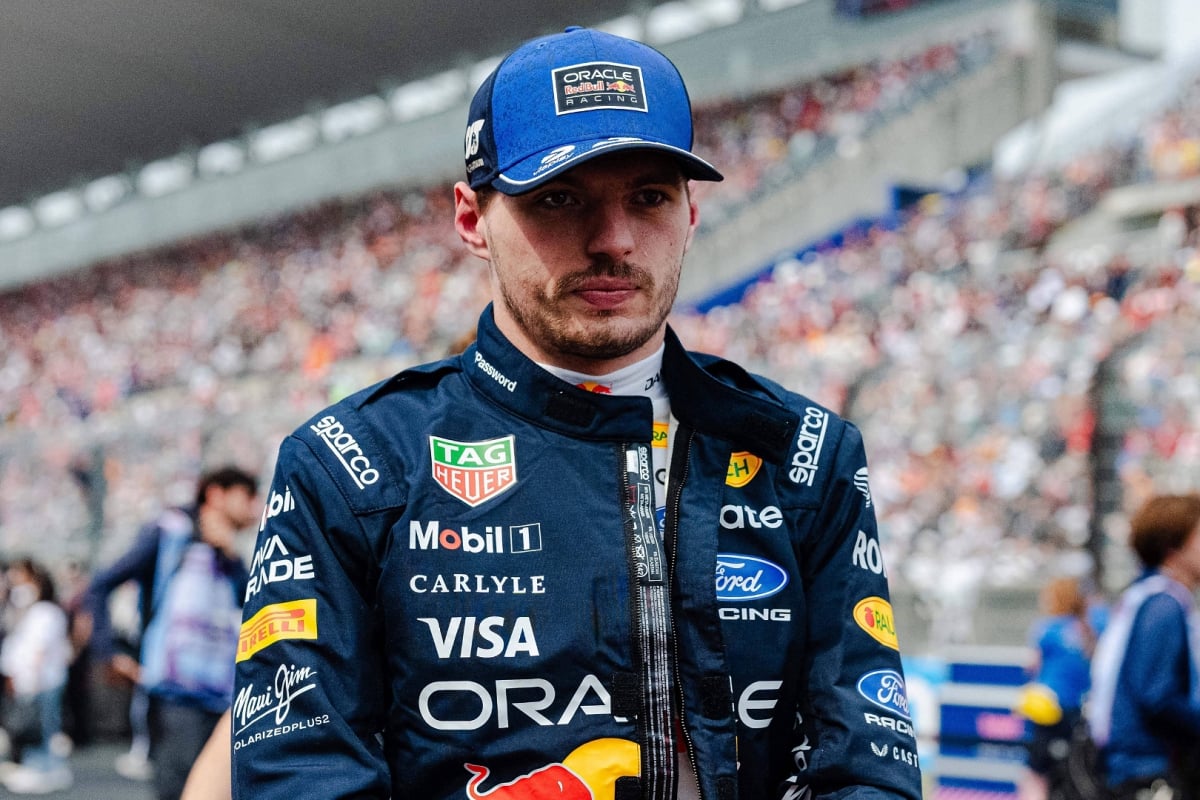
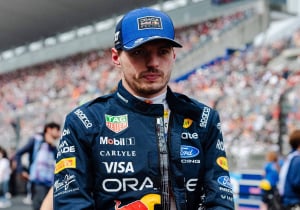
This has led to complaints from the likes of Max Verstappen, who has said - among plenty of other things - that the new cars are like 'Formula E on steroids', they're 'not fun' to drive and that F1 is becoming like 'Mario Kart'.
But come on, who doesn't like Mario Kart?
The fact is that Verstappen's grumblings are from a man who is currently sat down in ninth in the drivers' championship and looking like he has no chance of claiming a fifth world championship title. Of course he would love for the regulations to change so that Red Bull have a chance to catch up to the likes of Ferrari and Mercedes.
It's the same logic that has caused Lewis Hamilton - who is driving a much-improved Ferrari in 2026 - to say that it is the 'best racing' he has been a part of in his long, illustrious F1 career.
F1 2026 is probably somewhere in between those two statements, but it's a hell of a lot more exciting than 2023, 2024 (barring the off-track chaos) and 2025.
READ MORE: The FIA double whammy set to stop Mercedes F1 dominance
F1's aerodynamic changes paying off
If we just stay away from the contentious issue of the power units for now, F1's decision to make cars smaller, lighter and more nimble is absolutely paying off.
These aerodynamic tweaks were designed to allow closer racing between the cars, while also encouraging more overtaking, particularly around narrow street circuits.
We haven't had any bona fide street circuits on the 2026 calendar as of yet, but we have already seen cars able to run closely behind one another much better than in 2025 and, crucially, we have seen more overtakes at all three of the grands prix so far compared to the same events in 2025.
At the season-opening Australian Grand Prix, there were 125 overtakes, while the 2025 event saw just 45.
The Japanese GP has been one of the most boring races of the season in each of the past few years - with 2025 seeing just 28 overtakes - yet even on this circuit in 2026 we saw a thrilling race with 106 overtakes.
What's more, all four races that have taken place so far have seen multiple lead changes, unlike in 2025 when so many of the races were blitzed by whoever started on pole. Yes I know all three of the grands prix so far have been won by the pole sitter, but lead changes have been a feature of each of the races, and Kimi Antonelli had to recover from sixth in Japan.
I also think that we should enjoy it while it lasts, because the 2022 season saw similar close racing between drivers and lead changes galore at the start of the year, but as drivers got used to the new regulations and learned that they needed to manage their tyres a bit more, we started seeing more 'normal' racing. That will happen in 2026, too, as the drivers become more and more knowledgeable on their new cars with each passing race weekend.
Power unit concerns
Of course, there is the argument that drivers should not have to manage their battery and should be racing flat out all of the time.
But that's never been a thing in F1. Whether it be for fuel management, tyre management or harvesting energy to a battery, F1 drivers have always had to manage a 60-odd lap grand prix.
The latest super clipping and lift and coast measures that we are seeing are just more of that, although admittedly it is disheartening to see those methods of management even in qualifying.
Throwing another aspect into the mix to try and throw F1 drivers off their game is something we should always look to try and do, they are the 22 best racers in the world, things should not be easy and familiar for them.
The same goes when it comes to the geniuses who are creating the power units back at the factory. Give them something that will force them to come up with solutions to stay ahead of the rest of their rivals. We know Ferrari can build a high-performance petrol-powered V10 engine. Give them a challenge, like building a 1.6-litre V6 turbo hybrid that has 350kW-worth of electrical power, and an internal combustion engine that runs entirely off sustainable fuels.
There's also the argument of environmental impact, and how these new power units release much less carbon dioxide into the atmosphere than even the 2025 power units, as F1 tries to reach its goal of carbon neutrality by 2030.
Forcing power unit manufacturers to think about how to make such high-performance, reliable power units that can run off 100 per cent sustainable fuels will only benefit us and our planet, with a lot of the new technology being able to be transferred to road cars.
Drivers' safety concerns need addressing by the FIA
So far, this piece has just focused on the enjoyment levels of F1 for fans and the spectacle of the sport.
But last weekend's Japanese Grand Prix highlighted that some changes must be made to the new regulations for safety reasons.
The closing speeds that we have between a car that has boost mode activated and a car that is harvesting energy are too radical, and could cause some potentially dangerous situations for the drivers.
Oliver Bearman's crash in Suzuka highlighted this. Bearman appeared to be caught out by how quickly his car caught up to the back of Alpine's Franco Colapinto, whose car was harvesting energy at a usually high-speed section of the track.
In order to avoid Colapinto, Bearman swerved onto the grass, but this caused his car to spiral out of control and into the barriers.
Key F1 figures such as Carlos Sainz and Martin Brundle have called on the FIA to make the necessary changes to the rules in order to protect the drivers, and F1's governing body are meeting on April 9 to discuss what changes need to be made.
I just hope that we do not go back to the kind of frustratingly boring racing that we had in 2025, and that a sensible balance can be found between safety and excitement.
READ MORE: Why didn't F1 replace the Bahrain and Saudi Arabian GPs?
Related
More F1 news
Latest F1 news
Recommended by the editors







Races
-
 Grand Prix of Australia 2026
-
 Grand Prix of China 2026
-
 Grand Prix of Japan 2026
-
 Grand Prix of Bahrain 2026
-
 Saudi Arabian Grand Prix 2026
-
 Miami Grand Prix 2026
-
 Grand Prix du Canada 2026
-
 Grand Prix De Monaco 2026
-
 Gran Premio de Barcelona-Catalunya 2026
-
 Grand Prix of Austria 2026
-
 Grand Prix of Great Britain 2026
-
 Grand Prix of Belgium 2026
-
 Grand Prix of Hungary 2026
-
 Dutch Grand Prix 2026
-
 Grand Prix of Italy 2026
-
Gran Premio de España 2026
-
 Grand Prix of Azerbaijan 2026
-
 Grand Prix of Singapore 2026
-
Grand Prix of the United States 2026
-
 Gran Premio de la Ciudad de Mexico 2026
-
 Grande Prêmio de São Paulo 2026
-
Las Vegas Grand Prix 2026
-
 Qatar Grand Prix 2026
-
 Grand Prix of Abu Dhabi 2026
Follow us on your favorite social media channel
Editorial & corporate information

Avenue HQ
10–12 East Parade
Leeds
LS1 2BH
United Kingdom Regional correspondence
View contact page