



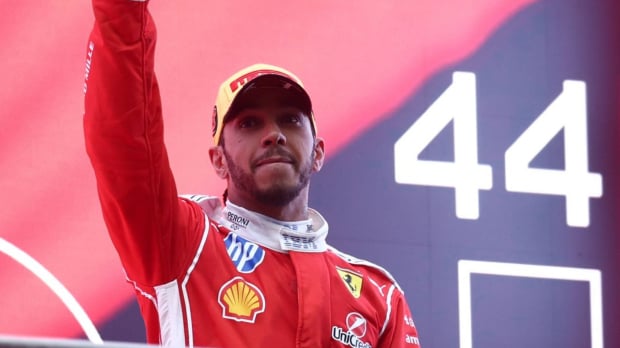

Lewis Hamilton ditched private jet 'guilt trip' to 'save the planet'
Lewis Hamilton is a seven-time world champion

A former F1 star has revealed the reason why seven-time world champion Lewis Hamilton opted to sell his private jet.
Hamilton is the most successful F1 driver in history, and with a reported base salary at Ferrari of $60million, there's no doubt that he could afford to have the luxury of a private jet, as Max Verstappen, Toto Wolff and Fernando Alonso do.
However, the Brit opted to get rid of his private jet in 2019, in an attempt to reduce his carbon footprint and align his lifestyle with more environmentally-friendly values.
Hamilton is an environmentally conscious individual, and he and Sebastian Vettel used to be the lone voices in that sense on the F1 grid, with Vettel continuing his work even now he has retired from F1.
41-year-old Hamilton is still racing in the sport, however, and was spotted on board Wolff's private jet following the Chinese Grand Prix alongside Valtteri Bottas, George Russell and Susie Wolff.
Now, while explaining how lifts between the drivers are organised during race weekends, former F1 star David Coulthard has explained Hamilton's decision to ditch the private jet that he used between 2013-2019.
"It was candy apple red, but in the interest of saving the planet, he got rid of it," Coulthard told the Up to Speed podcast.
"It doesn't mean that he doesn't fly privately, he just doesn't have the guilt trip of owning his own. I'm not quite sure if that's carbon offsetting or not!"
READ MORE: BMW make decision on F1 return
F1's carbon neutrality goal
F1 have an ambitious goal of becoming carbon neutral by 2030, and this includes the travel to and from races for drivers and team personnel.
Carbon neutrality is the practice of ensuring there is no net release of carbon dioxide into the atmosphere, and this includes carbon offset practices like planting trees, renewable energy installations or methane capture.
The 2026 regulation changes have helped F1 to try and achieve this goal, ensuring the new F1 cars are releasing fewer emissions by tripling the emphasis on electrical energy within the new power units.
What's more, the internal combustion engine side of the power unit now runs off 100 per cent sustainable fuels, as the sport ditches fossil fuel usage.
F1 2026 Regulations: Every new rule and car change explained
Related
More F1 news
Latest F1 news


Recommended by the editors
 F1 News & Gossip
Williams battling bizarre problem with 2026 F1 car
 GPFans Exclusive
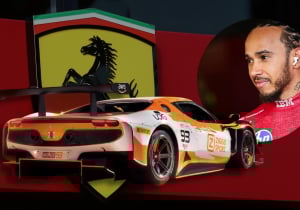
EXCLUSIVE: Lewis Hamilton in a Ferrari at the Nurburgring? What comes next after Verstappen success
 F1 News & Gossip
Toto Wolff accused of having a Kimi Antonelli 'complex' by former F1 boss
 Japanese Grand Prix
Max Verstappen F1 reign could end at 2026 Japanese Grand Prix







Races
-
 Grand Prix of Australia 2026
-
 Grand Prix of China 2026
-
 Grand Prix of Japan 2026
-
 Grand Prix of Bahrain 2026
-
 Saudi Arabian Grand Prix 2026
-
 Miami Grand Prix 2026
-
 Grand Prix du Canada 2026
-
 Grand Prix De Monaco 2026
-
 Gran Premio de Barcelona-Catalunya 2026
-
 Grand Prix of Austria 2026
-
 Grand Prix of Great Britain 2026
-
 Grand Prix of Belgium 2026
-
 Grand Prix of Hungary 2026
-
 Dutch Grand Prix 2026
-
 Grand Prix of Italy 2026
-
Gran Premio de España 2026
-
 Grand Prix of Azerbaijan 2026
-
 Grand Prix of Singapore 2026
-
Grand Prix of the United States 2026
-
 Gran Premio de la Ciudad de Mexico 2026
-
 Grande Prêmio de São Paulo 2026
-
Las Vegas Grand Prix 2026
-
 Qatar Grand Prix 2026
-
 Grand Prix of Abu Dhabi 2026
Follow us on your favorite social media channel
Editorial & corporate information

Avenue HQ
10–12 East Parade
Leeds
LS1 2BH
United Kingdom Regional correspondence
View contact page