


Max Verstappen goes into the Green Hell: Nurburgring track guide and why F1 will never return
Max Verstappen returns to the Nurburgring this weekend, but here's why F1 never will

Four-time F1 world champion Max Verstappen is returning to the Nurburgring Nordschleife this weekend, as he competes in the 58th ADAC Barbarossa Prize, the opening round of the Nurburgring Langstrecken-Serie (NLS) after the originally scheduled first round was cancelled due to freezing conditions.
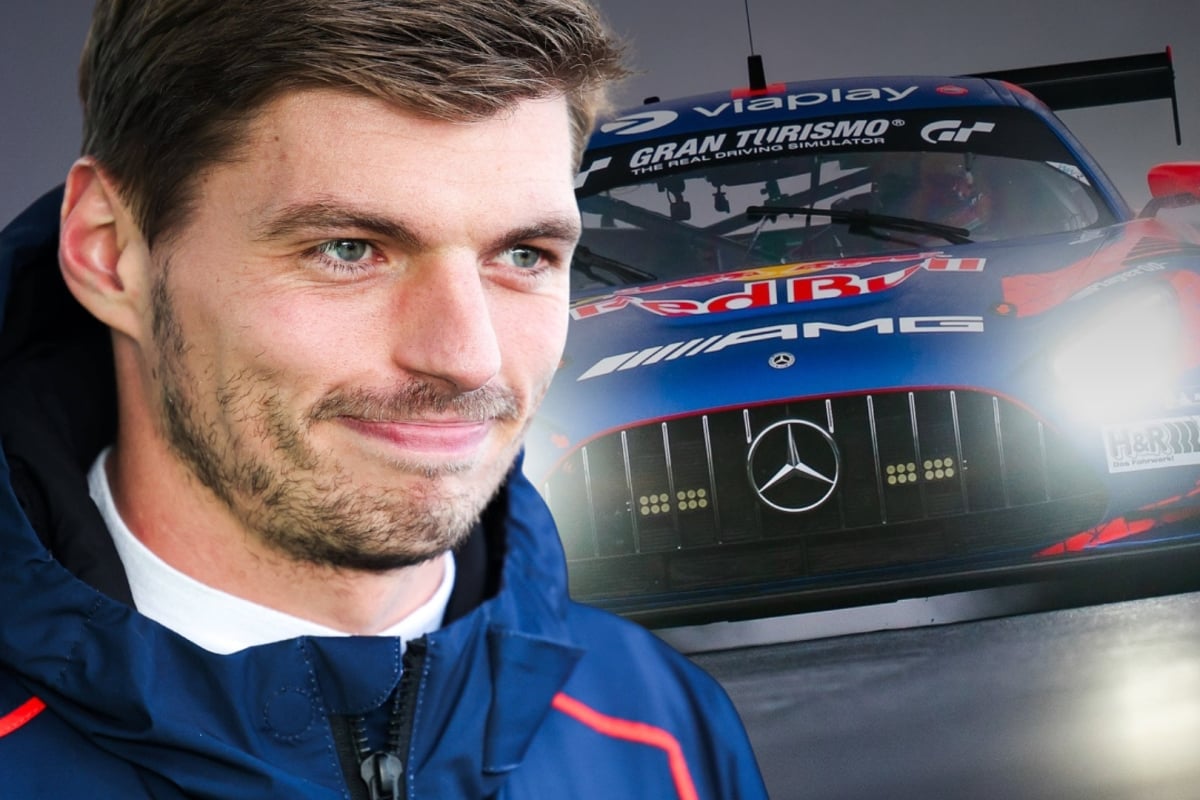
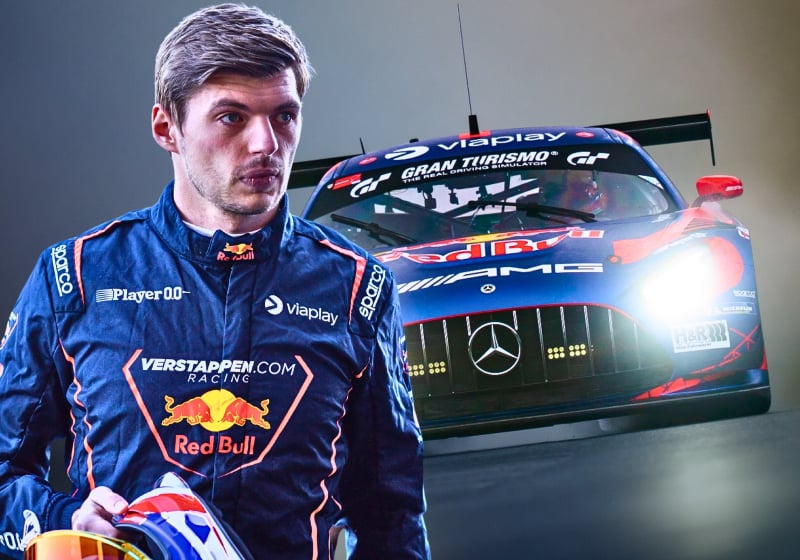
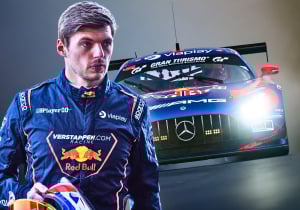
Verstappen will be piloting the number three Mercedes-AMG Team Verstappen Racing AMG GT3 EVO, as he makes his return to GT racing with the team that he owns.
The newly-named Verstappen Racing are now using Mercedes machinery, and Verstappen has two new team-mates in Daniel Juncadella and Jules Gounon, who will also be competing for the team when they enter the pro class of the 2026 GT World Challenge Europe later this year.
Verstappen himself is using this weekend's race to get himself prepared for the legendary 24 Hours of Nurburgring endurance race in May, which he has been confirmed to be taking part in.
But what makes the Nurburgring Nordschleife - nicknamed 'the Green Hell' - so special? And why will we never see an F1 race at the track ever again?
WATCH: Max Verstappen Nurburgring LIVE - Free NLS race streams and everything you need to know
Nurburgring track guide
The Nurburgring Nordschleife is a demanding 20.8km (12.9-mile) circuit with 154 turns, designed by architect Gustav Eichle in the backdrop of the Eifel mountains, and built between 1925-1927.
While there is a shorter, less fearsome layout of the Nurburgring that has been used for modern-day F1 races, Verstappen and his GT racing rivals will be racing on the original Nordschleife layout.
Arguably the most well-remembered section of the Nordschleife comes at the start of the lap, with the Flugplatz section of the track. This name translates to 'air field', and is named that because there used to be a small airfield located right next to the track.
The Flugplatz features a very short straight that climbs sharply uphill for a short time, then suddenly drops slightly downhill, and this is immediately followed by two very fast right-hand kinks. After these comes a downhill straight called Kottenborn, into a very fast curve called Schwedenkreuz, with drivers often reaching top speed in this section.
Following Flugplatz, we then find ourselves on the Fuchsrohre section of the track. This features a long right-hand corner called Aremberg, before we have a road that switches back left and right and then climbs sharply uphill.
Cars are often flat out through the Fuchsrohre section, and even go airborne at several points, as the track winds through the Adenauer Forest.
After the one of the fastest sections on the track, Nordschleife then dives into the Bergwerk, a tight right-hand corner and a left-hand kink on a small crest. It was here that F1 legend Niki Lauda was involved in an infamous crash that almost cost him his life.
The Karussell corner is one of the slowest sections of the track, but is almost the most famous. The entrance to the corner is blind, heading up a hill, and the road then becomes sharply banked on one side and level on the other. This banking drops off, rather than climbing up like most bankings on circuits.
It's also unusual in that the sharply banked side has a concrete surface, and there is a foot-wide tarmac surface on the bottom of the banking. It's one of the hardest sections of the track on a driver's hands and wrists, due to its bumpy nature.
Next we head into the Brunnchen section, which is composed of two right-hand corners and a very short straight, making it perfect for spectators to stand and watch the action. Both right-handers are blind once more, while the short straight has been modified in recent years to not include its previous sudden, sharp drop which caused cars to go airborne.
The track then winds into the Pflanzgarten and Stefan Bellof Esses. The Pflanzgarten is an extremely fast section of the track which features a number of jumps, including the Sprunghugel.
The first downhill left-hander of Pflanzgarten suddenly switches back left, then right before the road drops away twice, providing two jumps for drivers. Immediately after the road levels out, it suddenly goes right very quickly and then right again, a very windy, fast-paced section of the Nordschleife track.
After the Sprunghugel - which translates to 'jump hill', the road then goes downhill and quickly levels out, before going through a flat-out right-hander which starts the Stefan Bellof Esses. Here, the road quickly switches back left and right making it hard for drivers to maintain control of their car. Following another jump at the end of this section, the track goes through a flat-out right-hander and into a short straight that leads into two very fast curves called the Schwalbenschwanz.
This is a sequence of very fast sweepers also known as the Kleines Karussell (little carousel) because of its resemblance of the iconic corner previously mentioned. It is a 90-degree corner instead of 210 degrees, and is faster and slightly less banked than The Karussell.
After this, there are just two more corners to negotiate before the 2.135 km-long Dottinger Hohe straight to finish the lap.
When did F1 last race at the Nurburgring?
The most recent F1 race to have taken place on the Nurburgring Nordschleife was the 1976 German Grand Prix, which was won by James Hunt.
F1 has raced on the modern circuit layout since then however, regularly between 2009-2013 and again in 2020 for the Eifel GP as part of the COVID-hit F1 season.
The last time an F1 car was driven around the Nurburgring Nordschleife layout was in 2023, when David Coulthard and Sebastian Vettel raced old Red Bull F1 cars around the track in a special event.
Why F1 will never return to the Nurburgring
The 1976 German GP saw one of the most infamous moments in F1 history. World champion Niki Lauda lost control of his Ferrari before the right-hand Bergwerk curve, and crashed into an earth bank, before the car bounced back onto the track, engulfed in flames.
Brett Lunger hit Lauda's stricken car, while Harald Ertl then hit into the back of Lunger's car. Lauda's rivals stopped and helped him out of his burning Ferrari car, but Lauda had suffered serious burns and was rushed by helicopter to the Bundeswehr hospital in Koblenz.
He almost lost his life in the days following the incident, but remarkably made a full recovery, and was back racing in F1 by the 1976 Italian GP, before claiming the title in 1977.
Lauda, Ertl and Lunger weren't the only drivers to crash during the race, with Ronnie Peterson, Patrick Depailler and Vittorio Brambilla also crashing out, while the inability for the helicopter to get to Lauda's location on the track within five minutes led to a lot of criticism.
It was deemed that organisers just did not have the resources to manage such a long circuit, and that was not satisfactory for F1, who never returned to the full-length circuit again.
POV: You are Max Verstappen tackling the Green Hell this weekend.
— Coach Dave Academy (@coachdavesetups) March 19, 2026
No music, no edits.
Just 100% pure, unfiltered GT3 onboard.
See what Max is facing as @davidperel tackles the Nordschleife in the Ferrari 296 GT3.
Will Max tame the Green Hell, or will it tame him? 👇 pic.twitter.com/UTfa95XZlw
READ MORE: Max Verstappen told to speak to F1 rivals after causing storm over new 2026 rules
Related
More F1 news
Latest F1 news
Recommended by the editors
 Max Verstappen
Max Verstappen Nurburgring LIVE: Free NLS race streams and everything you need to know
 Latest F1 News
Aston Martin and Adrian Newey set for F1 cost cap boost after FIA twist
 F1 News & Gossip
Max Verstappen told to speak to F1 rivals after causing storm over new 2026 rules
 Max Verstappen
Max Verstappen ally claims bad Red Bull start has triggered F1 champion's fury







Races
-
 Grand Prix of Australia 2026
-
 Grand Prix of China 2026
-
 Grand Prix of Japan 2026
-
 Grand Prix of Bahrain 2026
-
 Saudi Arabian Grand Prix 2026
-
 Miami Grand Prix 2026
-
 Grand Prix du Canada 2026
-
 Grand Prix De Monaco 2026
-
 Gran Premio de Barcelona-Catalunya 2026
-
 Grand Prix of Austria 2026
-
 Grand Prix of Great Britain 2026
-
 Grand Prix of Belgium 2026
-
 Grand Prix of Hungary 2026
-
 Dutch Grand Prix 2026
-
 Grand Prix of Italy 2026
-
Gran Premio de España 2026
-
 Grand Prix of Azerbaijan 2026
-
 Grand Prix of Singapore 2026
-
Grand Prix of the United States 2026
-
 Gran Premio de la Ciudad de Mexico 2026
-
 Grande Prêmio de São Paulo 2026
-
Las Vegas Grand Prix 2026
-
 Qatar Grand Prix 2026
-
 Grand Prix of Abu Dhabi 2026
Follow us on your favorite social media channel
Editorial & corporate information

Avenue HQ
10–12 East Parade
Leeds
LS1 2BH
United Kingdom Regional correspondence
View contact page