



F1 Car Battery: How does it work and why is it so important in 2026?
The battery will be one of the most important aspects of F1 2026

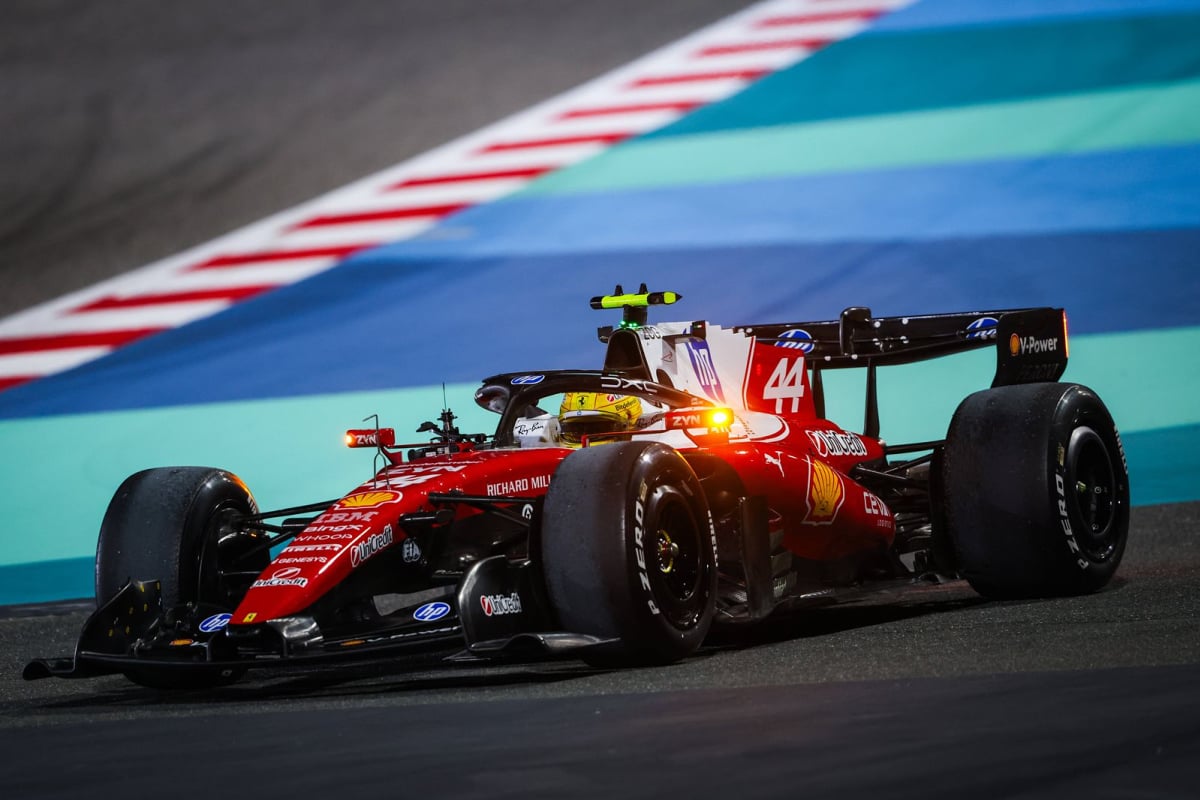
While brand new chassis and power unit regulations are keeping us occupied ahead of the 2026 F1 season, the new regulations mean that the battery in the car is every bit as important.
The batteries within the power units are one of these aspects of the sport that have overseen dramatic changes throughout the course of F1 history, and are now arguably more important than ever.
Drivers' ability to manage their battery throughout the course of a race - and even throughout the course of a one-off qualifying lap - is likely going to be crucial to their success in 2026.
It's what has caused Max Verstappen to describe the new cars as like 'Formula E on steroids', a nod to the all-electric racing series.
But how does a battery within an F1 power unit work?
F1 2026 Regulations: What has happened to the MGU-H?
How do F1 car batteries work?
While your traditional petrol road car might use a lead acid battery, F1 cars use lithium ion batteries, a now well-established technology which is also used for many electric vehicles and hybrids that you see on the road today.
The use of lithium ion is no longer special to F1, but the technology that is used for the battery of one thing can differ massively to the technology used for the battery of something else, even if they both have lithium ion batteries, and in the case of F1 batteries, it has become an extremely sophisticated energy store.
In terms of how a battery works, a battery consists of an anode, which is the negative electrode, and a cathode which is the positive electrode, and an electrolyte which is normally liquid - although F1 are hoping to lead the way in the future with solid state batteries.
During charging, the positively charged ions flow from the cathode through the electrolyte to the anode. They are stored there and when no more can be stored, the battery is fully charged.
When specifically talking about F1 batteries, this charging has historically happened through a Motor Generator Unit - Kinetic (MGU-K), and a Motor Generator Unit - Heat (MGU-H), although from 2026, the MGU-H has been abandoned in F1 (more on this later).
Where the lithium ion batteries in F1 cars differ to the lithium ion batteries in road cars is that the F1 batteries are designed for extreme power density rather than high capacity, which allows for quick, intense bursts of power.
On top of this, specialised high-performance liquid cooling systems are needed for safety purposes, something which are not as crucial within electric road cars.
Why is the battery so important in F1 2026?
The battery elements in the 2026 power units are much more powerful, with the amount of emphasis on electrical energy being tripled from 120kW to 350kW. This means there is an almost 50-50 split between the battery and the internal combustion engine.
New battery elements need to harvest up to nine Megajoules (MJ) per lap for optimal usage, and the new energy recovery system can recharge the battery double as fast as in the 2025 power units.
The reason why drivers need to recharge their battery so quickly is to make optimal use of both their boost button, as well as overtake mode during the races.
Overtake mode releases an extra 0.5 MJ of energy if you are one second behind the car ahead at a certain detection point, and can be understood as a replacement for DRS, even though it can be used at any time throughout the course of the lap after a driver has received it.
The boost button can also be used throughout the course of the lap and will likely be utilised to its full extent during qualifying laps, as well as when it comes to defending in the race or in conjunction with overtake mode for a huge surge of extra energy.
Both of these modes rely entirely on drivers having enough charge of their battery left, however, which makes their ability to both manage and recharge the battery element in 2026 absolutely crucial.
There are several ways that drivers can recharge their battery throughout the lap, but they are all through the MGU-K, with F1 having waved goodbye to the MGU-H, placing greater emphasis on the drivers' ability to do the following things.
Firstly, they can recharge the battery by lifting and coasting, slowing their cars down slowly rather than in the fastest, most efficient way. Although this technique will make lap time slower, it may allow for a full recharge of the battery to go again on the next lap to try and overtake the car ahead.
The other three conventional techniques for recharging the battery include simply braking, running at half throttle, as well as 'super clipping', which happens at the end of a straight when the car is at full throttle.
The reason why F1 has opted to ditch the MGU-H and instead focus on these kinetic ways of recharging the battery is because the MGU-H was a very expensive piece of kit to produce and maintain throughout the season, and didn't actually produce particularly big gains in power output.
When does the 2026 F1 season start?
All 11 teams will be back in action when the 2026 season starts in Melbourne for the Australian Grand Prix. The first race of the year takes place on March 8 at 3pm local time (AEDT), 4am GMT, and 11pm ET.
F1 2026 Regulations: What is lift and coast?
Related
More F1 news
Latest F1 news



Recommended by the editors
 F1 2026
In F1 size matters, so why are so many 2026 cars so overweight?
 Latest F1 News
FIA statement points to 'exciting' racing with 'tweaks' to F1 regulations after crunch talks
 Ferrari
Lewis Hamilton back on track despite F1 race hiatus
 Latest F1 News
McLaren announce official signing of Gianpiero Lambiase from Red Bull







Races
-
 Grand Prix of Australia 2026
-
 Grand Prix of China 2026
-
 Grand Prix of Japan 2026
-
 Grand Prix of Bahrain 2026
-
 Saudi Arabian Grand Prix 2026
-
 Miami Grand Prix 2026
-
 Grand Prix du Canada 2026
-
 Grand Prix De Monaco 2026
-
 Gran Premio de Barcelona-Catalunya 2026
-
 Grand Prix of Austria 2026
-
 Grand Prix of Great Britain 2026
-
 Grand Prix of Belgium 2026
-
 Grand Prix of Hungary 2026
-
 Dutch Grand Prix 2026
-
 Grand Prix of Italy 2026
-
Gran Premio de España 2026
-
 Grand Prix of Azerbaijan 2026
-
 Grand Prix of Singapore 2026
-
Grand Prix of the United States 2026
-
 Gran Premio de la Ciudad de Mexico 2026
-
 Grande Prêmio de São Paulo 2026
-
Las Vegas Grand Prix 2026
-
 Qatar Grand Prix 2026
-
 Grand Prix of Abu Dhabi 2026
Follow us on your favorite social media channel
Editorial & corporate information

Avenue HQ
10–12 East Parade
Leeds
LS1 2BH
United Kingdom Regional correspondence
View contact page