



F1 2026 Regulations: What is straight mode?
All you need to know about straight mode

In 2026 the new F1 regulations mean you'll be hearing some unfamiliar terms and this time we're tackling the all new 'straight mode'.
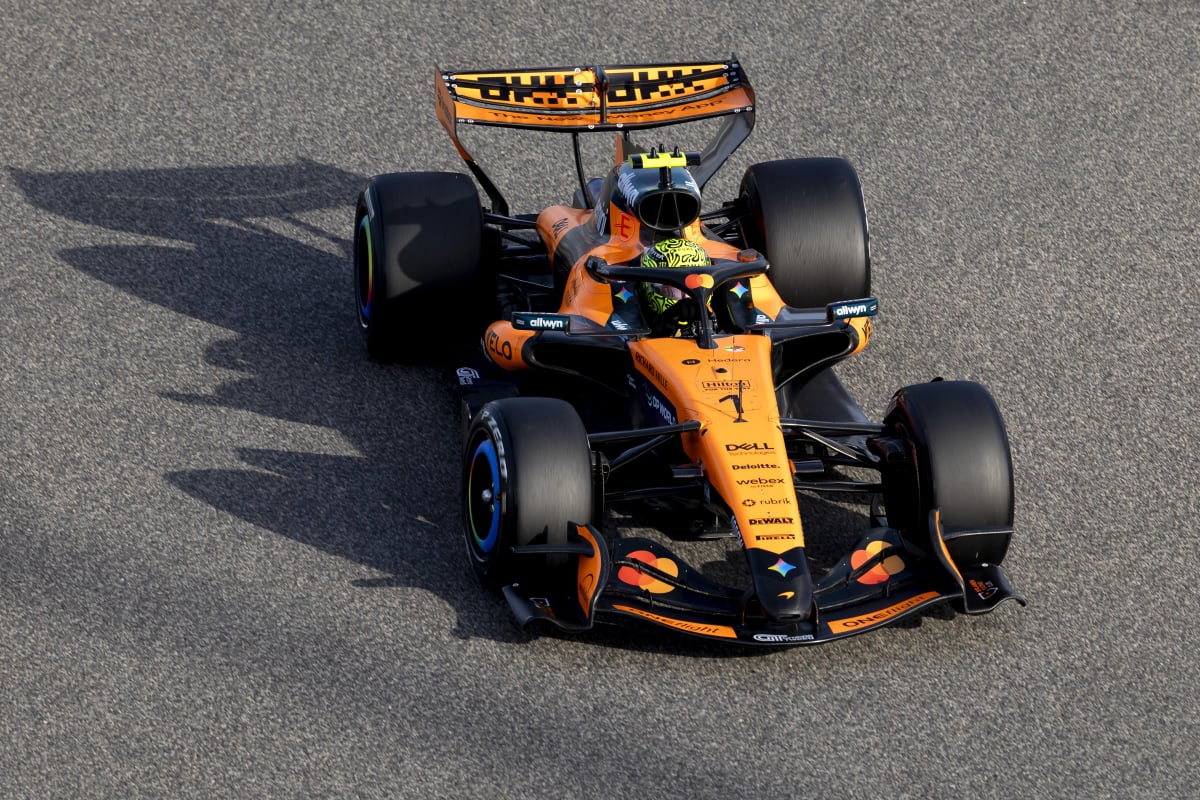
For the first time, F1 cars are able to to adjust both their front and rear wings at certain points on the track, which is known as active aerodynamics.
Previously, F1 cars had a Drag Reduction System (DRS) where at the push of a button, a flap on the rear wing opened and reduced drag at certain detection points.
DRS has been abandoned for 2026 however, and instead replaced by active aero where two terms will feature throughout the new ruleset: straight mode and corner mode.
To save confusion we're only going to focus on one component of active aero in this article, and tell you all you need to know about straight mode.
F1 2026 Regulations: What is active aero?
What is straight mode?
Previously known as 'X mode', the all new 'straight mode' is exactly what it says on the tin. Each circuit will contain designated zones where 'straight mode' can be used on (you guessed it) the straights.
Where DRS was restricted to specific zones, drivers can now manually switch between straight mode and corner modes, with the former mode now available on more straights than DRS.
When straight mode is deployed, both the front and rears wings will change to a lower angle to reduce the overall drag and allow for greater speed on the straights.
Then when the driver approaches the corner to break, the car can re-enter corner mode, which will return the wings to a high downforce state.
Why have the FIA replaced DRS with straight mode?
The FIA have replaced DRS with straight mode because of the new power units, in which more energy will be generated by the electrical component.
F1's new power units allow drivers to use 'overtake mode', expending the battery's energy to provide a straightline speed boost.
So, to increase the efficiency of this mode the FIA need to reduce drag, and DRS was no longer adequate enough for this. Hence the introduction of straight mode.
Will straight mode improve overtaking?
While the ultimate answer will only arrive once the F1 cars race out on track, there are concerns that the new straight mode could welcome a familiar problem.
Reducing the rear wing load could impact the wake behind the car, which basically means turbulent air could remain an issue.
According to RaceTeq's analysis of straight mode, when it is in operation the turbulent wake is kept lower and spreads outwards. This could then impact the onset flow to a following car and could hamper how easy it is to follow cars.
However, there is hope that overtake mode can overcome this turbulent wake behind the cars.
When does the 2026 F1 season start?
The first race of the season is in Melbourne on Sunday March 8 for the Australian Grand Prix. Lights out are at 3pm local time (AEDT), 4am GMT, and 11pm ET.
Meanwhile, the first of Bahrain testing gets under way on Wednesday February 11 and then continues on Thursday February 12 and Friday February 13.
Each day is split into two sessions with a one-hour lunch break between. Times are as follows:
Session One: 10am-2pm local time (7am-11am UK, 8am-noon CET, 2am-6am Eastern).
Session Two: 3pm-7pm local time (noon-4pm UK, 1pm-5pm CET, 7am-11am Eastern).
A second three-day test will follow from Wednesday February 18 until Friday February 20.
F1 2026 Regulations: What is corner mode?
Related
More F1 news
Latest F1 news

Recommended by the editors
 George Russell
Rattled George Russell is being schooled by rivals and his F1 title dream is already fracturing
 Latest F1 News
Ferrari F1 suspect Mercedes skullduggery with new engine trick
 Max Verstappen
When Max Verstappen said he 'might headbutt someone', and an English journalist took the bait
 Latest F1 News
'It's not healthy': Max Verstappen is at breaking point over F1 future







Races
-
 Grand Prix of Australia 2026
-
 Grand Prix of China 2026
-
 Grand Prix of Japan 2026
-
 Grand Prix of Bahrain 2026
-
 Saudi Arabian Grand Prix 2026
-
 Miami Grand Prix 2026
-
 Grand Prix du Canada 2026
-
 Grand Prix De Monaco 2026
-
 Gran Premio de Barcelona-Catalunya 2026
-
 Grand Prix of Austria 2026
-
 Grand Prix of Great Britain 2026
-
 Grand Prix of Belgium 2026
-
 Grand Prix of Hungary 2026
-
 Dutch Grand Prix 2026
-
 Grand Prix of Italy 2026
-
Gran Premio de España 2026
-
 Grand Prix of Azerbaijan 2026
-
 Grand Prix of Singapore 2026
-
Grand Prix of the United States 2026
-
 Gran Premio de la Ciudad de Mexico 2026
-
 Grande Prêmio de São Paulo 2026
-
Las Vegas Grand Prix 2026
-
 Qatar Grand Prix 2026
-
 Grand Prix of Abu Dhabi 2026
Follow us on your favorite social media channel
Editorial & corporate information

Avenue HQ
10–12 East Parade
Leeds
LS1 2BH
United Kingdom Regional correspondence
View contact page