


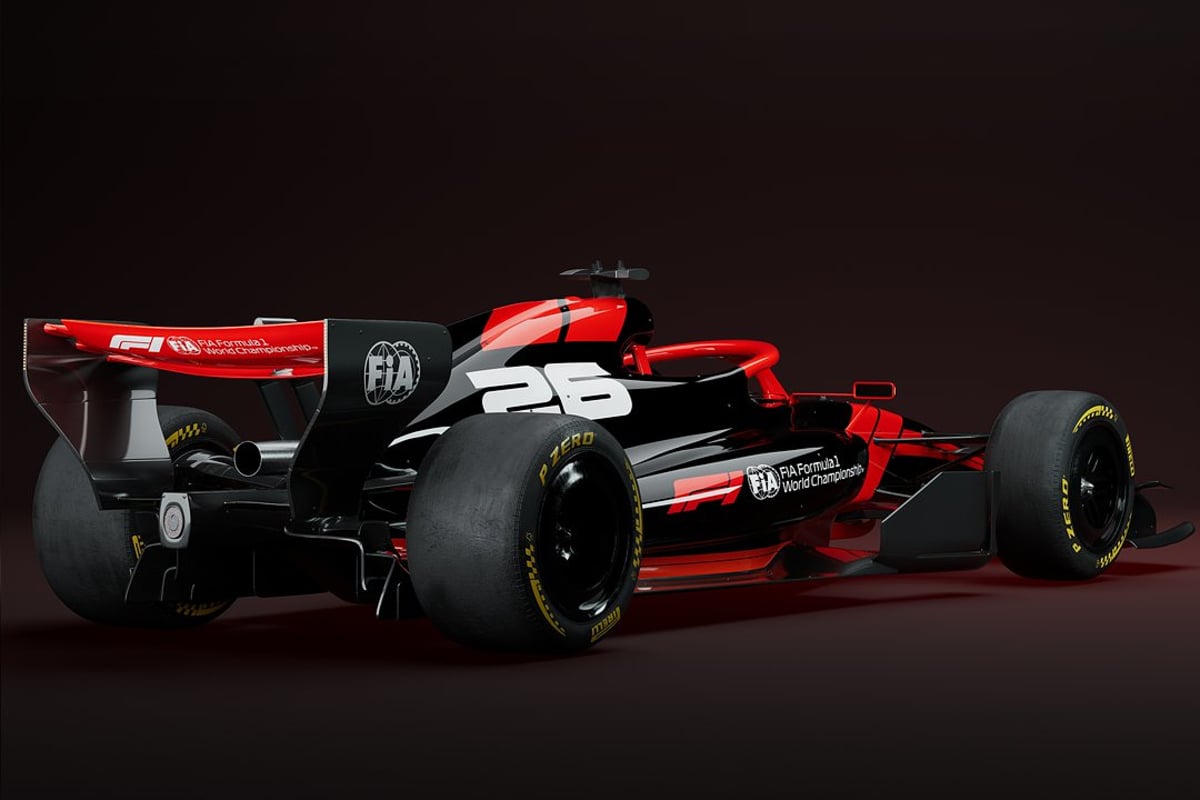


F1 2026 Regulations explained: All you need to know about massive changes
Here's everything you need to know about the wholesale changes

With pre-season testing getting underway in Bahrain this week, F1 fans are getting excited about the new season.
Wholesale regulation changes that are sweeping into the sport are making 2026 one of the most hotly anticipated seasons in recent memory, with a shake up of the competitive order from 2025 largely expected.
We have new engine rules, new aerodynamic car design rules, and a plethora of new gizmos for drivers to be utilising in order to get ahead during qualifying and races.
Here's everything you need to know about F1's new era!
F1 TESTING 2026: Bahrain schedule, start times and how to watch live
New F1 power unit rules explained
The new 2026 power units have had their electrical energy tripled compared to the 2025 units, and can now generate a staggering 350kW.
And the internal combustion engine (ICE) element will see a slight decrease in power output - from 550-560kW to 400kW - meaning there is almost an exact 50-50 split between the two power sources within the engine.
F1 engines will remain a 1.6-litre V6 turbo hybrid, but the sport has waved goodbye to the MGU-H, while the energy recovery system (ERS) can generate twice as much recharge to the battery per lap compared to 2025, generating a massive 8.5 megajoules per lap.
On top of this, the new power units will provide drivers with a new way of being able to overtake the car in front.
'Overtake' mode will be used by different drivers in different ways. Drivers will be handed an extra surge of electrical energy if they are within one second of the car ahead at a particular detection point, which will usually be at the final corner of a lap.
Drivers can then choose whether they want to use this all in one go down the home straight, or spread it out across the course of the lap, helping with both overtaking and then defending that position, or going after another car further up the road, but it can only be used on that following lap.
Overtake mode will give drivers an extra +0.5MJ (megajoules) of recharge, making battery management a crucial responsibility for F1 drivers in 2026.
F1 2026 aerodynamic changes explained
The sport will also introduce a suite of changes in aerodynamics aimed at making the F1 machines smaller and lighter.
A revolutionary addition for 2026 is the introduction of an active aerodynamics system. Cars will feature movable front and rear wings, with the front wing being 100mm narrower with a two-element flap and the rear wing having three elements, with the lower beam wing removed.
In terms of these active aerodynamics, 'straight mode' is when the front and rear wing flaps open to reduce overall drag and increases top speed, which will be made available to all drivers.
'Corner mode', however, takes place at the corners, where the front and rear wing flaps close which increases downforce and therefore cornering speeds.
In addition, front wheel arches will be removed and part of the wheel bodywork will be mandated to achieve optimal wake performance. In-washing wheel wake control boards will also be mounted on the front of the sidepods to control the wheel wake.
Furthermore, the 2026 cars will have a 'partially' flat floor and a lower-powered diffuser. This reduces the ground effect as well as the car's reliance on ultra-stiff and low-set-up.
Why do the new F1 chassis look different?
F1's smaller cars are aimed at creating more exciting racing, by being smaller, narrower and more agile.
Cars are lighter by 30kg in 2026, the wheelbase reduced by 20cm and the car width reduced by 10cm.
The maximum floor width has also been reduced by 15cm, while the width of the front tyres have been decreased by 2.5cm and the rears by 3cm.
Downforce is being trimmed by 30 per cent. Additionally, drag is targeted for a 55 per cent reduction. These changes aim to improve overall efficiency and handling, making cars more raceable by allowing them to follow each other more closely.
The 18-inch wheels introduced in 2022 are here to stay but with slightly narrower profiles. Front tyres will shrink by 25mm and rears by 30mm, with the FIA assuring minimal impact on grip.
Is F1 2026 better for the environment?
The ICE's reduction in power output means that there is more focus on electrical energy within the 2026 hybrids.
On top of this, the ICE side of the power unit can run off 100 per cent sustainable fuels, at F1 tries to meet its self-set goal of carbon neutrality by 2030.
These 'advanced sustainable fuels' were already trialled in F2 and F3 in 2025, and the fuel is made from sources such as carbon capture, municipal waste and non-food biomass.
New F1 safety rules explained
In 2026, the front impact structure (FIS) will include a two-stage structure. This change aims to prevent incidents similar to those in recent years where the FIS has broken off near the survival cell after the initial impact, leaving the car vulnerable to any subsequent impacts.
Side protection is also getting a boost, especially around the driver's seat. The fuel cell area will be much stronger too, with more than double the current protection - all without making the cars any heavier.
Stronger roll hoops are another improvement. They are expected to withstand even higher forces (20G), and test simulations will also see an increase to 167kN.
Finally, lateral safety lights will be installed to indicate the ERS (Energy Recovery System) status of a car when it is stationary on track, further enhancing driver and marshal safety.
READ MORE: F1 Testing 2026 weather forecast - Latest from Bahrain
Related
More F1 news
Latest F1 news


Recommended by the editors
 Japanese Grand Prix
F1 Japanese Grand Prix delayed after huge crash
 Japanese Grand Prix
F1 2026 Japanese Grand Prix starting grid with penalties applied
 F1 Standings
F1 Standings 2026: Latest points leaders as Japanese Grand Prix takes place at Suzuka
 Japanese Grand Prix
F1 2026 Japanese Grand Prix weather forecast - latest from Suzuka







Races
-
 Grand Prix of Australia 2026
-
 Grand Prix of China 2026
-
 Grand Prix of Japan 2026
-
 Grand Prix of Bahrain 2026
-
 Saudi Arabian Grand Prix 2026
-
 Miami Grand Prix 2026
-
 Grand Prix du Canada 2026
-
 Grand Prix De Monaco 2026
-
 Gran Premio de Barcelona-Catalunya 2026
-
 Grand Prix of Austria 2026
-
 Grand Prix of Great Britain 2026
-
 Grand Prix of Belgium 2026
-
 Grand Prix of Hungary 2026
-
 Dutch Grand Prix 2026
-
 Grand Prix of Italy 2026
-
Gran Premio de España 2026
-
 Grand Prix of Azerbaijan 2026
-
 Grand Prix of Singapore 2026
-
Grand Prix of the United States 2026
-
 Gran Premio de la Ciudad de Mexico 2026
-
 Grande Prêmio de São Paulo 2026
-
Las Vegas Grand Prix 2026
-
 Qatar Grand Prix 2026
-
 Grand Prix of Abu Dhabi 2026
Follow us on your favorite social media channel
Editorial & corporate information

Avenue HQ
10–12 East Parade
Leeds
LS1 2BH
United Kingdom Regional correspondence
View contact page